Reading Food Pantry: a mini-pantry comes to the Library, and food insecurity hits a new high
(3-4 minute read)
As summer winds down and Reading heads into a new school year, the Reading Food Pantry thanks the community for its year-round support and wishes students, teachers, and staff a great year ahead. The Pantry also has news: a new resource is landing at the Reading Public Library soon, alongside sobering statewide data on just how many families are struggling to put food on the table.
A new addition to the Library
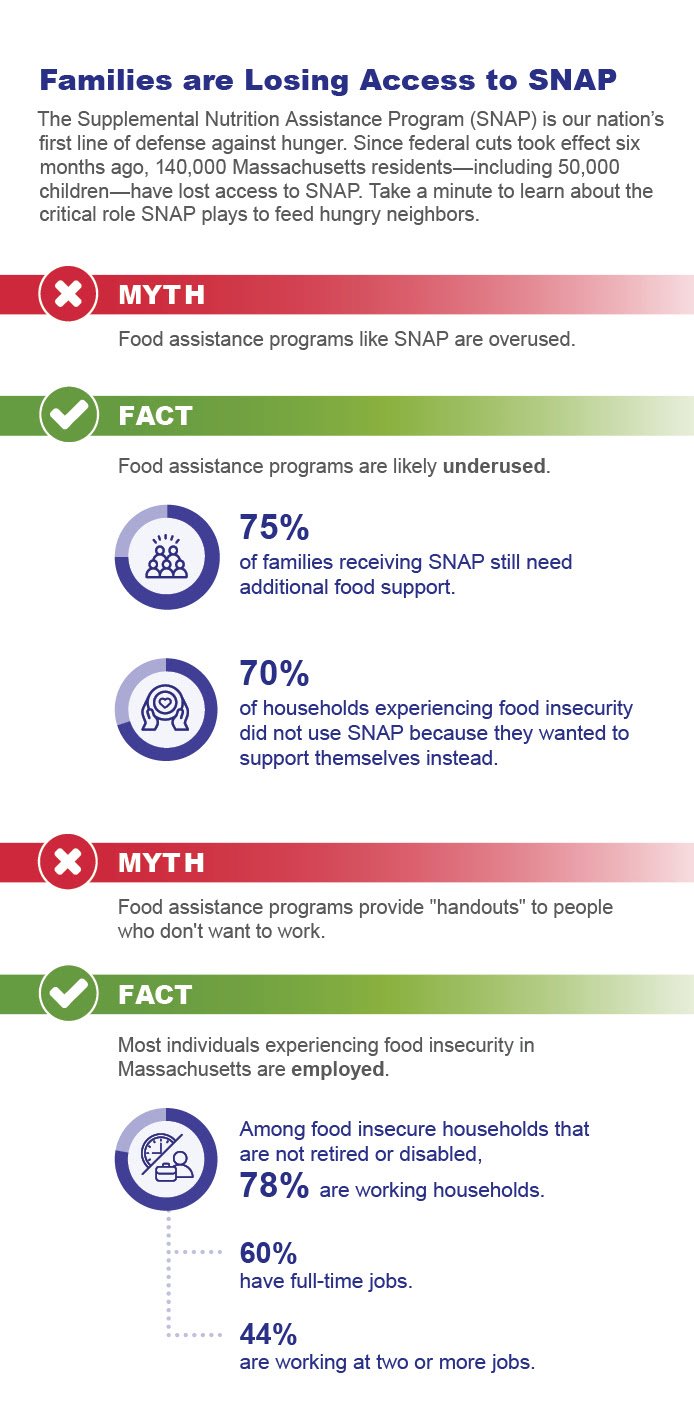
Graphic from the Reading Food Pantry August newsletter.
By the end of the week, the Reading Public Library will get a mini food pantry, a small, freestanding stock of food available to anyone who needs it. Executive Director Simone Payment says more details are coming in next month's newsletter, including who built it and how residents can help keep it stocked. For now, keep an eye out for it going in.
Food insecurity is rising sharply
Each year, the Greater Boston Food Bank studies food insecurity in Massachusetts, and the latest numbers are stark: 40% of households experienced food insecurity in 2025, up from 37% in 2024 and more than double the 19% recorded in 2019.
Supplemental Nutrition Assistance Program (SNAP) benefits remain a lifeline for many of those households, but the Greater Boston Food Bank’s data show that 75% of households relying on SNAP still need additional help from food pantries, mobile markets, or community meals to get by. Recent cuts to SNAP have only added to that need. The Pantry says it’s already hearing from both longtime neighbors and new faces about how the reductions are affecting them.
If you or someone you know is struggling with food costs or SNAP costs, the Reading Food Pantry is open Monday evenings from 6:30 to 7:30 pm and Friday mornings from 10:30 to 11:30 am, in the back parking lot at 6 Salem Street.
How to help, including family pets
The Pantry doesn’t just stock food for people. It also keeps dry and canned dog and cat food on hand for neighbors’ pets, along with occasional kitty litter, treats, toys, and accessories like bowls and leashes.
Donations such as pet food, treats, litter, or accessories can be dropped off in the bins at Market Basket or Stop & Shop, or brought directly to the Pantry during donation hours: Wednesday afternoons from 4:30 to 6:00 pm or Thursday mornings from 9:30 am to 12:00 pm.
Volunteer spotlight: Board member Anne Baynes
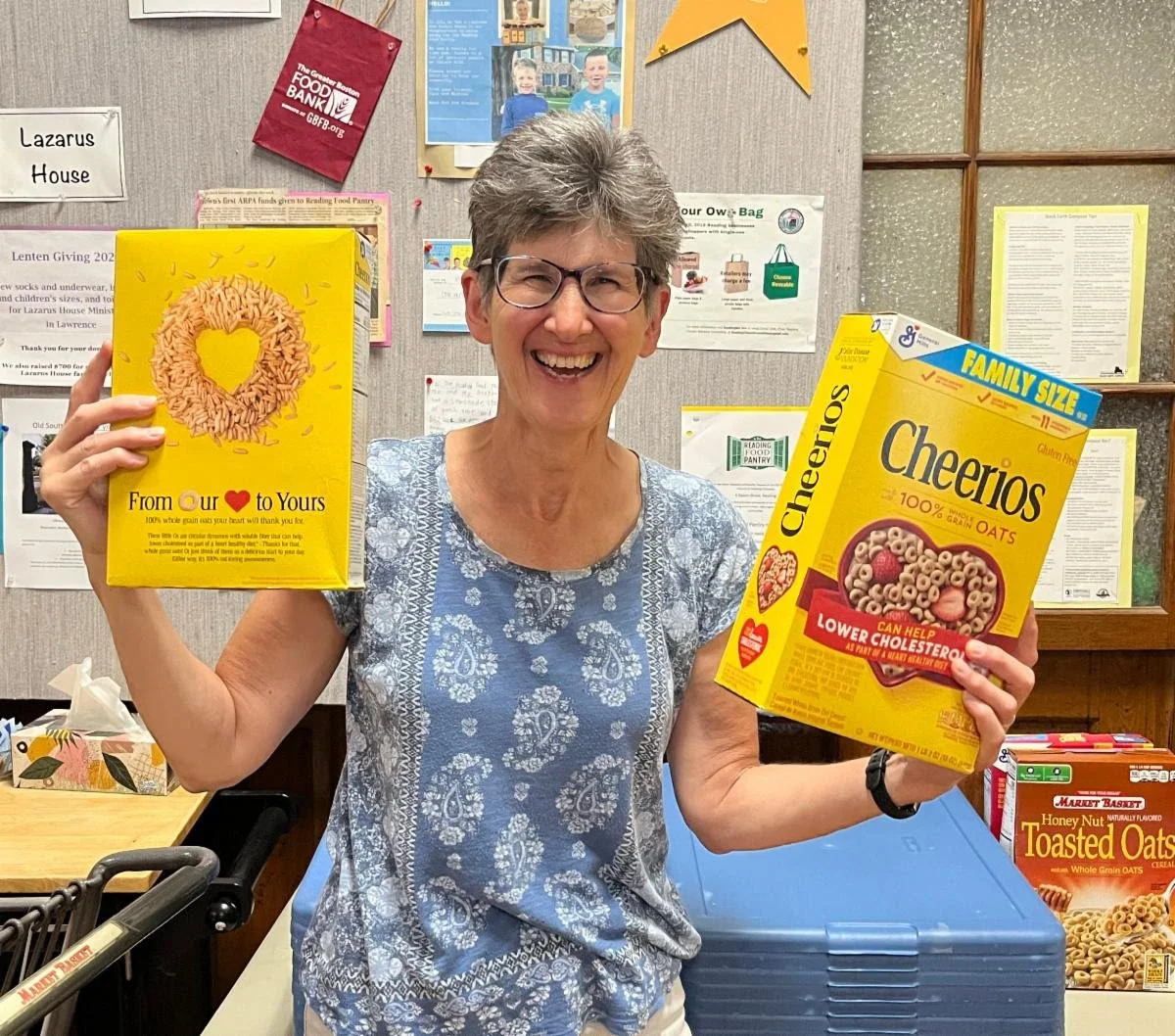
A smiling volunteer holds two boxes of Cheerios at the Reading Food Pantry. Photo from the Reading Food Pantry August newsletter.
For more than seven years, Anne Baynes has shown up every Wednesday to sort donations, check expiration dates, shelve food, and keep the Pantry’s sprawling inventory of reusable and paper bags in order. She’s also one half of the “cereal team” that keeps cold cereal sorted by expiration date. Before each Wednesday shift, she picks up donations from Market Basket and Stop & Shop, and residents may recognize her from the Pantry’s booth at Friends and Family Day in June or the Street Faire in September, where she’s helped cut and hand out cake and run the jelly bean guessing contest.
Anne joined the Pantry’s board in 2024 to help oversee operations and long-term decisions. Outside the pantry, she enjoys gardening, reading, biking, jigsaw puzzles, and hitting 10,000 steps a day.
“I am always impressed with the generosity of the Reading community in keeping the Pantry shelves stocked,” Anne said. “So many organizations and individuals run food drives throughout the year, and the bins at Market Basket and Stop & Shop are full almost every week. It is especially fun to see kids come in with donations from their birthday parties!”
How to support the Pantry
The Reading Food Pantry relies on donations, volunteers, and community food drives to keep its shelves stocked for neighbors in need. Residents can drop off food and pet supply donations at Market Basket or Stop & Shop bins and make financial contributions directly to the Pantry to support its ongoing work.
