Financial Forum recap: May 20, 2026
(4-5 minute read)
For residents looking to stay up to date on key town matters, this recap highlights the major takeaways from the Finance Committee meeting held on Wednesday, May 20, 2026.
Watch the full meeting here on RCTV’s Youtube page.
Review the full Financial Committee packet.
Key takeaways
Chief Financial Officer Sharon Angstrom presented an overview of Reading’s current financial position, including reserve levels, spending trends, and multi-year forecasts showing the Town is on track to fall below recommended thresholds in FY28 without corrective action.
Angstrom identified a minimum override of $7.5 million as necessary to close the structural budget gap, with larger options sustaining the budget through 2030.
Finance Committee and Select Board members discussed placing multiple override options on the November 3, 2026, ballot, giving voters a tiered choice on the size of the override rather than a single take-it-or-leave-it number.
Current reserve status
Chief Financial Officer Sharon Angstrom shared the town’s reserve balances as of April 2026:
Free Cash (April 2026): $8,746,004
General Sabilization: $2,100,899
Total Reserves: $11,046,903
However, a review of reserve trends shows the Town has been using more Free Cash than it regenerates. Free Cash regeneration has averaged about 6% historically but fell to 4% last year as budgets grew leaner. Graphs presented to the Committee show reserves are projected to fall below the Town’s minimum threshold in FY2027 if the current trajectory continues.
The current average assessed home value in Reading is $944,193, with an average FY26 tax bill of $10,148.
Understanding the structural deficit
The Town is facing what Angstrom described as a structural deficit, a gap between what the budget requires and what Proposition 2 ½ allows in annual tax revenue growth (capped at 2.5%, plus new growth). Key drivers include:
Employee benefits costs, which represent a significant and largely uncontrollable portion of the budget
A conscious effort to keep special education students in-district, which increased school costs, but reduced out-of-district placements
A rubbish contract increase
Total excess spending above the projected 2.5% increase: $6,072,246
Unrestricted government aid has not recovered significantly since 2008-2009, compounding pressure on municipal budgets across the state, including Reading’s.
Override options & ballot timing
The Committee discussed three potential override scenarios presented by Angstrom:
$7.5M - The minimum needed to close the structural gap
$8M - Closes the gap and covers new building staffing, insurance, and operating costs
$12M - Would sustain the Town through approximately FY30, accounting for rising accommodated costs and expiring contracts
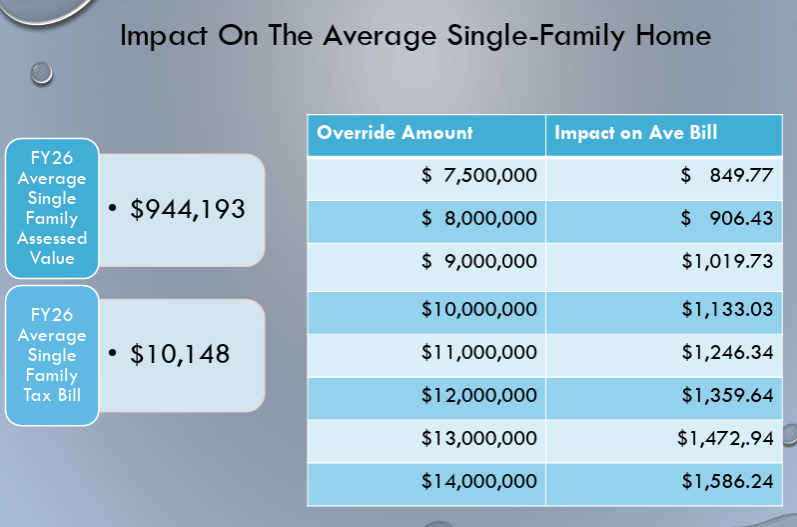
Page 9 of the May 20, 2026, Finance Committee packet.
The Committee expressed interest in placing 2-3 tiered options on the ballot, allowing voters to choose. Under this approach, whichever option received the highest support and passed would be adopted. Multiple members noted this approach serves as a form of public input on the size of the override.
The target date for a vote is November 3, 2026, timed to coincide with the state midterm election to avoid the cost of a separate special election. The ballot question must be submitted to the state by August 5, meaning the Finance Committee and Select Board need to finalize the options by mid-July.
Town Manager Jayne Wellman noted that if an override fails, the Town would build a lower budget for FY27, which would mean cuts primarily through attrition and reductions in staffing and operational expenses, including potential reductions in library and Reading Center for Active Living (ReCAL) hours and in maintenance contracts.
Lessons from 2018 override
Members reflected on the 2018 override effort, which succeeded after a failed attempt in 2016. Key lessons cited included:
The 2016 ask was considered too vague and was largely associated with the School Department
The 2018 effort was highly specific - each department identified exactly what positions would be hired or retained, and commitments were made and kept
A concerted public communication effort, shared appreciation across all departments, and transparency were credited with its success
The first attempt in 2016 asked for $7.5M; the amount was reduced to $4.15M, which then passed. This cycle’s structural need is larger. Angstrom noted that pandemic-era ARPA funds and reserves extended the 2018 override’s runway to approximately 10 years, nearly double the original projection.
Public Engagement Plan
The Town intends to launch a robust public engagement campaign ahead of the November vote, including:
Virtual and in-person public forums
A dedicated website with an updated tax calculator and a place for residents to submit questions
Educational videos and podcast appearances
A potential public survey to gauge appetite before finalizing the override amount - the 2018 Select Board survey drew nearly 2,000 responses
A public forum before the end of June, prior to the August ballot deadline
Several members raised concerns about engaging residents before the summer months, when attention is typically lower. The Committee agreed that early, clear, and simplified communication, focused on how the Town got here and what the options mean in practical terms, is essential.
Select Board member Karen Herrick also flagged an upcoming state ballot question proposing a reduction in the income tax rate, noting a yes vote on that question would directly reduce local aid to municipalities like Reading, and that voter education should address this connection.
Other notes
The Town is exploring moving to weekly trash and biweekly recycling pickup as a potential $400,000 savings measure.
The Reading Police Department will conduct an in-house staffing study.
Bond rating: Angstrom noted that the Town’s AAA bond rating could be at risk if the override does not pass, as it would likely need to borrow in a weakened financial position. Passing the override helps preserve the rating.
Eastern Gateway rezoning was cited as the primary engine for new growth over the next decade, as Reading is otherwise largely built out.
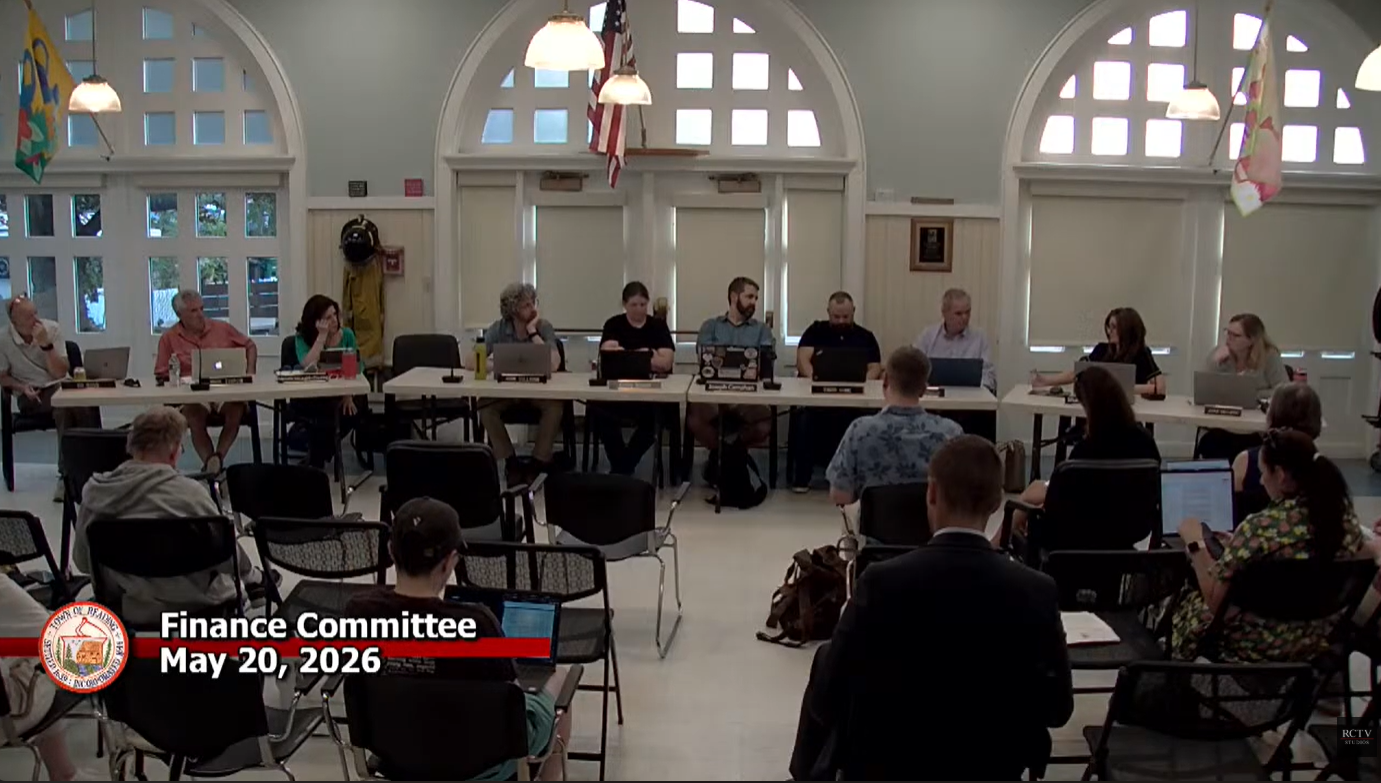
Image of the May 20, 2026, Financial Committee meeting from the RCTV Youtube page. Pictured (left to right): Finance Committee members Ed Ross, Mark Zarrow, Marianne McLaughlin-Downing, John Sullivan, Vice Chair Emily Sisson, Chair Joe Carnahan, Endri Kume, Joe McDonagh, Chief Financial Officer Sharon Angstrom, and Town Manager Jayne Wellman.
