Override webinar recap: September 30, 2026
(7-8 minute read)
For residents looking to stay up to date on key town matters, this recap highlights the major takeaways from the Override Webinar held on Wednesday, September 30, 2026.
Watch the full meeting here on RCTV’s Youtube page.
Review the Fire Department slides from the presentation.
Review the Police Department slides from the presentation.
Key takeaways
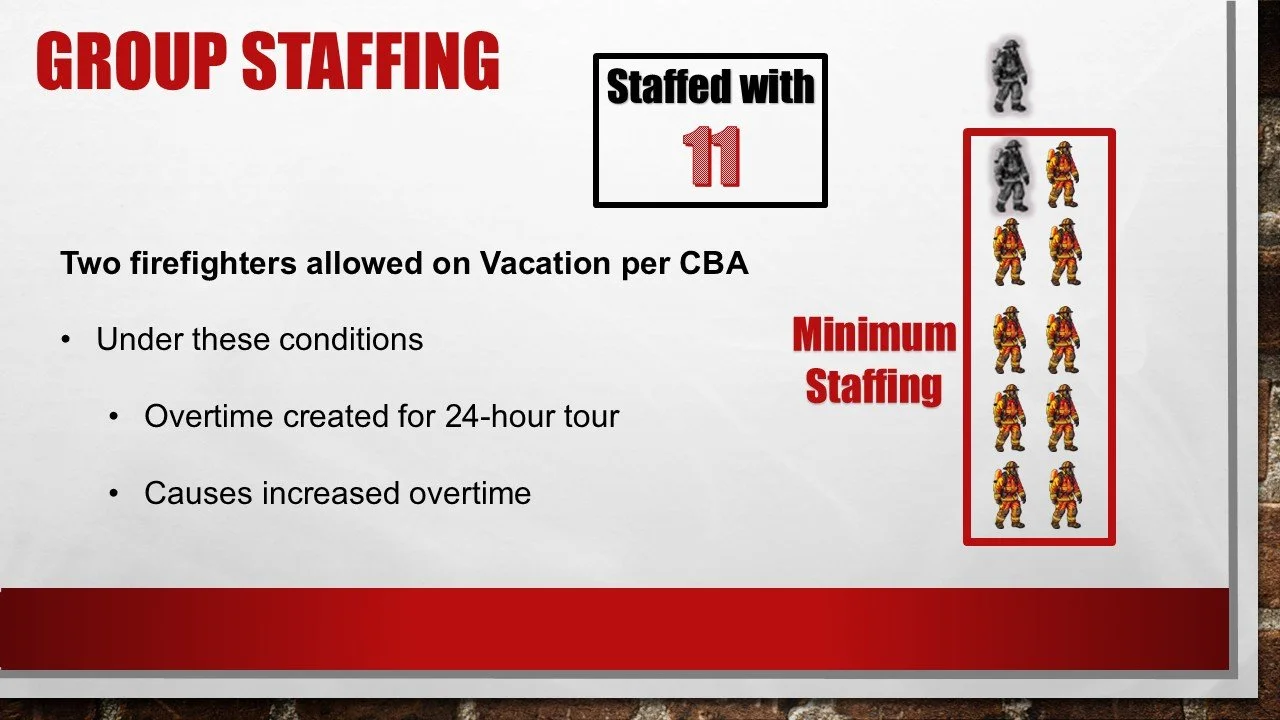
Public safety staffing would shrink if the override fails. Fire Chief Rick Nelson said reductions of up to four positions would leave 11 firefighters per shift, while Police Chief David Clark said the department would lay off four to five officers. Both chiefs said the cuts would affect response capacity, overtime, and training.
The library’s state certification is at risk. Director Amy Lannon said cuts of two to three staff and Sunday hours could push the library below the minimum municipal funding required for certification. Losing it would end about $66,000 in annual state aid and eligibility for state and federal grants.
A $6.5M override still leaves a gap. Town Manager Jayne Wellman said the FY28 structural deficit is about $9.8M, so about $3M would still be covered with free cash. She said the override would get the budget to a sustainable point.
Fire Department
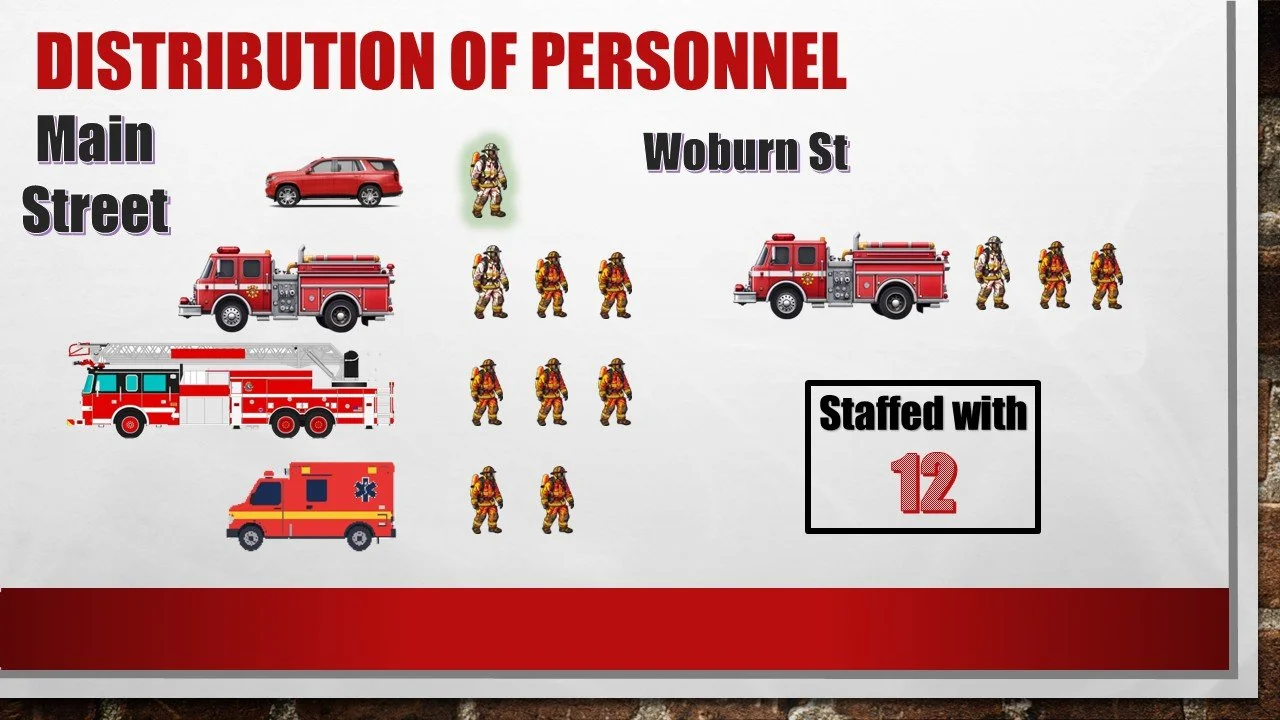
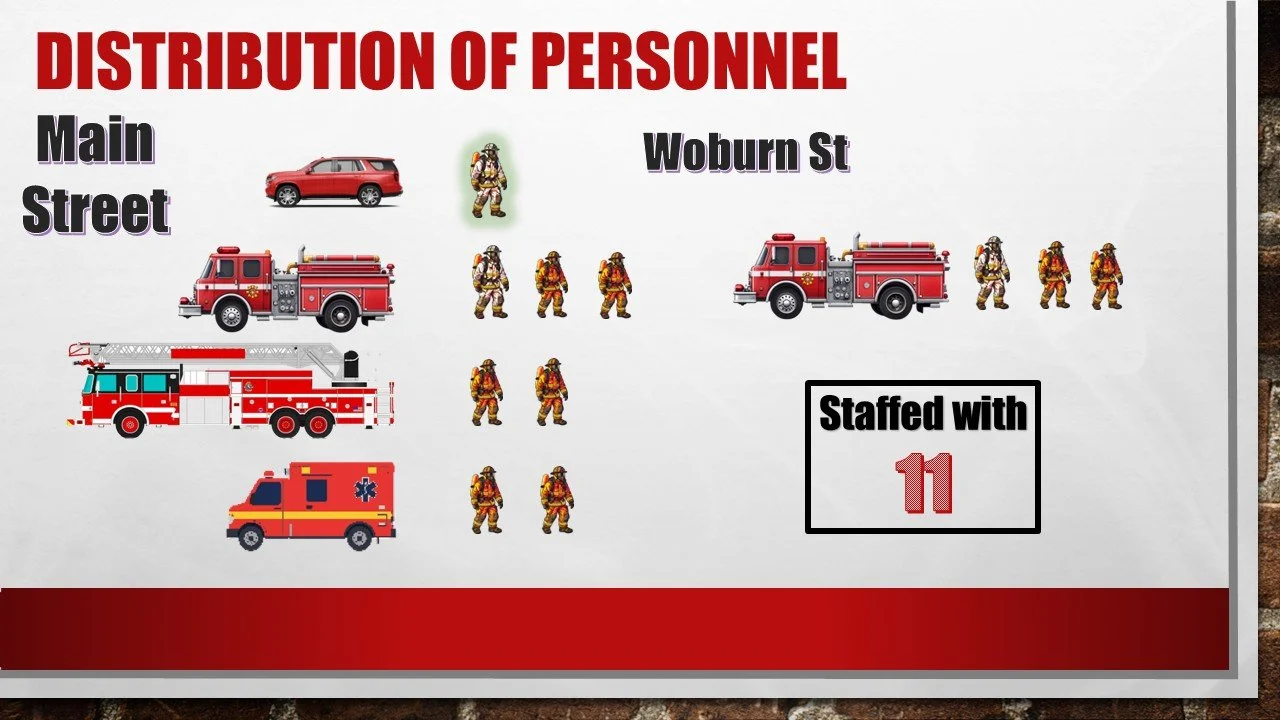
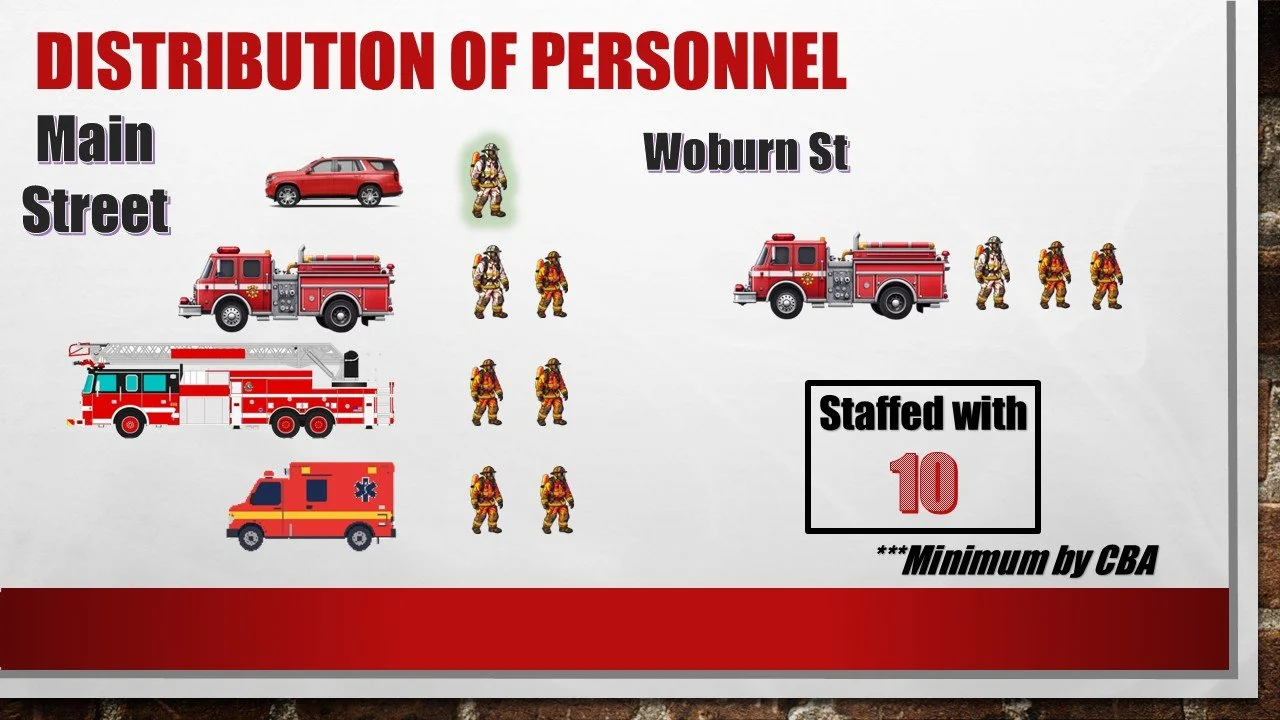
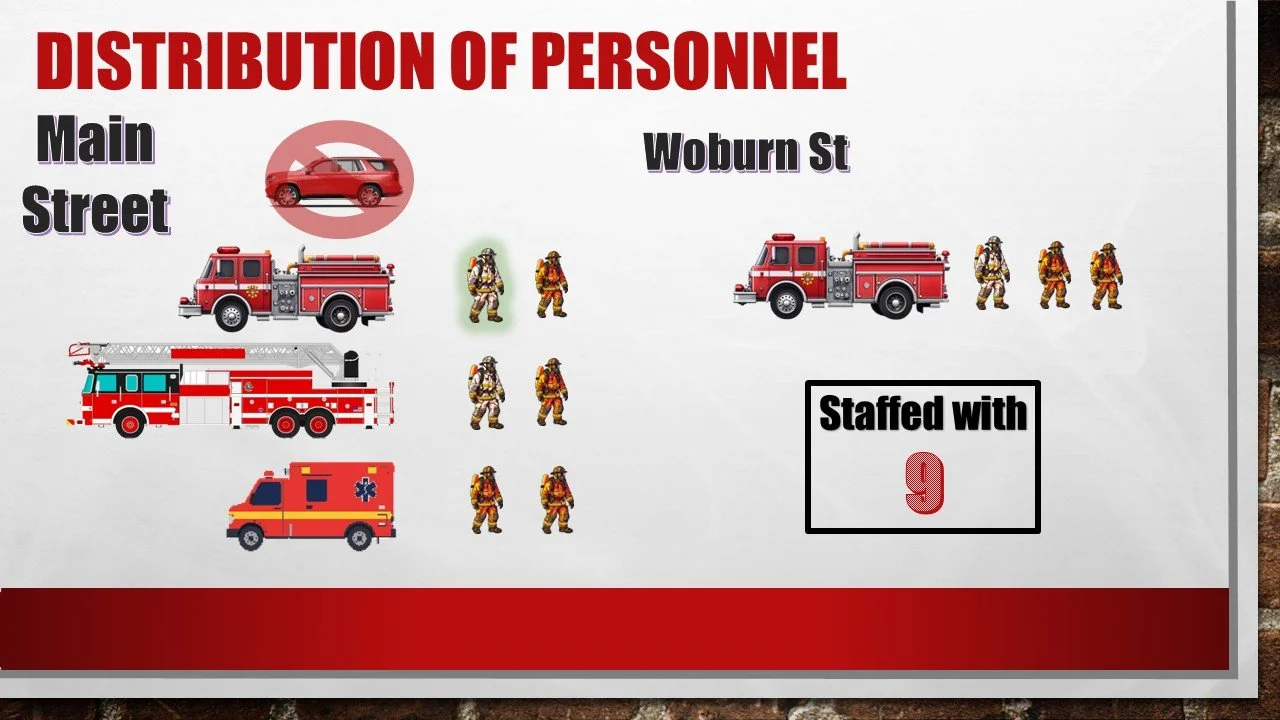
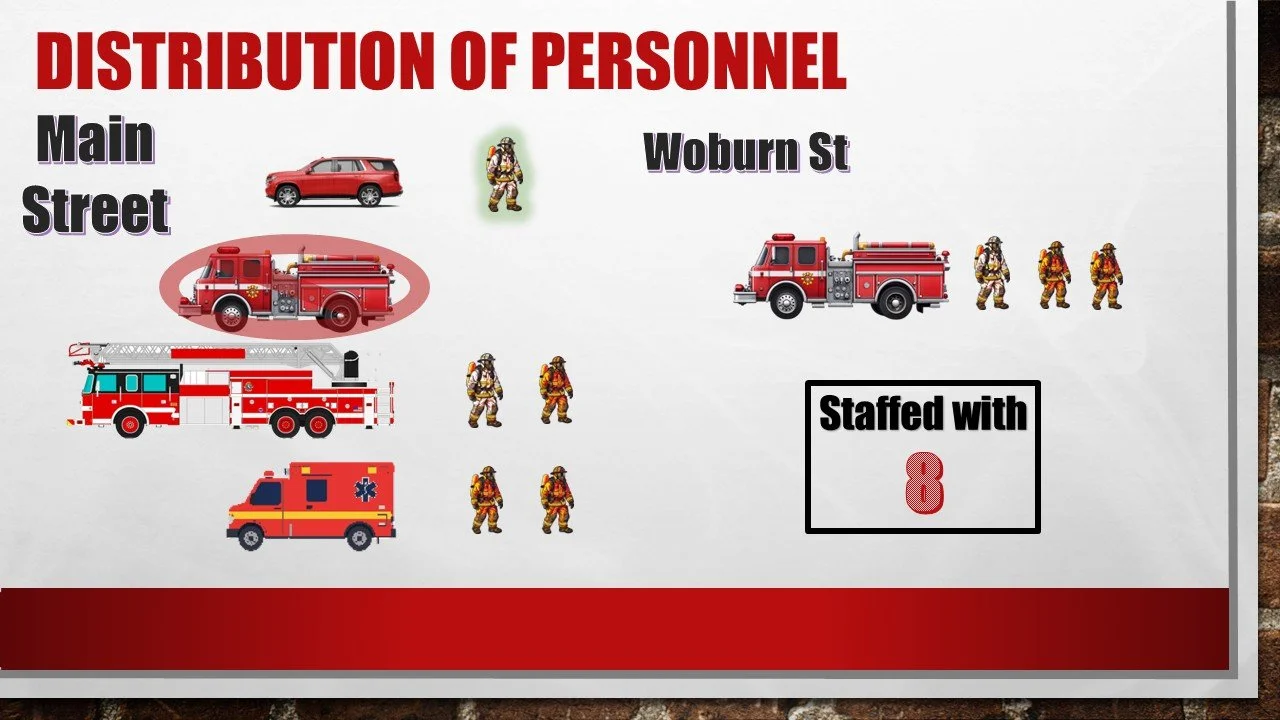
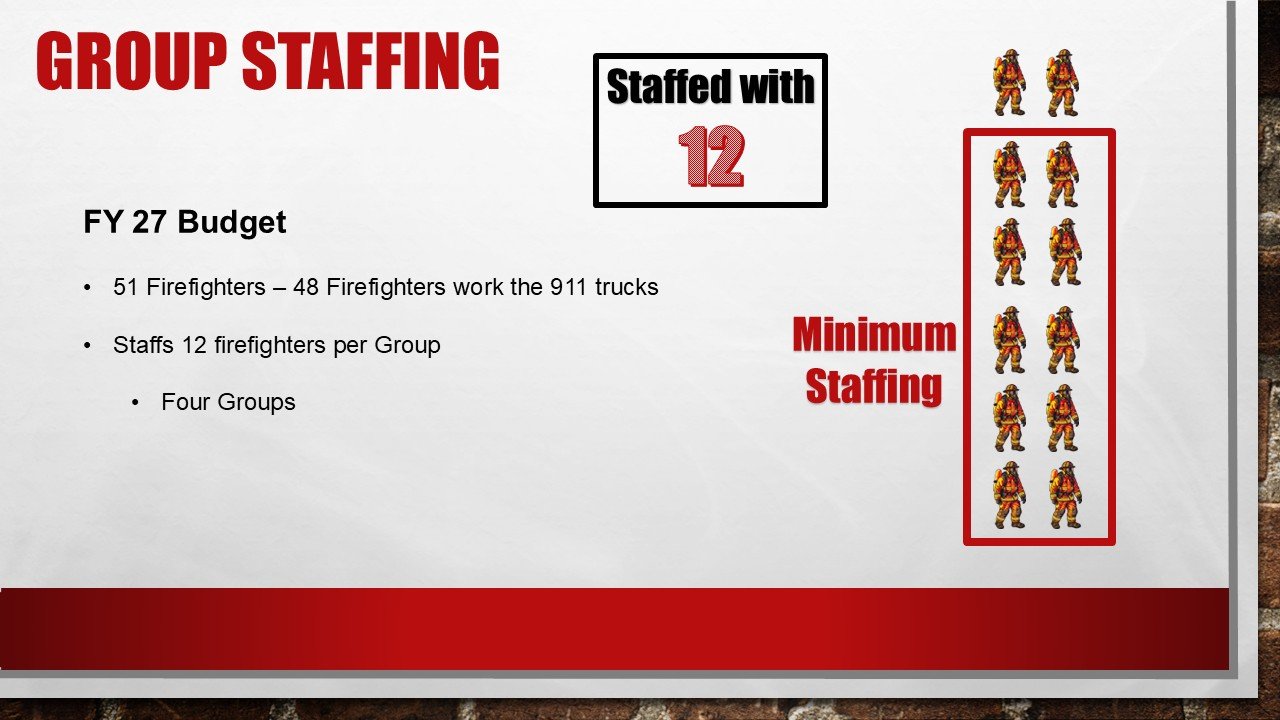
Reading Fire Chief Rick Nelson said the department is budgeted for 51 firefighters and currently staffs 47, with four open positions that are not being filled. Staffing is set at 12 per shift, with 10 being the minimum under the union contract. At 12, crews staff engines at Woburn Street and Main Street, plus a ladder truck, a paramedic unit, and a chief’s car at Main Street. At 11, the ladder truck is affected. At 10, the Main Street engine faces operational challenges. At 9, the chief’s car is lost. At 8, Main Street has no engine. The Woburn Street engine must keep three firefighters to remain available for mutual aid. Residents can review the Fire Department’s slides to see how each staffing level changes which apparatus can be staffed.
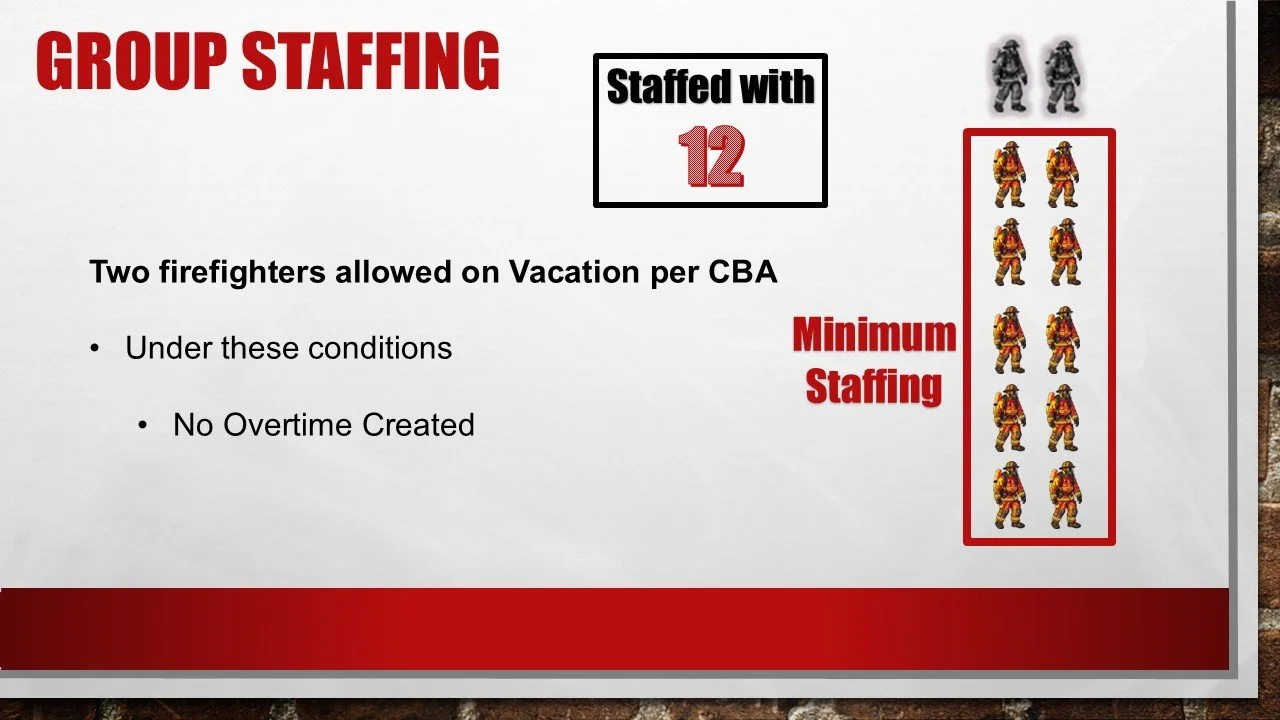
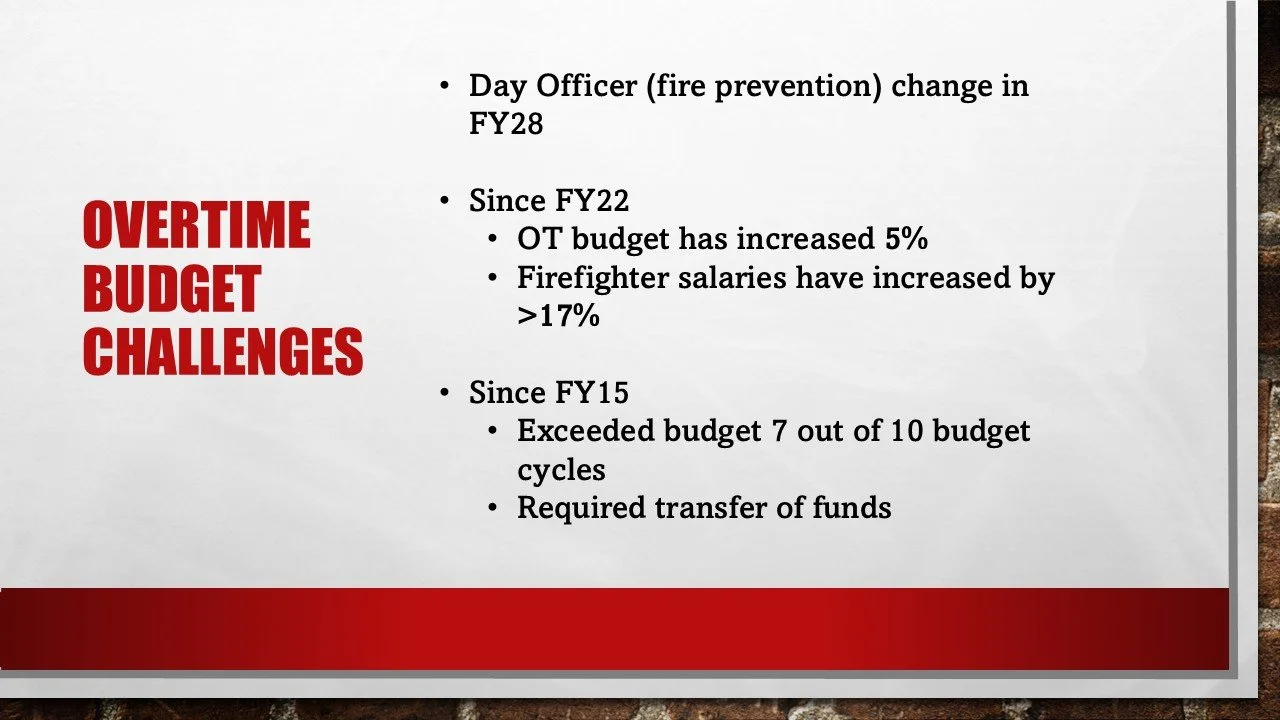
The department’s Level 1 request would add four firefighters, bringing the total to 13 per shift, the final phase of a plan begun under Chief Burns. At 12 per shift, with two firefighters allowed on vacation at a time, no overtime is created. At 11, overtime is required to cover each 24-hour tour. Nelson said the override budget has grown 5% since FY22 while firefighters’ salaries rose more than 17%, and that seven of the past 10 budget cycles required a transfer of funds. A new hire takes eight to ten months to reach the street, and outfitting each firefighter costs about $10,000. Cuts to overtime could also reduce fire and EMS training.
Select Board member Chris Haley said the biggest issue for him was the gray area in staffing numbers. Nelson said the department is budgeted for 51 and staffs 47, and that hiring has been delayed because of the cost of outfitting new firefighters and potential unemployment costs. Haley asked whether a failed override would cut anyone who is not already missing from the roster, but said last December’s argument about how difficult it is for two firefighters to carry a hose through a house stuck with him, and that there is a reason to ask for more.
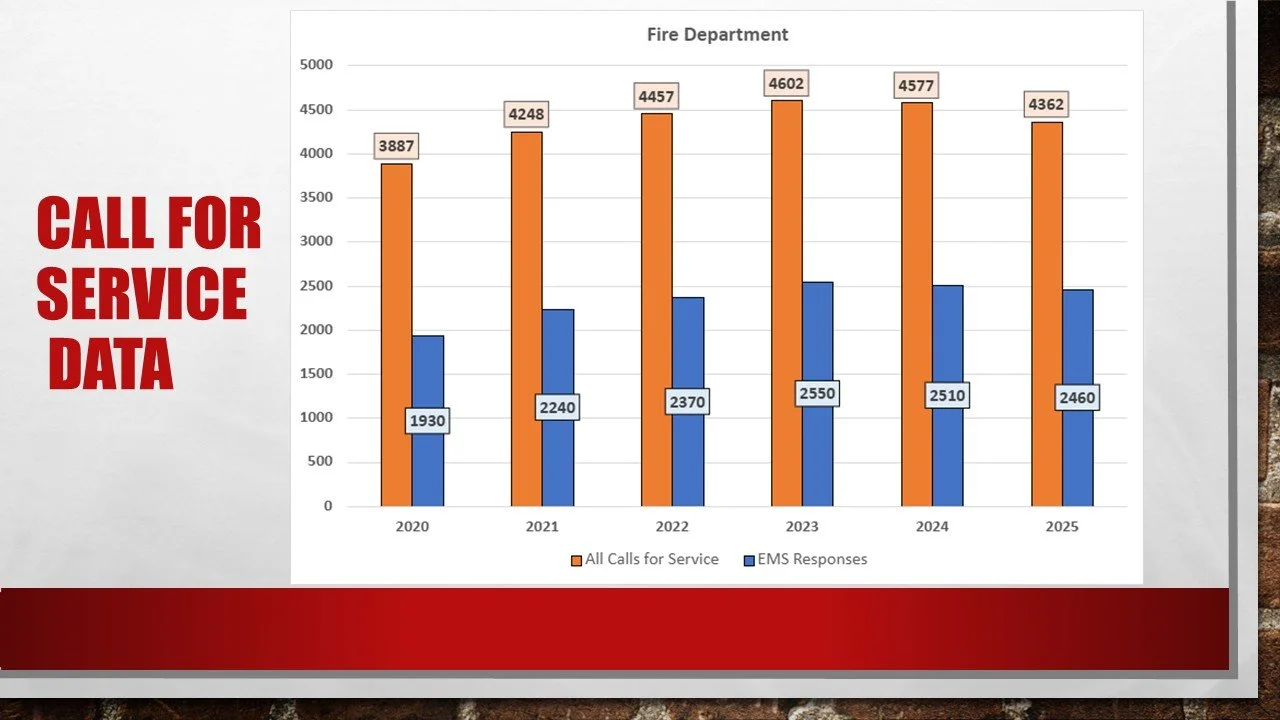
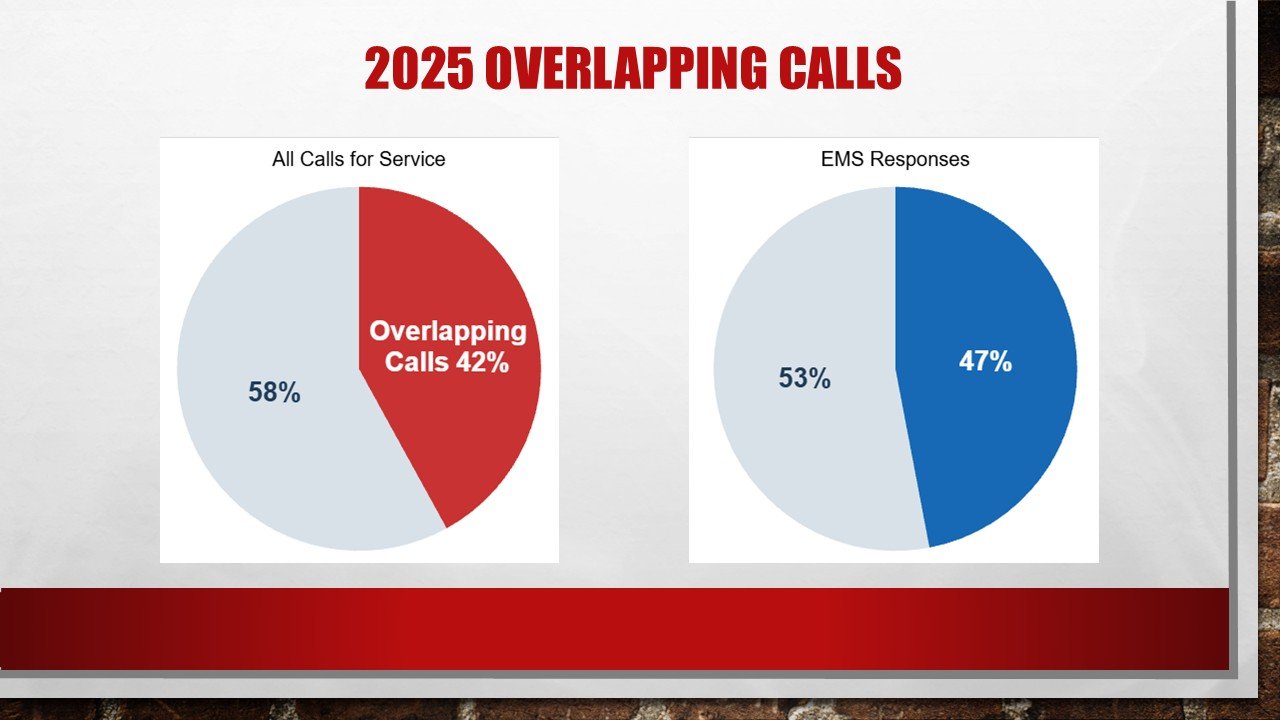
In response to a question from Finance Committee member Ed Ross, Nelson said call volume has trended upward, and the department is busier than during the 2018 override. He said calls often overlap, including two EMS calls at once 47% of the time, and that the counts include mutual aid responses to other towns.
Police Department
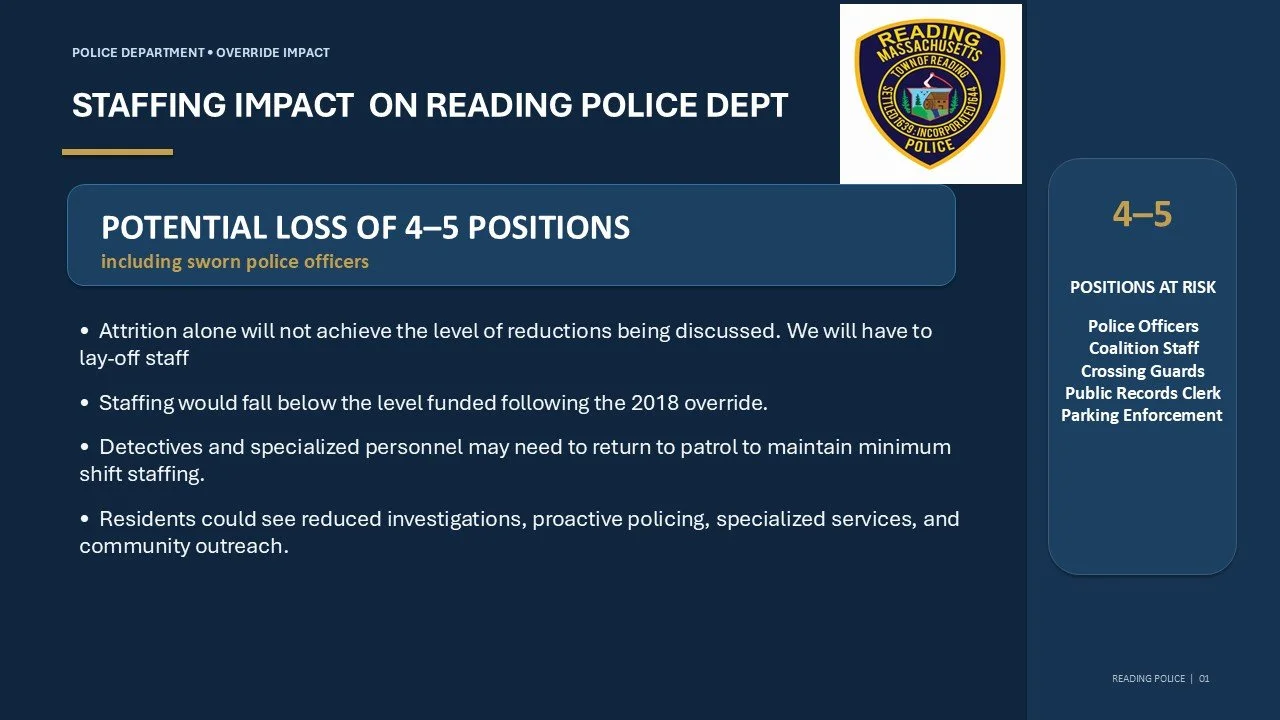
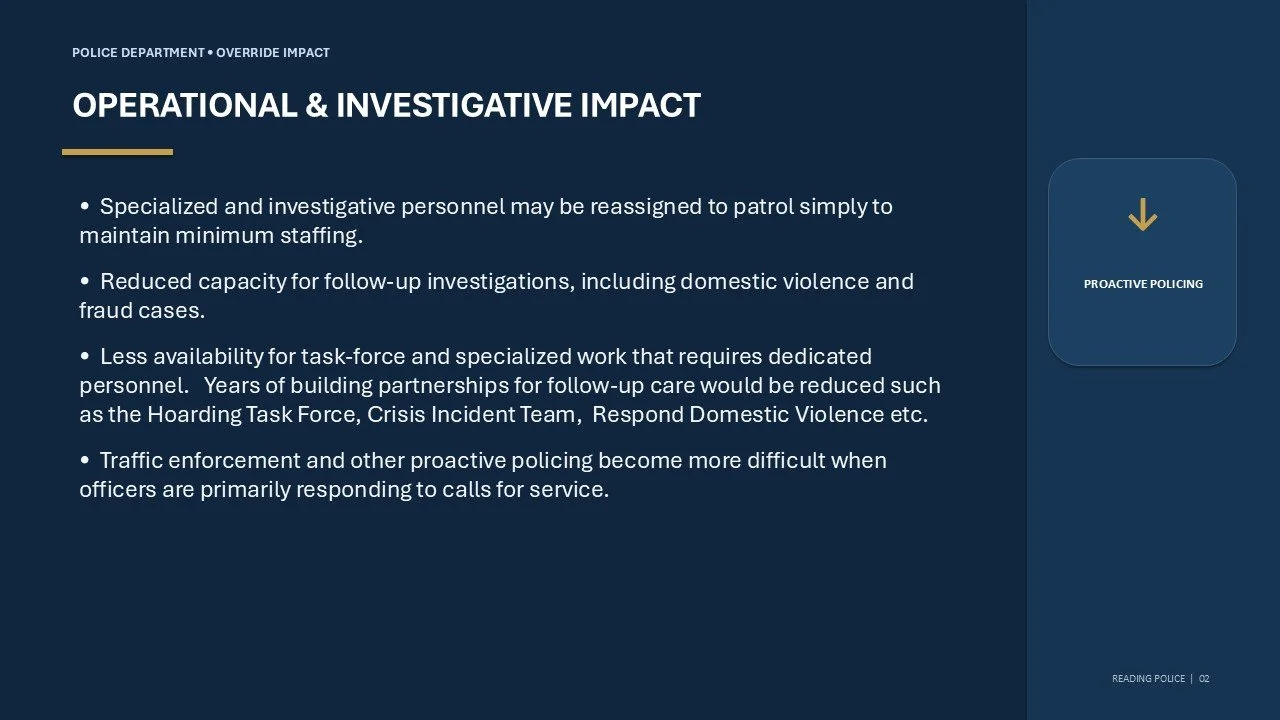
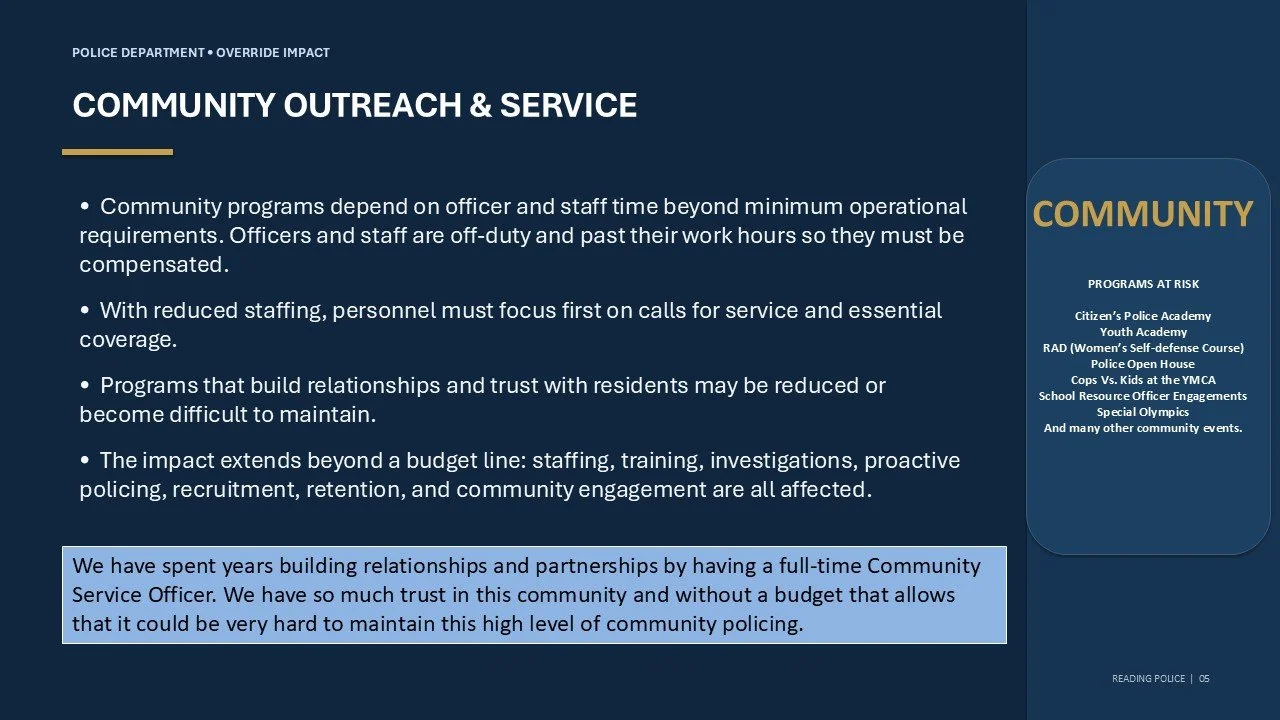
Reading Police Chief David Clark said the department has 46 officers, up from 41 before the last override, and a failed override could bring staffing below 2018 levels. He said patrol would remain the priority, so residents could expect fewer investigations, less proactive policing, reduced specialized services, and less community outreach. Deputy Chief Christine Amendola said four to five full-time employees plus some crossing guards are at risk. Specialized personnel would move to patrol, which Clark said would reduce follow-up on cases including domestic violence and fraud.
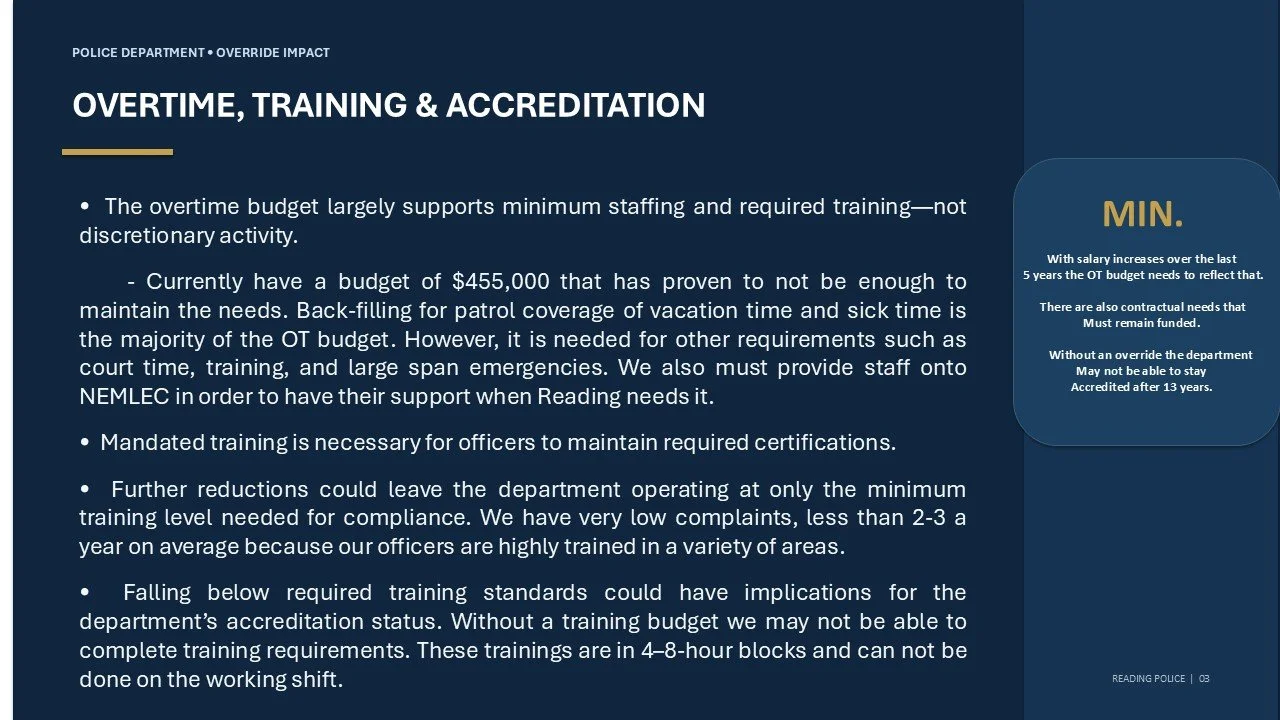
Clark said overtime isn't discretionary and the $455,000 budget hasn’t kept pace. Large incidents tie up officers while the rest of the town still needs coverage, and he cited a search that drew 15 canines and seven drones through NEMLEC, the regional law enforcement council. Reading must contribute about 10% of resources based on its size, and Clark said the main risk of staffing cuts is being unable to backfill shifts. Amendola said officers need at least 48 training hours a year, and the department averages more than 64, including firearms, de-escalation, and crisis intervention. Clark said the department has held accreditation for 13 years and that a lack of training funds could affect it.
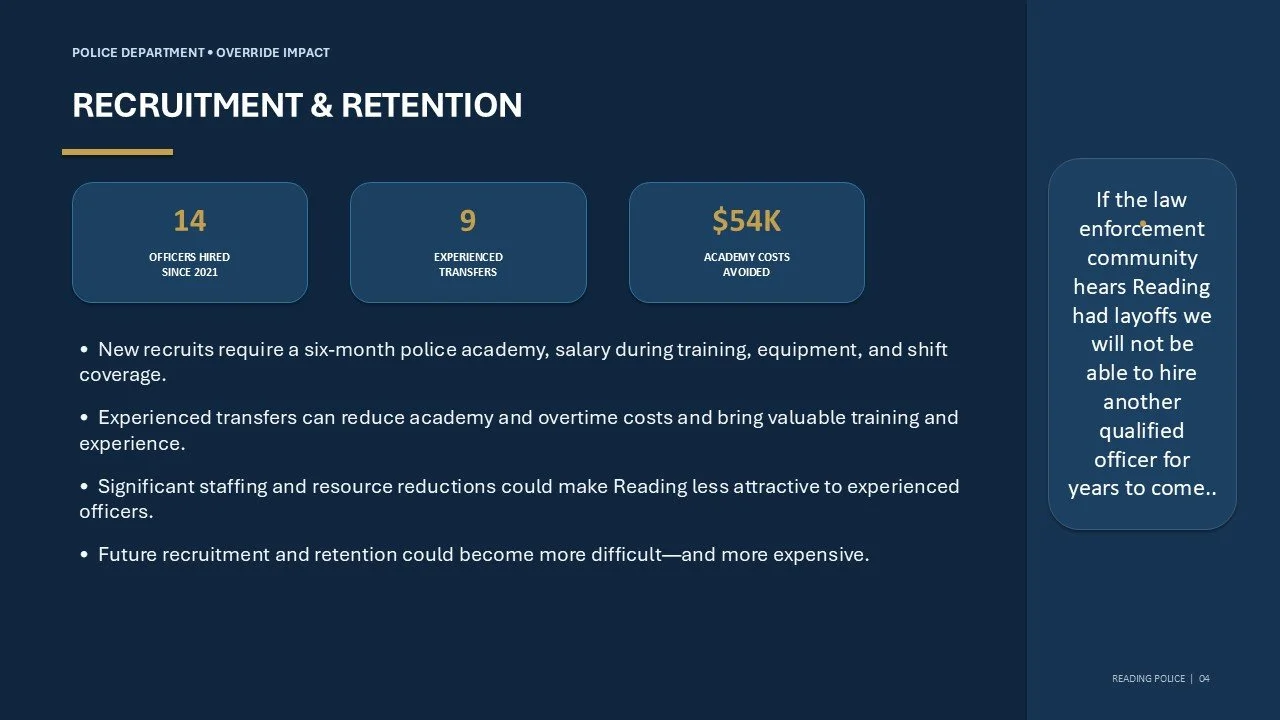
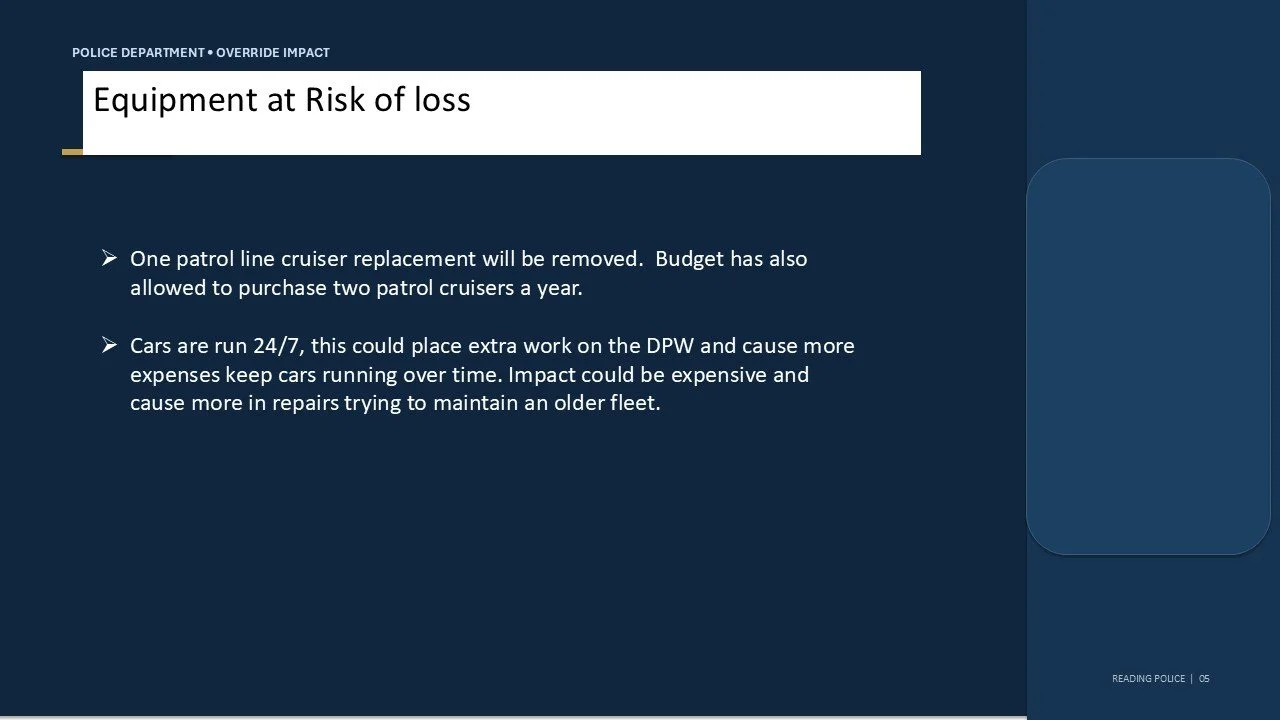
Clark said 14 officers have joined the Reading Police Department since 2021, nine of whom transferred from other agencies, saving Reading the six-month academy and equipment costs, and that layoffs would make recruiting harder. He said a failed override would also mean buying one new cruiser a year instead of two, increasing DPW's maintenance costs. He said programs through the Reading Coalition for Prevention and Support, including a mental health technician, a school outreach coordinator, and a full-time Community Service Officer, help build community trust. Wellman said police and fire make up about 51% of town salaries, so the town is taking proportionally more from other departments to limit the impact on public safety.
Reading Public Library
Lannon explained that state certification lets Reading offer its collection and programs to residents of other communities, and other libraries can refuse service to decertified ones. It also brings about $66,000 a year in state aid and grant eligibility, including the $5.1M building grant, $60,000 in other grants, and a $20,000 civic hub grant. To stay certified, the town must increase library funding by a minimum percentage, averaged over three years. Lannon said the library is asking for a 3% increase and could still meet the requirement with as little as 1.7%. That leaves only $20,000 to $30,000 of room, so the staff cuts needed without an override could push funding below the minimum.
Without the override, the library would lose two to three staff members and Sunday hours, which could reduce hours from 60 to 54 a week, such as opening later and closing earlier. Programs depend on hours and staff. Lannon said the library avoided decertification in 2016 by cutting Sunday hours, bringing hours from 64 to 60, against the 59-hour minimum. She also said the library pays the NOBLE consortium $50,000 a year for services worth about $340,000.
Reading Public Schools
Superintendent Dr. Henry Turner said the School Committee asked for a menu of scenarios, now scheduled for the School Committee Meeting on October 15 after the original October 8 meeting was canceled. They include raising class size to 28 from the cap of 25, reshuffling the middle school model, changing high school class sizes, and adjusting support positions such as adjustment counselors and assistant principals. He stressed that these are not recommendations, but potential options under consideration.
On kindergarten, Turner said no decision has been made on whether full-day kindergarten would become fee-based if the override fails. Reading eliminated those fees a few years ago, and just over 10 districts in the state still charge. The schools would also have to offer a half-day option, and he said full-day kindergarten isn't 100% revenue. He also noted a 9:00 am session at Joshua Eaton on Wednesday, October 21, part of the October outreach, where school staff will discuss how education has changed over the past 8 to 10 years.
Budget background
Chief Financial Officer Sharon Angstrom said CBiz audits the town every year, with FY25 the latest available. Wellman explained that level funding means a line item does not change, while level services keep pace with inflation. Angstrom said state revenue has grown $3M in 15 years, shared costs rose from $19.1M in FY11 to $33.2M in FY26, and the general fund grew from $74.35M to $129.74M.
Wellman said a hiring freeze prioritizes public safety, with 9.5 positions open, and the town proposed a policy tying free cash to one-time expenses like capital. Angstrom said the town can safely regenerate about $3M in free cash a year.
Watch the September 30, 2026 Override webinar on the RCTV Youtube page.
