Select Board tours the DPW: June 9, 2026
(3-minute read)
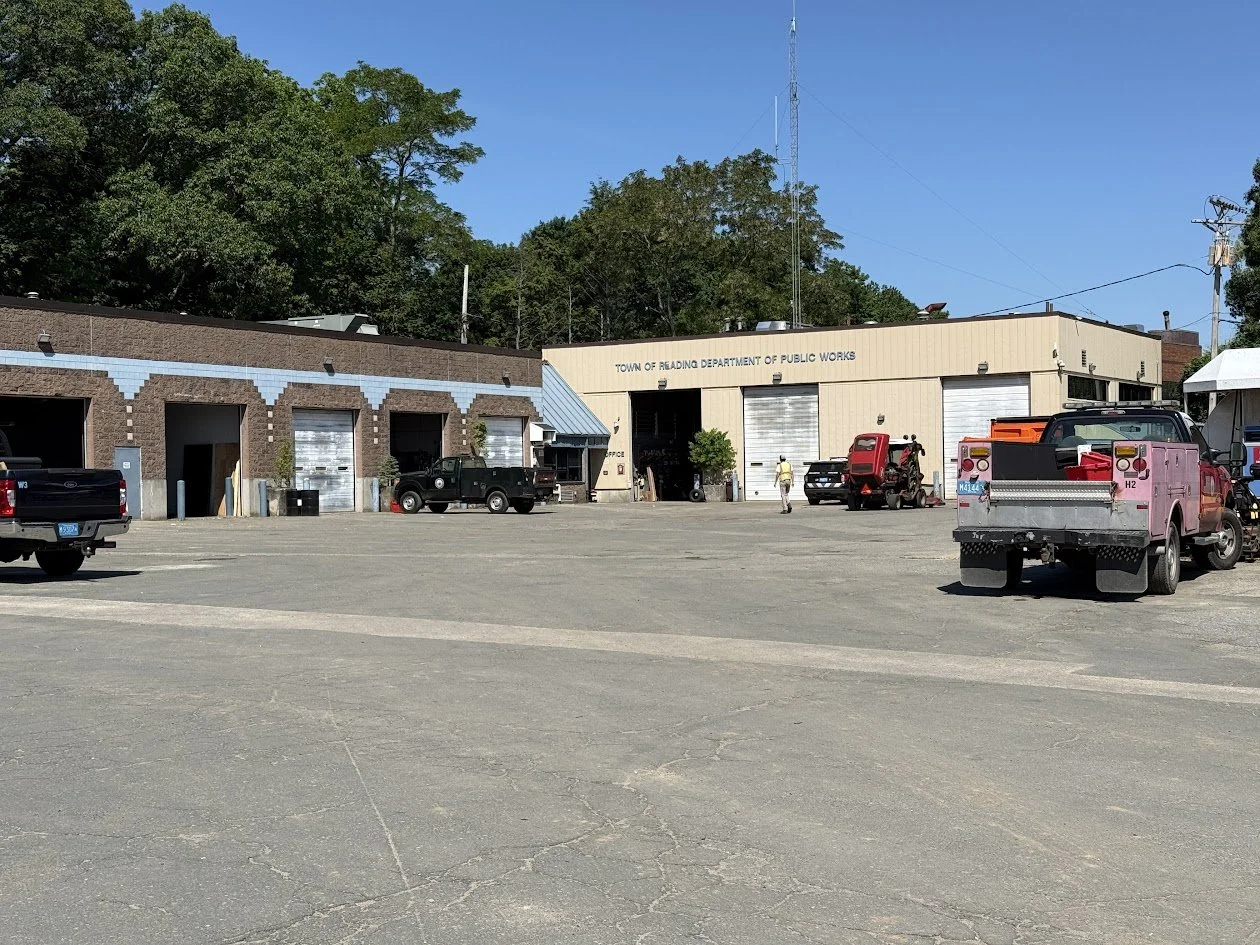
The Town of Reading Department of Public Works facility on a sunny June morning. Photo by Taylor Gregory.
On a sunny, warm summer morning, members of the Select Board and town staff gathered at the Department of Public Works for a guided tour of the facility on Tuesday, June 9, 2026. Chair Melissa Murphy, Vice Chair Karen Rose-Gillis, Karen Herrick, and Chris Haley attended, along with Town Manager Jayne Wellman and town staff Jax LaVerde. DPW Director Chris Cole led the tour, with Assistant Director Mike Kessman, and other members of DPW staff joining along the way to answer questions about their division.
A team of 40 keeps the Town running
The DPW employs 40 staff members across its division. Along the tour, the group met several of the supervisors who keep operations moving, including Highway Division Supervisor Jeff Cummings, who also oversees vehicle maintenance; Forestry Supervisor and Tree Warden Mike Hannaford; Water and Sewer Supervisor Peter Isbell; and Water Quality and DPW Safety Administrator Erik Mysliwy, who handles compliance and supports Isbell’s team.
The DPW building was constructed in 1988, consolidating departments that had previously been scattered across town under one roof.
Inside the bays
The facility houses seven bays, each dedicated to a different function. In the vehicle bay, staff maintain the Town’s fleet in-house, keeping vehicles on the road and service costs down. A former vehicle wash area has been converted into a welding station to make better use of the space.
The forestry bay, like each of the bays, includes a mezzanine level for storage, home to the Town’s holiday lights and decorations, which last longer when they are taken down each season rather than left on the trees. The park’s bay includes an office area and a dedicated chemical storage area.
In the meter room, staff test water meters and coordinate with a contractor on the logistics of replacing them throughout town. The new smart meters will allow residents to see their water usage in real time through a phone app, a rollout expected to take approximately four years.
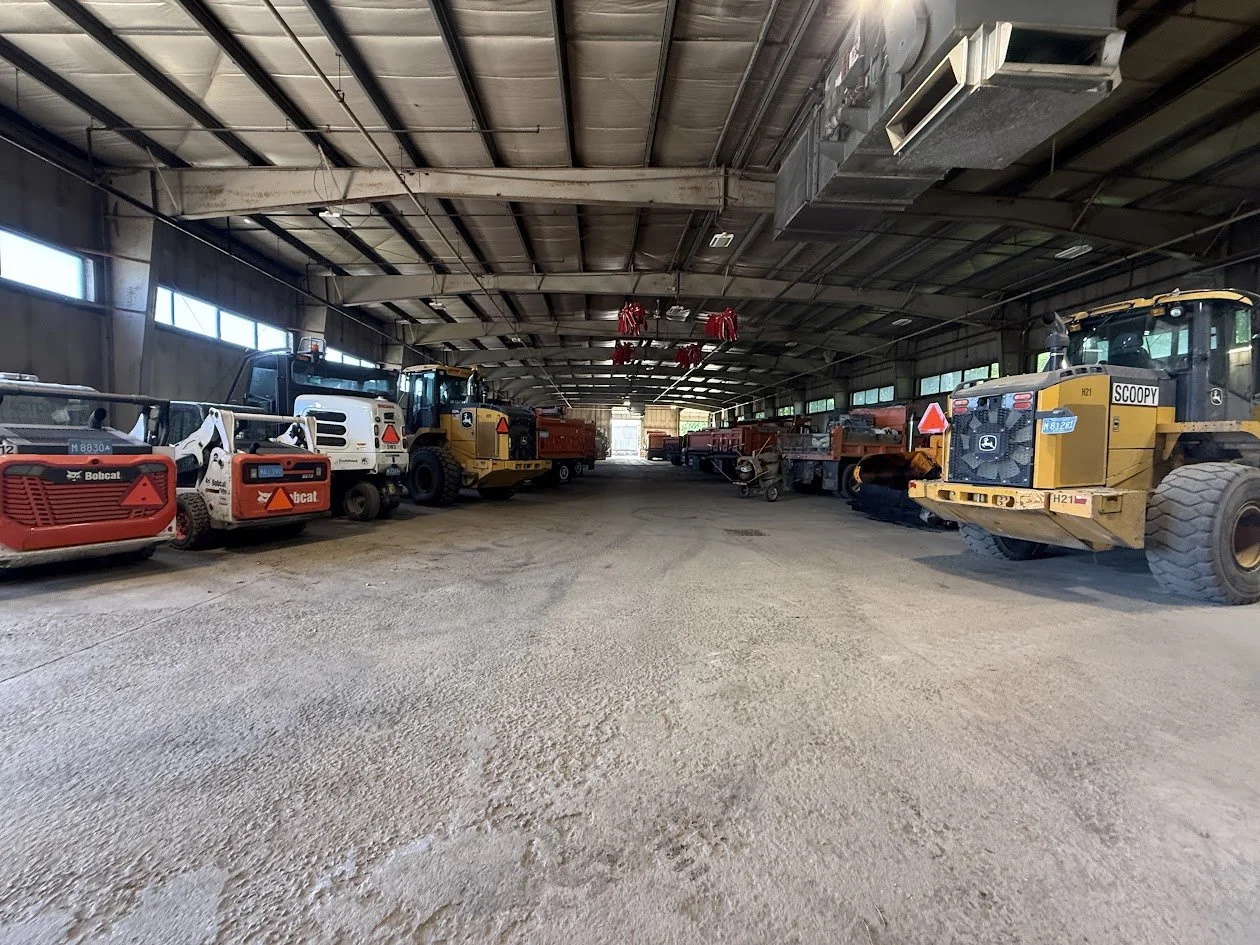
Front-end loaders, Bobcats, dump trucks, and other vehicles line the equipment bay at the Reading DPW. Photo by Taylor Gregory.
The water bay showcased some of the department’s resourcefulness. When hydrant parts became hard to source, DPW staff created the molds and welded the parts themselves. And now the Town has two hydrant identifiers for every hydrant in Reading. Staff also walked the groups through what it takes to fix a water main break: shutting off the water, isolating the leak, and completing the repair, a process that takes about six hours. This past winter brought roughly 30 water main breaks due to frost, and crews located them by breaking the Town into quadrants and listening for leaks.
The tour continued through the highway bay, the sign room, and the survey bay. An equipment bay houses two vacuum trucks (generally one for sewers and one for drains), occasionally requested by the Wakefield DPW for assistance, along with street sweepers, dump trucks, front-end loaders, excavators, and other large pieces of equipment.
Outdoors, the group saw the salt shed, exterior containers for various types of recycling, and exterior work that provided additional on-site storage.
Pride in the work
One thing was clear from the tour: the DPW staff care about the work they do for the community and take great pride in keeping the Town running and staying ahead of potential issues. Staff discussed their ability to create and maintain infrastructure, like the hydrant markers that would otherwise be costly or difficult to source from a manufacturer. And during the High Street renovation project, crews identified a water main in poor condition and replaced it as part of other site work, avoiding a potentially costly emergency break further down the road.
So much of what the DPW does is work most residents never see - the repairs made overnight, the parts fabricated in-house, the problems caught and fixed before they become emergencies. Whether it’s visible or invisible, and whether it’s noticed or not, that steady, behind-the-scenes effort is what keeps Reading running day in and day out. Thank you to the entire DPW staff for all that you do for this community.
