From casts to clearance: Levi Emmanuel’s road to the track
RMHS senior Levi Emmanuel’s journey from clubfoot to high jump
(7-minute read)
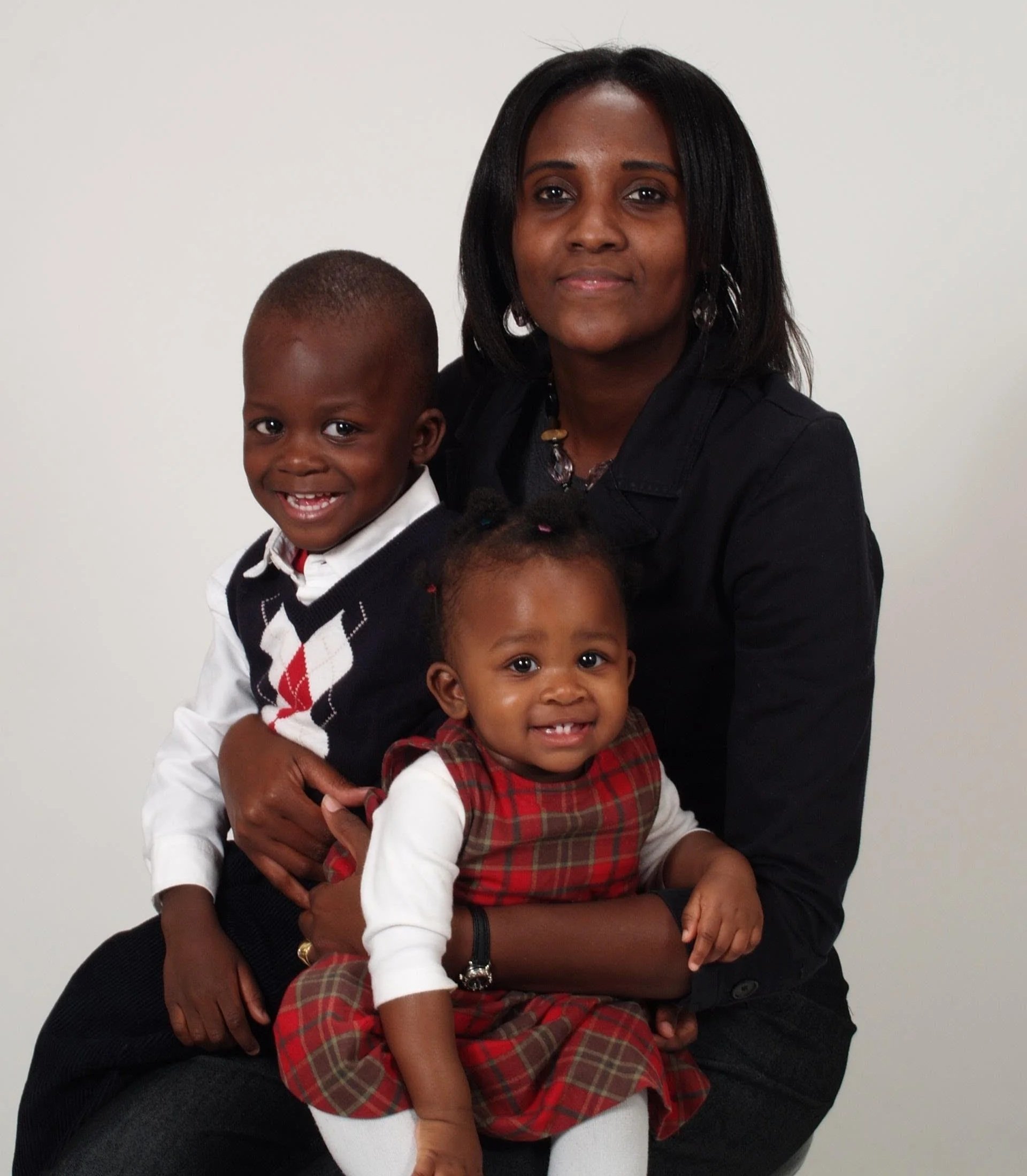
Miriam Katenda with a young Levi and baby Lydia. Miriam raised both children as a single mother while managing years of Levi's medical care and founding a non-profit organization. Photo provided by Miriam Katenda.
Most high jumpers spend years training before their first competition. Levi Emmanuel has been doing it for a little over a month.
The Reading Memorial High School senior cleared 5’4” on his first attempt at high jump this past April, a jump that turned heads and earned him a spot on the track and field team. What made it even more remarkable was what it took to get there: a club foot diagnosis at birth, years of surgeries, casts, braces, and corrective shoes, two years of school in Uganda, and a mother who refused to accept the limits a doctor once placed on her son’s body.
Levi’s story is one of unlikely athletic emergency, deep faith, and a young man finding his footing, literally and figuratively, as he approaches graduation.
Born fighting
Levi was born at Salem Hospital with a clubfoot - his right ankle and foot bent out of position. Before his mother, Miriam Katenda, could bring him home, doctors recommended breaking and resetting the leg, and Levi left the hospital in a cast at just days old.
What followed were years of medical appointments, repeat castings, corrective surgeries, special orthopedic shoes with a connecting bar worn around the clock, and nightly braces. His right leg grew smaller and shorter than his left; his foot was smaller. Doctors told Miriam plainly: his legs would never function or look like those of a typical person. He should expect weakness on his right side throughout his life.
“I remember responding to the doctor that I’m a God-fearing woman, and that I have faith to believe that God can turn things around.”
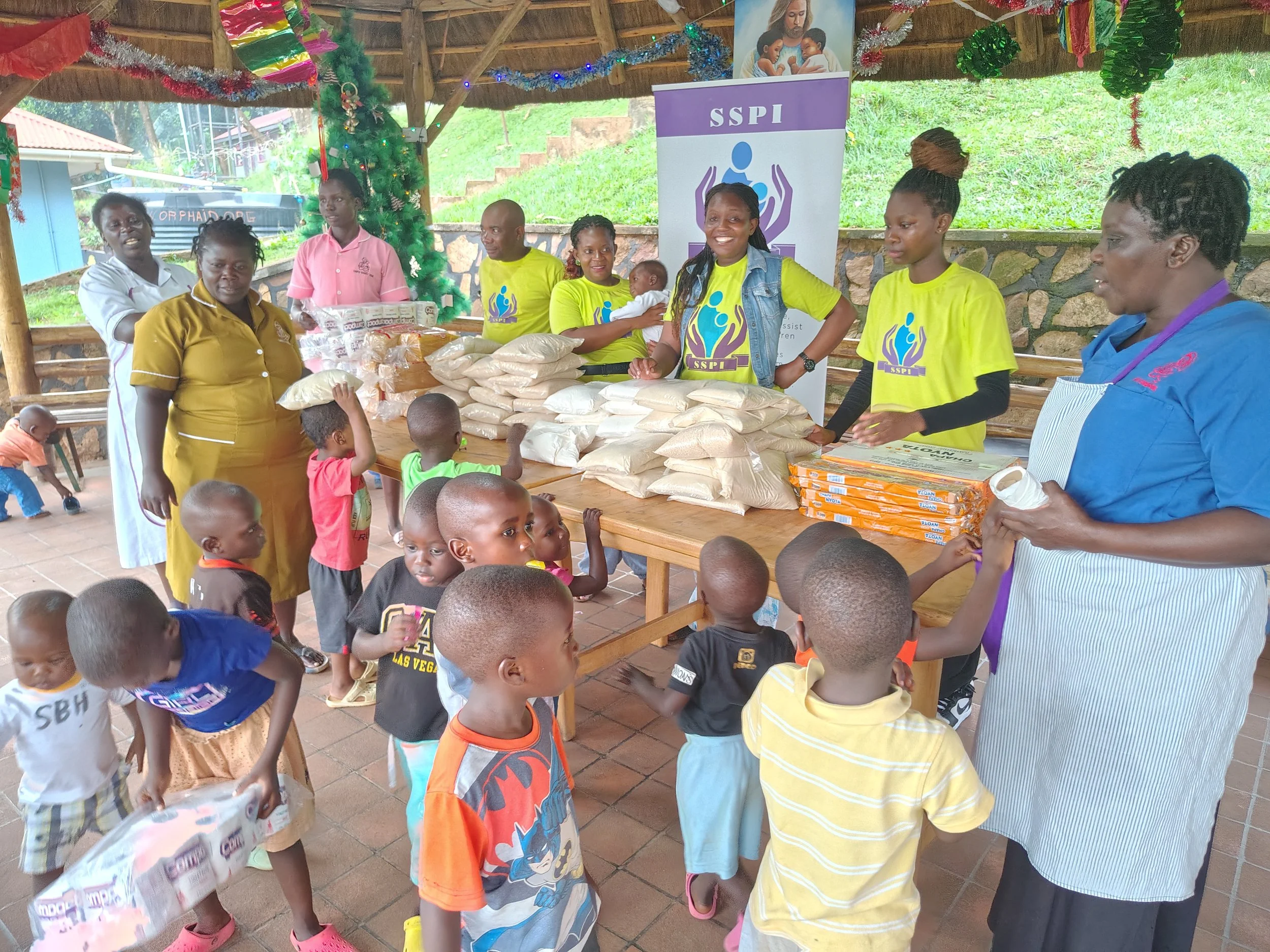
SSPI volunteers distribute food and supplies to families in Uganda. During the COVID-19 pandemic, a single SSPI fundraising effort provided food packages to 510 families. Photo provided by Miriam Katenda.
Miriam, a single mother raising Levi and his younger sister, Lydia, pushed back on that prognosis every day. She kept up with exercises and stretching through his childhood, kept the appointments, kept the faith.
A detour through Uganda
After completing middle school at Coolidge and beginning his freshman year at RMHS, Levi made an unexpected move; he and his sister spent two years attending school in Uganda, returning to Reading just last year.
The decision, Miriam explained, has nothing to do with academics. It was about character. “I put value on what I wanted them to acquire in Africa,” she said. “The goal was to build character, learning values that could help my children to be better citizens, becoming difference makers, and looking at the life around them with a world perspective in mind.”
Growing up in Reading, her children knew difficulty. In Uganda, they encountered a different scale of hardship - poverty, scarcity, and resilience in ways that reshaped how they saw the world and what they had. For Levi, the two years also brought both athletic and creative growth. He played basketball for his school team, and on the creative side, he taught himself guitar and became lead soul guitarist for his school in Uganda, a skill he developed entirely on his own.
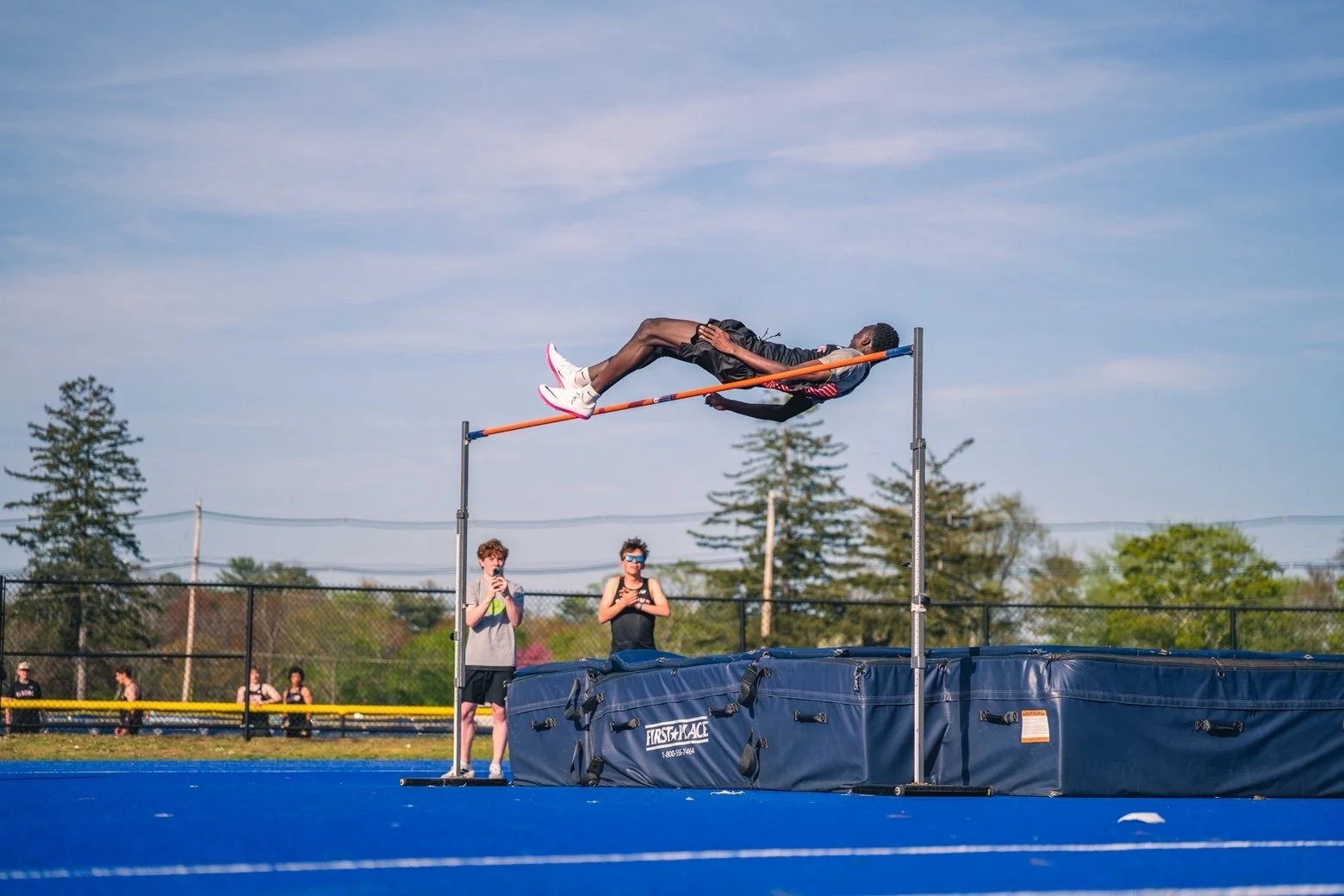
Levi Emmanuel competing for the RMHS track & field team. Photo provided by Miriam Katenda.
Finding his jump
When Levi came back to Reading, he tried out for basketball, and didn’t make the team. He was offered the role of team manager. It was a disappointment for a time; he wondered if his dream of competing in college athletics had slipped away.
Then, one afternoon in April, he tried jumping. Just like that, almost casually, he cleared 5’4” on his first attempt.
Word spread quickly. Coaches and teammates who watched him that day encouraged him to join track and field. RMHS Coach Carl McFadden was instrumental in motivating Levi to commit to the event and even purchasing the spikes he now competes in. In his very first official competition with the RMHS team, Levi cleared 5’8”. He has since set a personal best of 6’4”.
“He easily jumped 5’4” for the first time. From th[at] day, those who saw him jumping motivated him to join track and field.”
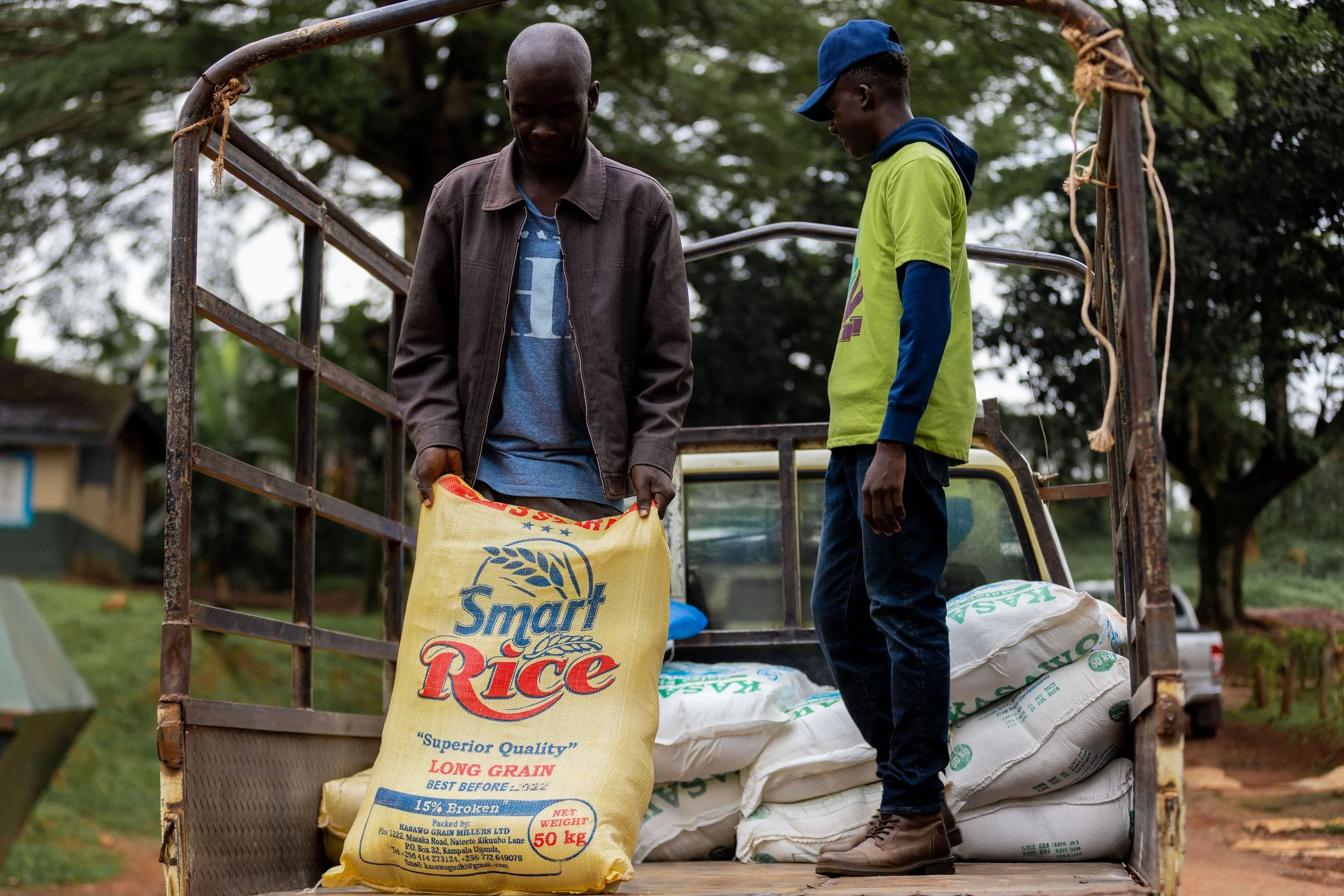
Levi works with another SSPI volunteer to unload large sacks of rice for distribution to single mothers and widows in Uganda. Photo provided by Miriam Katenda.
The right leg that doctors once said would be weaker and smaller, the leg that spent its earliest years in casts and braces, the leg that Miriam prayed over for nearly two decades, was now propelling her son over the bar.
More than an athlete
Levi’s story doesn’t exist in isolation. It’s woven into the fabric of a family that has built its identity around service.
Behind the athlete is a mother who has spent decades not only caring for her son but also channeling the hardship in her own life into something larger. Miriam Katenda is the founder of Supporting Single Parents International (SSPI), a Reading-based non-profit that serves families both locally and in Uganda. The organization runs entirely on volunteer labor and donated resources; no one at SSPI is paid. Every dollar and every hour go directly into the people it serves.
“Whenever I see a single mother, I always have compassion for them, because I know and understand their pain.”
The organization was born from personal experience. When Levi was one and a half years old, Miriam was pregnant with Lydia and found herself alone - no partner, no babysitter, managing Levi’s medical appointments while working and preparing for a second child. She drove herself to the hospital to give birth; she was alone in the delivery room. The nurses and doctors, moved by her situation, helped her take the photos and video as Lydia was born.
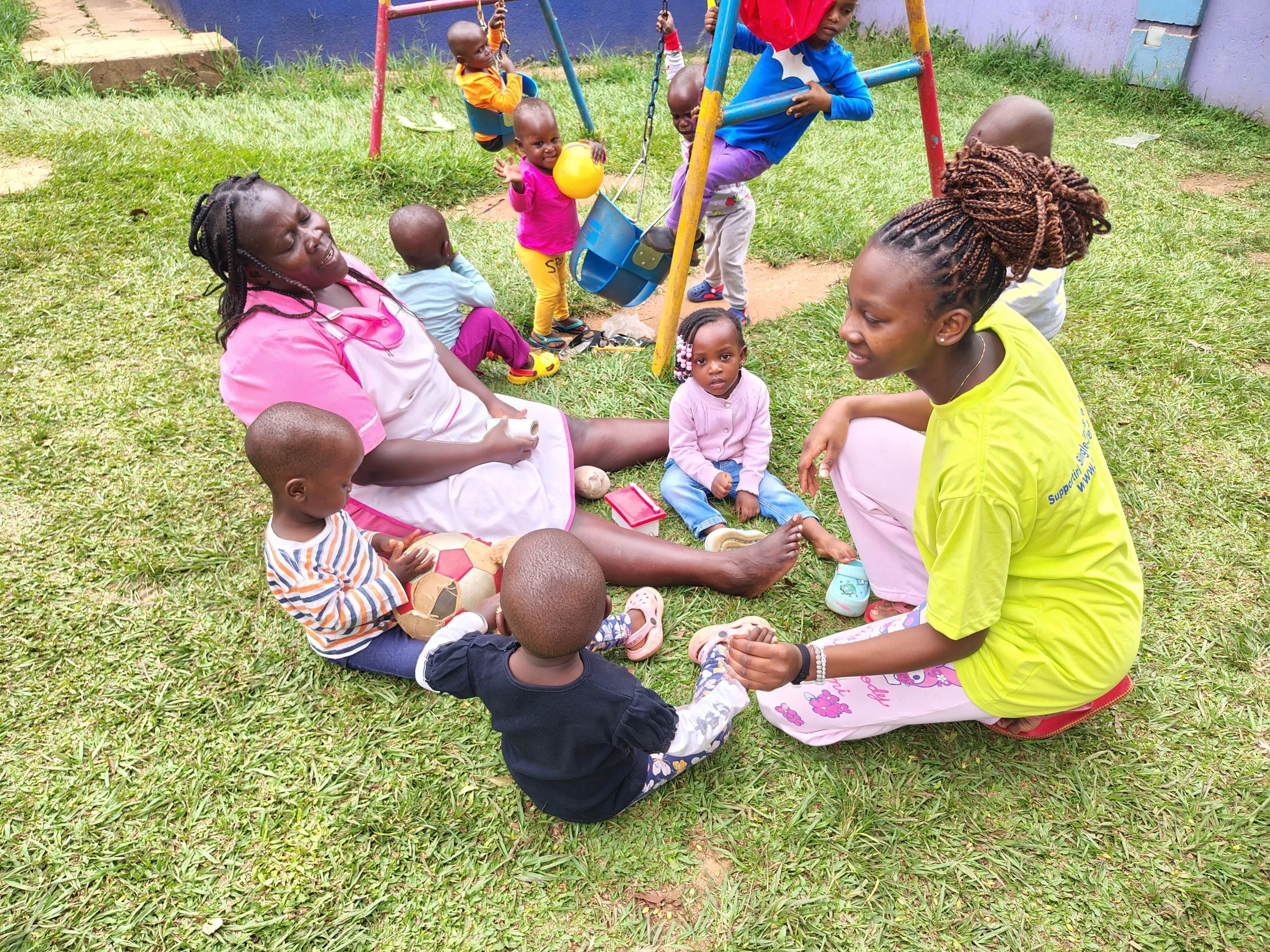
Lydia Esther plays with toddlers in the yards at a Ugandan orphanage. Photo provided by Miriam Katenda.
“Life as a single mother has been a hard journey,” she said. “I have seen God help me out each day.” That lived experience became the foundation of SSPI.
SSPI programs and how you can help
SSPI currently runs several programs across the US and Uganda. Locally, the Period Matters & Hands of Love program collects and distributes feminine hygiene products, deodorant, lotion, toothpaste, and clothing to homeless women in downtown Boston and low-income families in the area. Miriam is clear about why this matters: feminine hygiene products are not covered by food stamps, and girls who receive them during school hours are left without them during the summer, on weekends, and during school breaks.
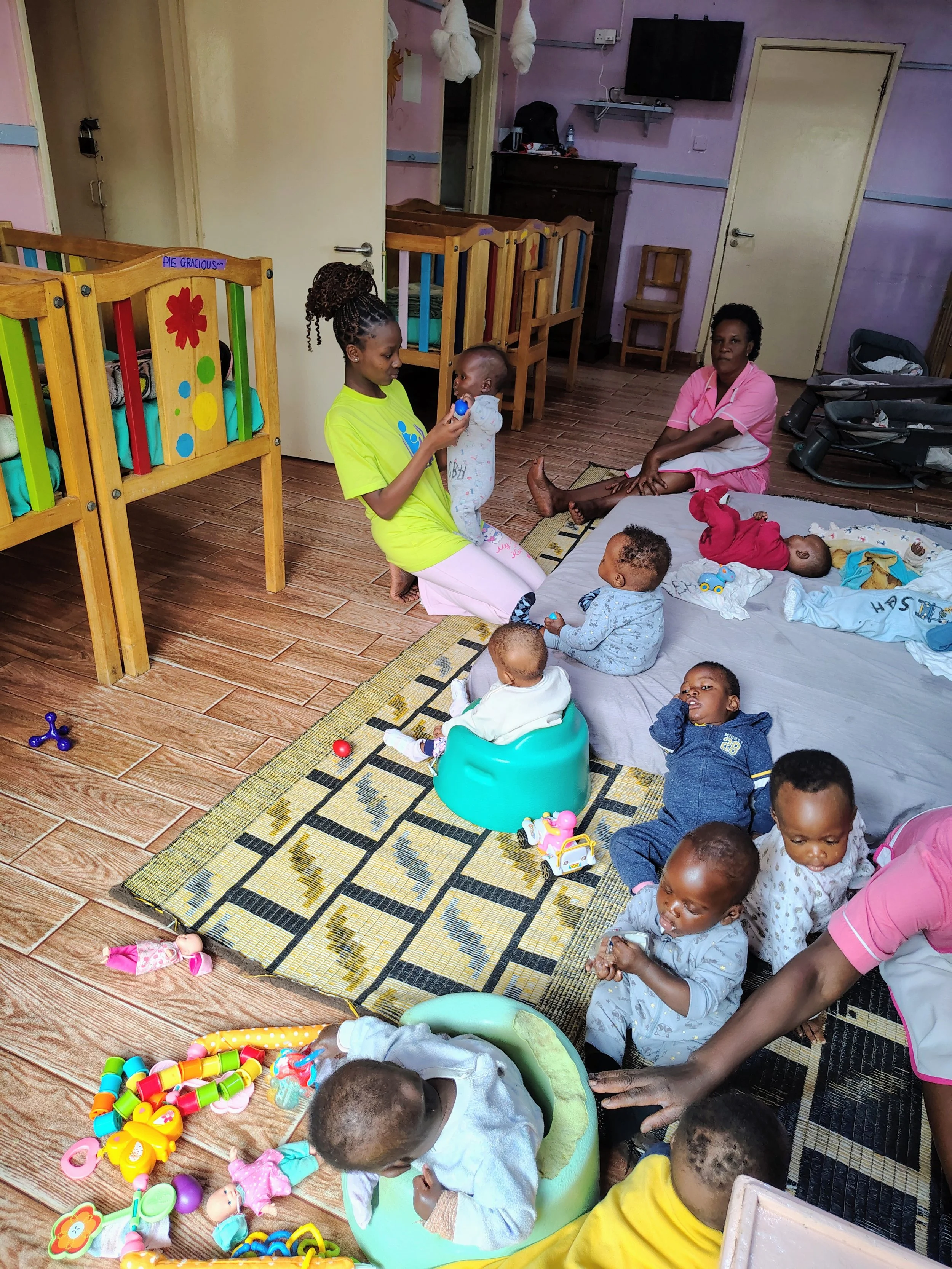
Inside the nursery: Lydia with infants at a Ugandan orphanage during her two years abroad. Photo provided by Miriam Katenda.
In Uganda, SSPI’s Bedding Program delivers mattresses, bedsheets, and mosquito nets to single mothers and widows living in poverty, many of whom were sleeping on bare floors with no protection from malaria-carrying mosquitoes. Each Christmas, SSPI also provides food packages to single mothers and widows; during the pandemic, one fundraising effort fed 510 families, many of whom Miriam said had been in deep despair. Looking ahead, SSPI plans to launch a vocational skills training program to teach baking, sewing, and other trades to young mothers, with space already secured and two donated sewing machines ready to go. Funding is the only thing standing in the way.
Levi and Lydia have grown up serving alongside their mother in all these efforts. Lydia spent time in Uganda advocating for orphaned children and is working to provide diapers and mosquito nets to babies in local orphanages.

Scan the QR code to donate to SSPI.
The Reading community can support SSPI by donating hygiene products, gently used clothing and shoes, funding for bedding and food programs, or sewing machines and supplies. Every contribution goes directly to the people SSPI serves. No overhead, no salaries.
Learn more and get involved at SSPICares.org.
What comes next
As Levi graduates tonight, his sights are set on competing at the university level. Community college, while free, doesn’t offer the level of athletic development he needs to grow as a high jumper. His mother is candid about financial barriers, and a four-year university is currently out of reach without athletic scholarship support.
He hasn’t received any offers yet, but he's only been doing this for a few weeks.
For Miriam, watching her son clear the bar carries a meaning that goes far beyond track and field. The sleepless nights, the hospital visits, the casts, the prayers, the years of not knowing what his body would or wouldn’t be able to do. All of it led here.
“The sleepless nights and hard work to nurse and care for the clubfoot leg had paid off. I thank God.”
Levi Emmanuel started his athletic journey on the track one month ago. If the first month is any indication, he’s just getting started.
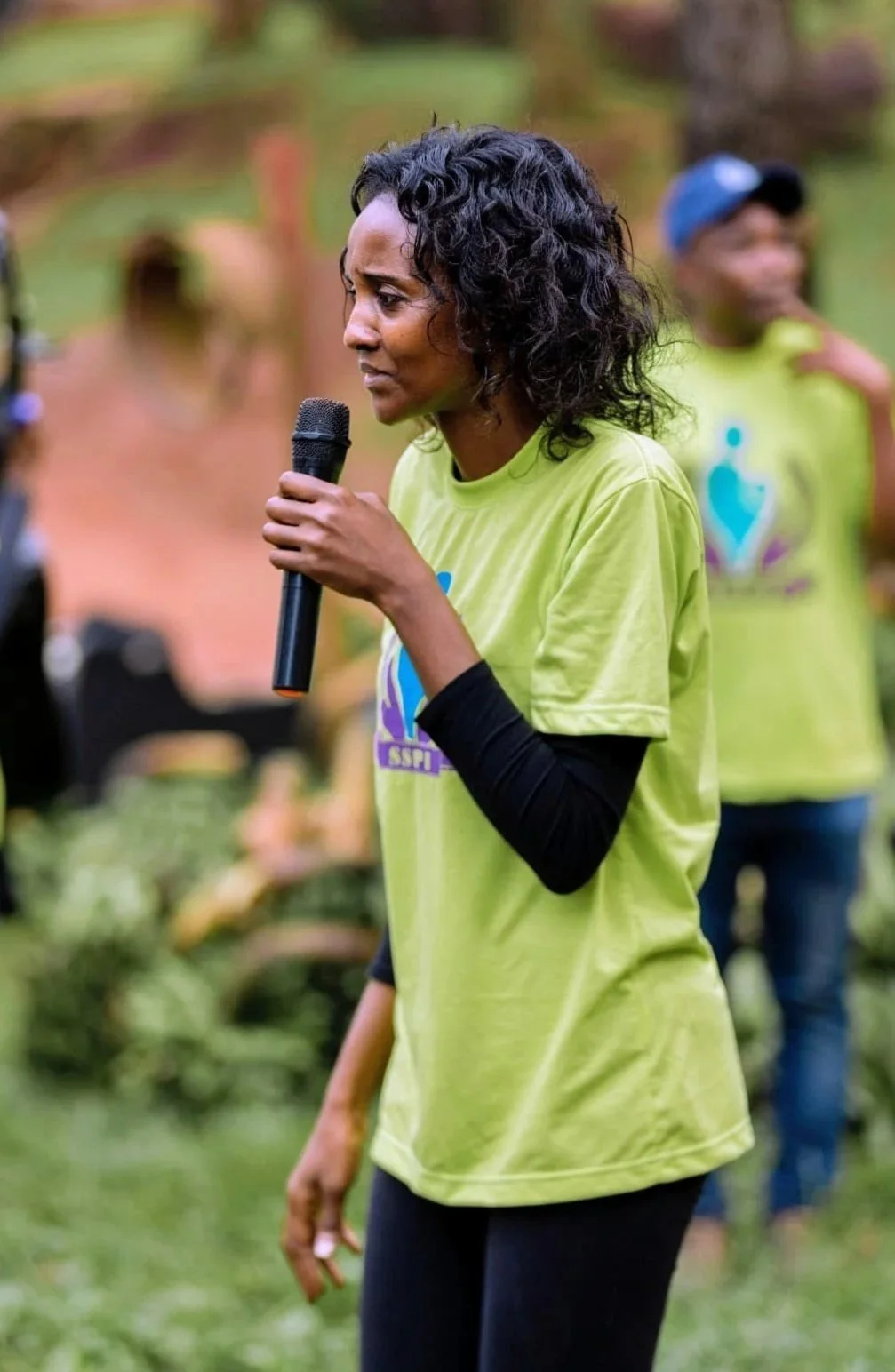
Miriam addresses community members at an event. The organization runs programs serving single mothers in the US and Uganda. Photo provided by Miriam Katenda.
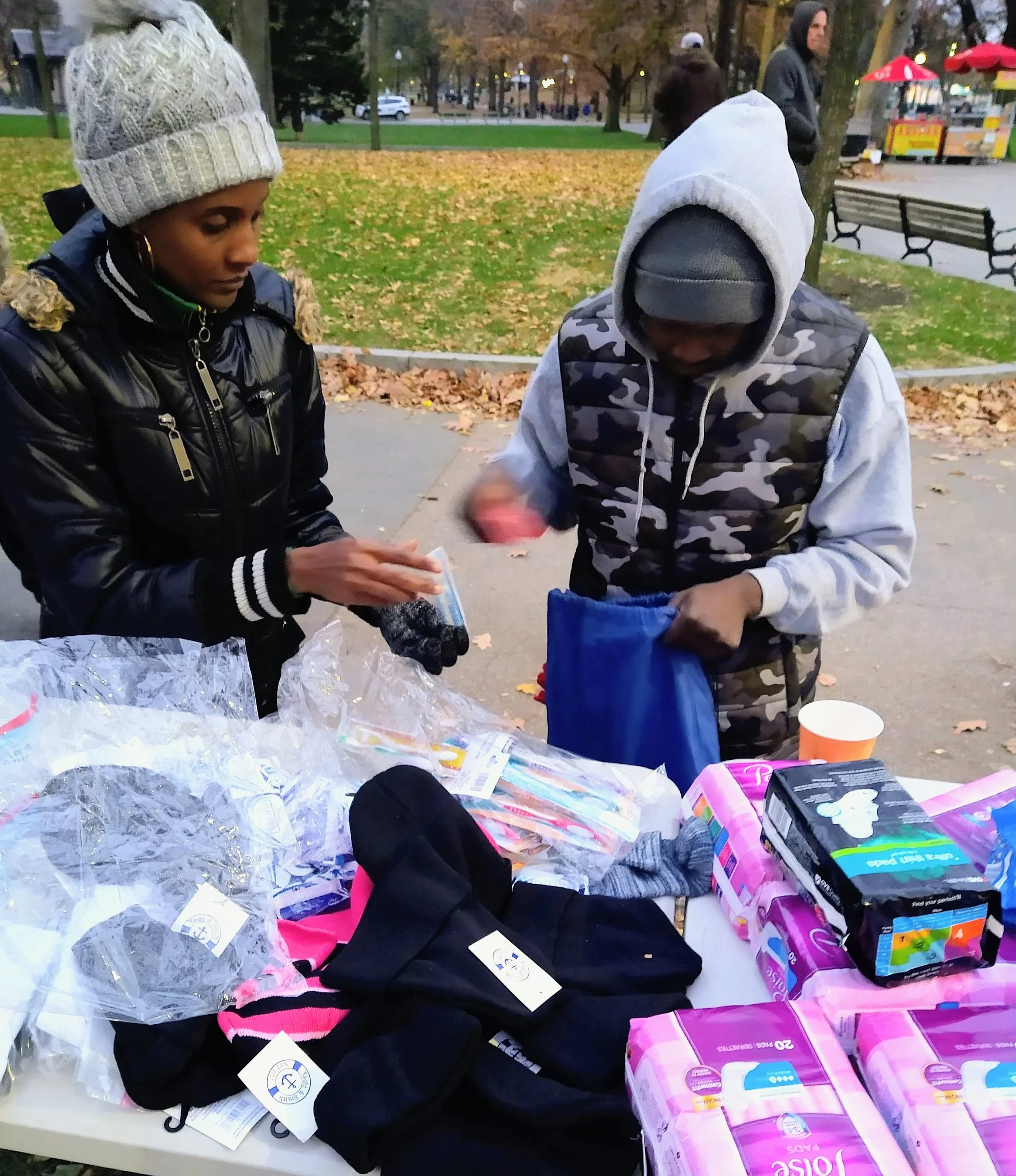
Miriam and Levi prepare hygiene packages for distribution to homeless women in downtown Boston as part of SSPI’s Period Matters & Hands of Love program. Photo provided by Miriam Katenda.
