Hands joined on the Common: A Wampanoag celebration comes to Reading
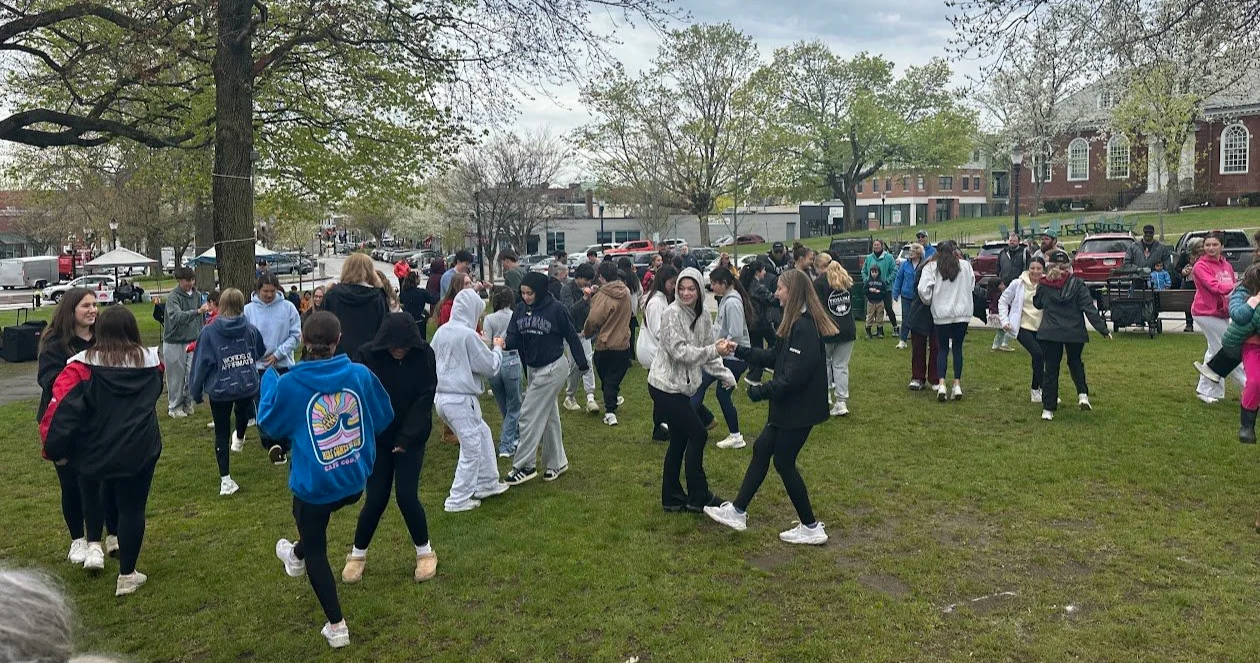
Participants paired up for the Mosquito Dance on the Town Common. Photo by Laura Wilson.
On a sun-dried afternoon, children and elders alike joined hands and moved together, a reminder that culture is something lived, not just remembered.
(5-minute read)
The Reading Common was filled with the sound of drums and chanting as five members of the Wampanoag Singers & Dancers stepped onto the grass and dressed in animal-hide moccasins, fringed pants, headdresses with striking feathers, and tunics adorned with bright embroidery. What followed was not a performance so much as an invitation - to move, to learn, and to belong.
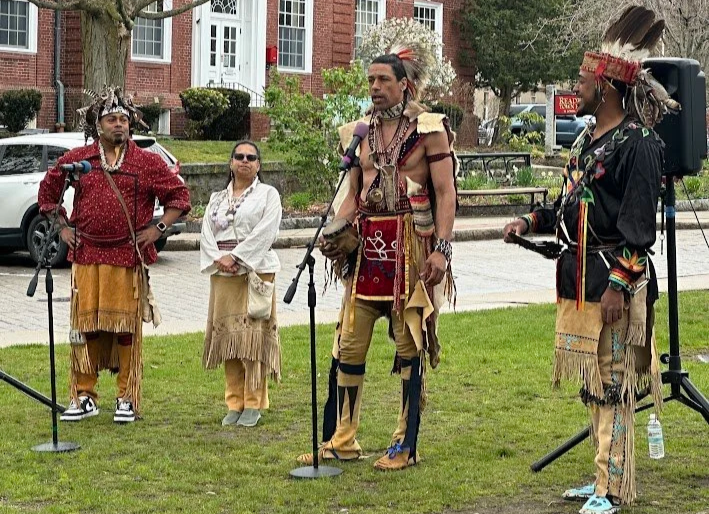
Members of the Wampanoag Singers & Dancers address the crowd on the Common. Pictured (left to right): Troy, Michelle St. John, Annawon Weeden, and Attaquin Weeden. Photo by Laura Wilson.
The event was introduced by Dr. Sarah Hardy, Assistant Superintendent for Reading Public Schools, who offered thanks to the Reading Public Library, Office of Equity and Social Justice, and Reading Cooperative Bank for their generous support in the day’s event. She framed the gathering with a simple but powerful idea: that learning about other cultures is how we keep from dehumanizing one another.
The performers introduced themselves first in their indigenous language, then in English. Attaquin Weeden, Jim Peters, Michelle St. John, Troy, and Annawon Weeden each brought their voice, instrument, and presence to the Common. Rattles and hand drums wove together with song as the group walked the perimeter of the gathered crowd before drawing everyone into the circle.
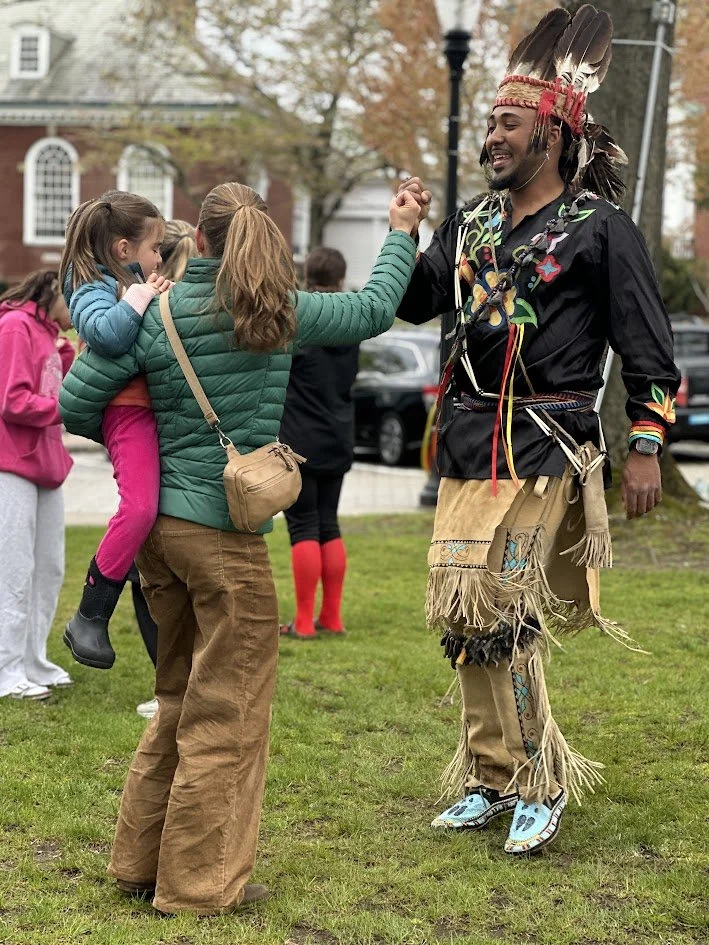
Attaquin Weeden dances hand in hand with a mom and her young daughter during one of the participatory dances. Photo by Laura Wilson.
From circle to celebration
Annawon Weeden anchored much of the narrative, speaking about the geography of eastern Massachusetts - the rocky hills of Blue Hills, Beacon Hill, and Bunker Hill - and the way the land’s transformation, including the filling of Back Bay, made it harder for indigenous people to maintain their identity with place. He referenced the missionary Roger Williams as a rare example of someone who asked questions rather than imposed beliefs.
The dances were both playful and purposeful. The Mosquito Dance, performed with partners joined at the pinky finger, involved kicking gently back and forth - keeping the mosquitoes at bay through movement and laughter. The Alligator Dance had pairs walking side by side, holding hands, and kicking softly into the air as the large circle slowly dissolved into a joyful mass of movement. When asked to pair up, children of all ages and combinations did so without hesitation.
Questions from the crowd
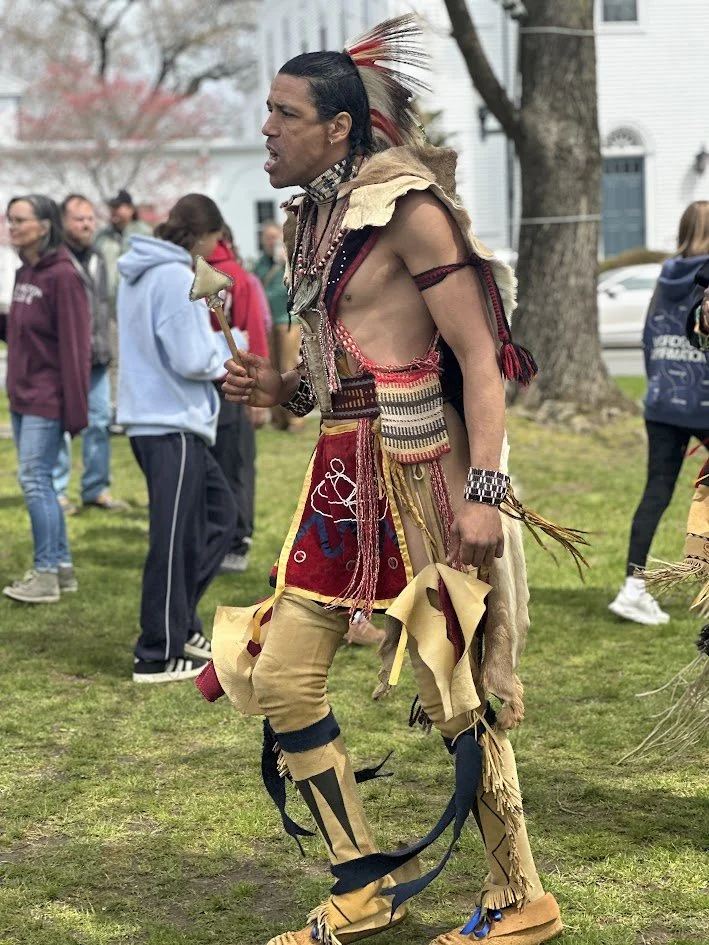
Annawon Weeden leads the group through the Common in full ragalia, his voice and movement anchoring the afternoon’s songs and storytelling. Photo by Laura Wilson.
After the dances, audience members asked questions that ranged from the personal to the political. When asked why they do this work, the performers spoke of community and education. On resilience, they pointed to their ongoing presence, roughly 200 in community today, and their commitment to teaching from the past while protecting the land. The Mashpee Wampanoag Tribe maintains an active presence and ongoing cultural programs for those who want to learn more.
On the question of what people can do to help, the answers were candid. “Land acknowledgment has become our identity, when we are so much more,” one performer noted, calling for actions that go beyond symbolic gestures. Another performer spoke of serving on the state commission reviewing the Massachusetts State Seal, a complicated, years-long process, and the difficulty of translating awareness into meaningful change.
Schools looking to engage respectfully were offered a concrete answer: invite indigenous artists and performers in. Support local culture before traveling to distant reservations. Recognize that indigenous people are present-tense, not just historical. “We exist,” said one performer simply.
The stomp dance sends everyone home
The event closed with the Stomp Dance - a balance of male and female energy, with an open invitation for anyone with something to shake to join in. The line of participation followed the chanting leader across the length and width of the common. Filling the afternoon with rhythm and motion before it was done.
It was the kind of event that lands differently than a lecture. Bodies moved. Strangers held hands. And for a while, an ordinary patch of grass in a Massachusetts town, something important was kept alive.
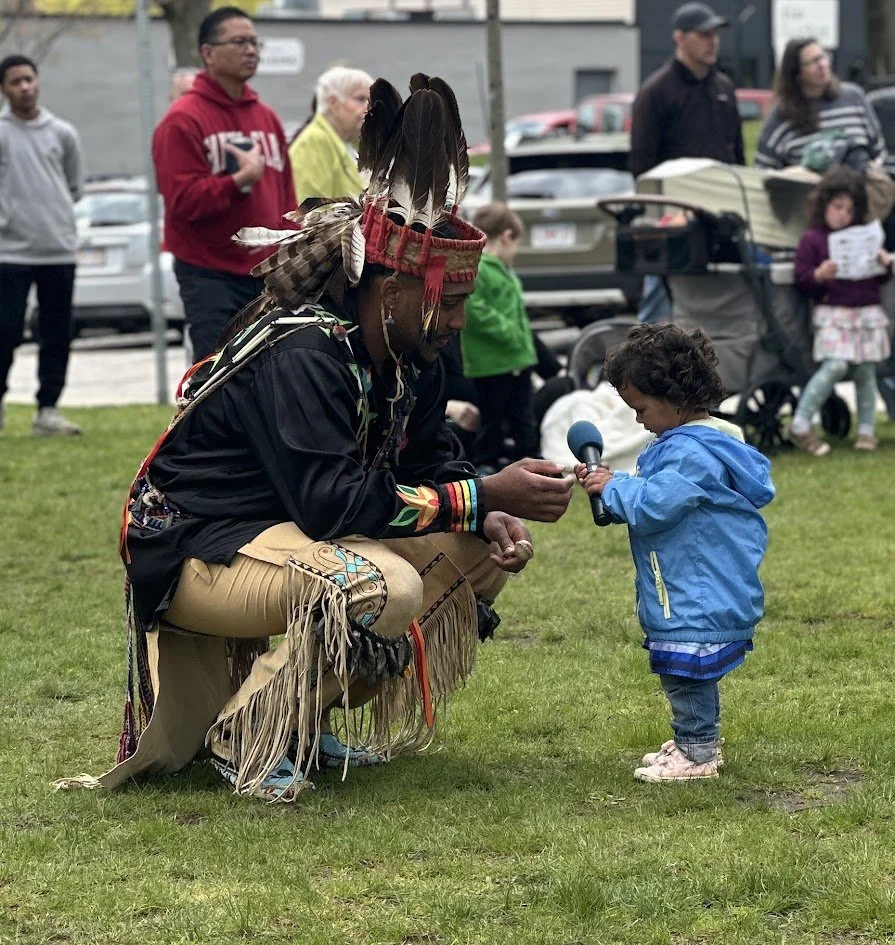
A quiet moment between Attaquin and his child. Photo by Laura Wilson.
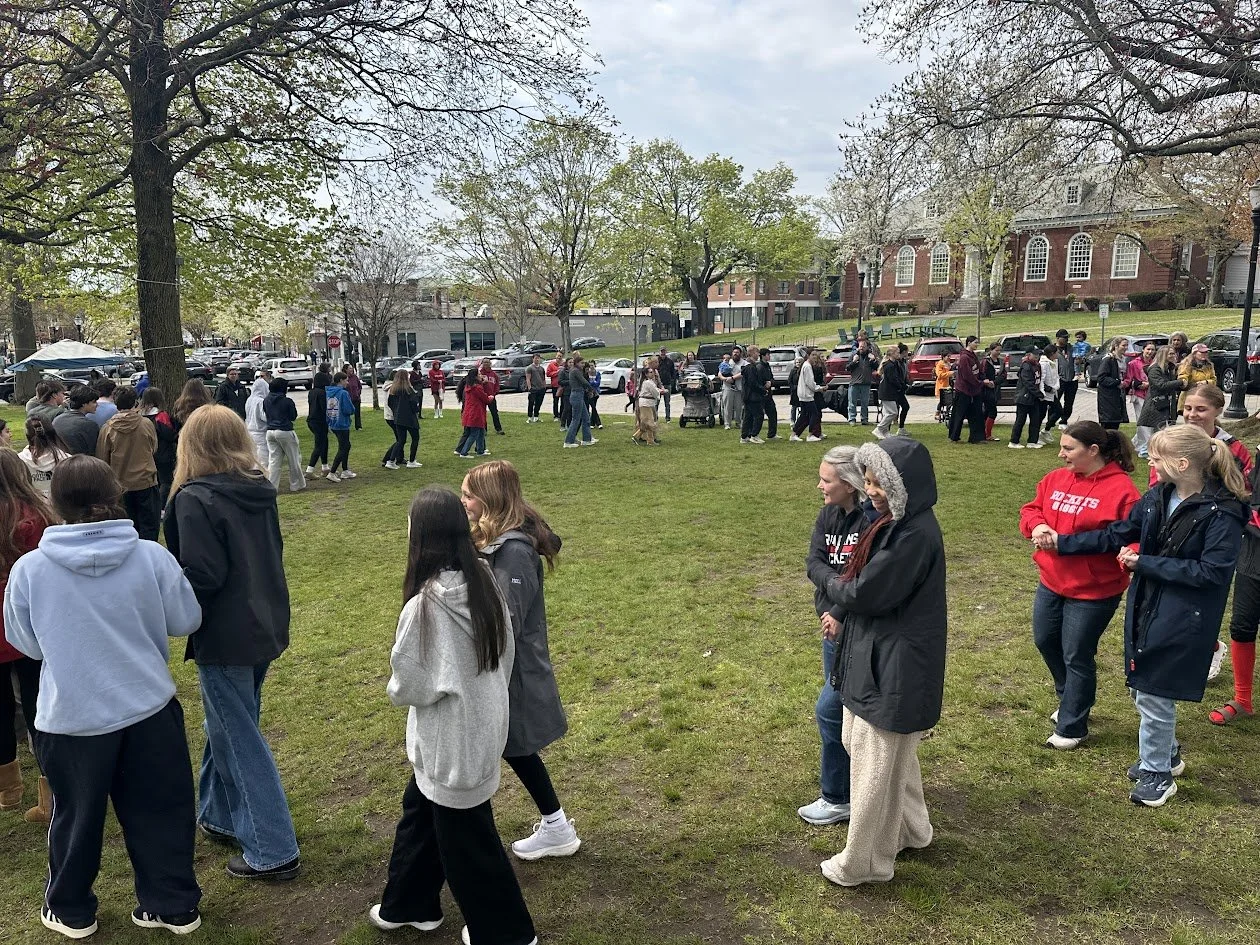
The Common fills with movement as dozens of community members join the Alligator Dance, pairing up and circling the green together. Photo by Laura Wilson.
