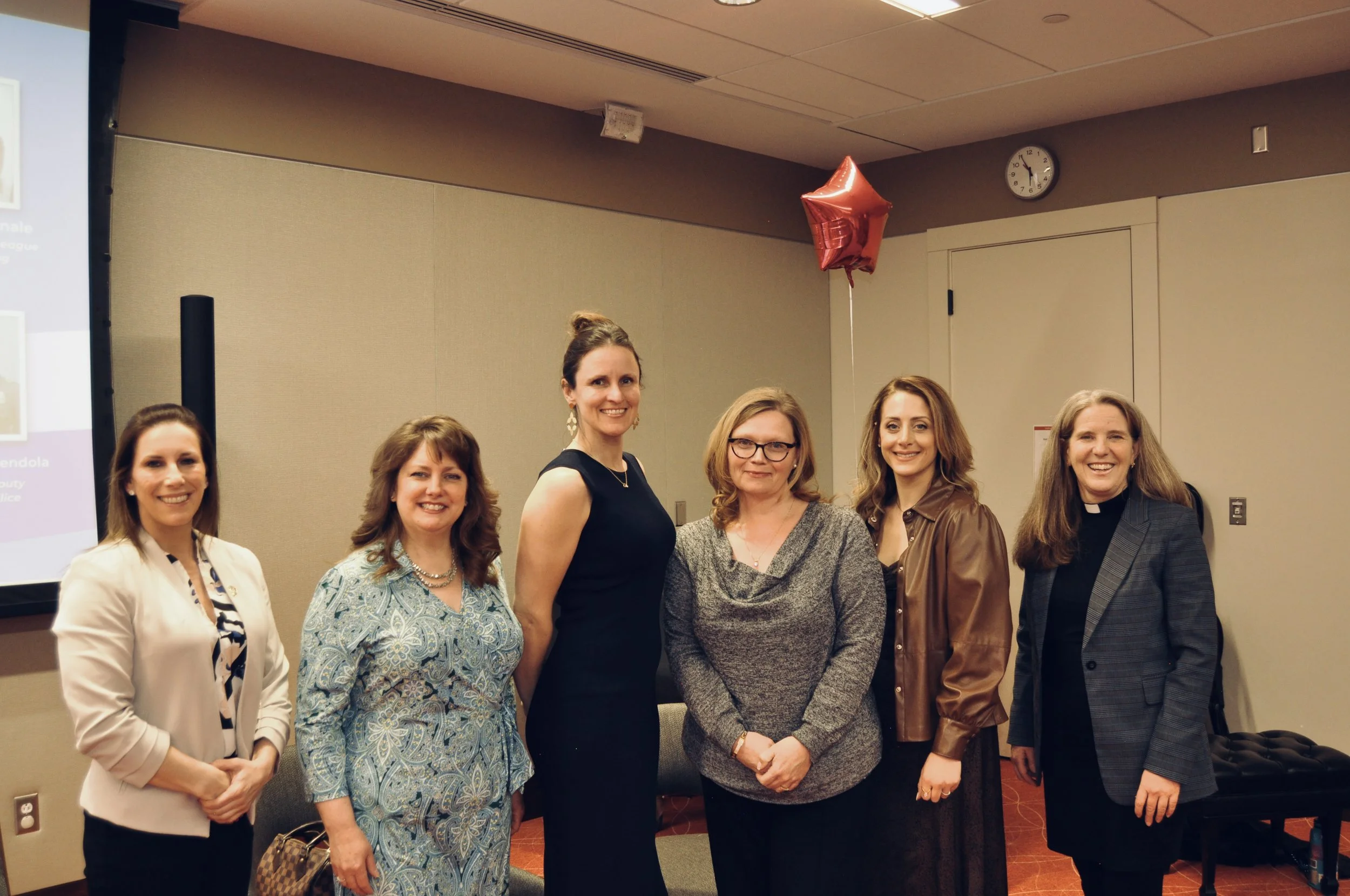
Event panelists gather for a group photo, representing a range of local organizations and leadership roles. Pictured (left to right): Deputy Chief Christine Amendola, Liz Whitelam, Sarah Samuels, Jayne Wellman, Ashley Spinale, and Pastor Mary Curlew. Photo by Aaron Soto.
(5-6 minute read)
In recognition of Women’s History Month, a panel of local leaders gathered at the Reading Public Library on Thursday, March 26, 2026, to share their experiences.
Moderated by the Director of Equity and Social Justice, Albert Pless (he/him), the event brought together approximately 60 attendees and featured a diverse panel of women leaders from across public service, business, finance, and community organizations.
Key takeaways
Leadership is deeply personal - and often shaped by adversity and persistence
Panelists shared stories of overcoming doubt, barriers, and unexpected career paths.
Mentorship and representation play a critical role in leadership development
Many panelists credited both formal and informal mentors, including family members and colleagues, for shaping their journeys.
Balancing confidence and compassion remains a central leadership challenge
Panelists highlighted the need to be both assertive and empathetic, particularly as women in leadership roles.
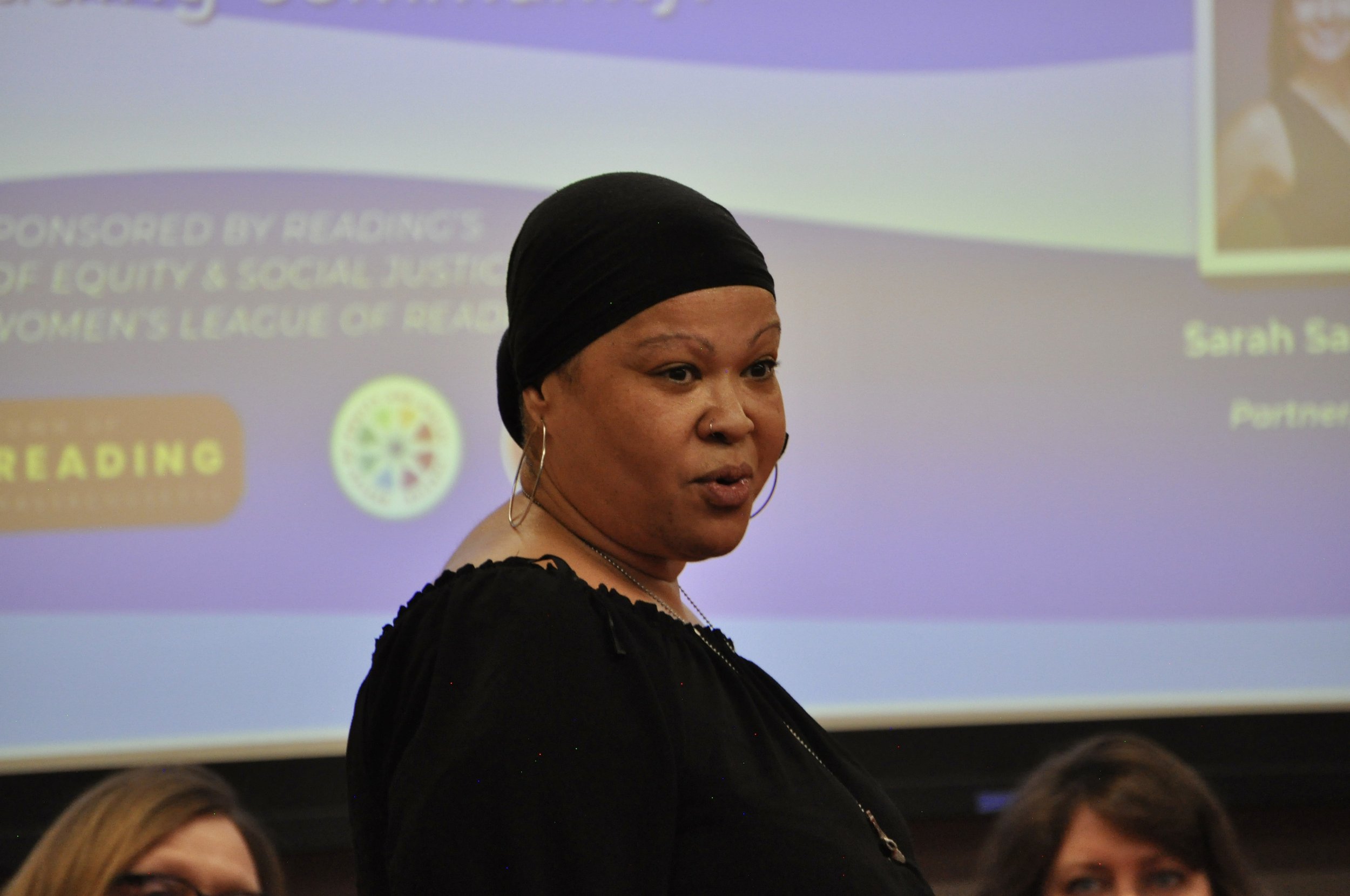
Poet laureate Michelle Richardson opened the evening with a powerful performance. Photo by Aaron Soto.
Opening reflections set the tone
The evening began with remarks by Pless, who highlighted the importance of Women’s History Month and the role women play in shaping communities.
A spoken word performance by Lynn’s first poet laureate, Michelle “LaPoetica” Richardson (she/her), emphasized themes of resiliency, unity, and empowerment - calling on women to support one another, reject division, and lead with compassion.
Panelists bring diverse experience
The discussion featured leaders from a wide range of professional and community backgrounds:
Deputy Chief of Police Christine Amendola (she/her) has over 27 years of law enforcement experience and has held numerous leadership positions throughout her career. She spoke about rising through the ranks in a traditionally male-dominated field and the importance of leading with both strength and empathy.
Pastor Mary Curlew (she/her), Rector of the Episcopal Church of the Good Shepherd, is also a licensed independent clinical social worker specializing in trauma-informed care for individuals and communities. She reflected on her path to ministry and the importance of representation and the importance of using leadership to create opportunity for others.
Sarah Samuels (she/her), a Partner at NEPC, oversees asset allocation, portfolio construction, OCIO, and investment manager selection across private markets, hedge funds, and public markets. She discussed navigating a field with limited representation and the importance of using leadership to create opportunities for others.
Alyssa Spinale (she/her), a Nurse Practitioner and Vice President of the Women’s League of Reading, emphasized community involvement and the importance of giving back locally while balancing professional and personal responsibilities.
Jayne Wellman (she/her), Reading’s first female Town Manager, oversees communications, procurement, community development, and key resident services, including elder services, recreation, and veterans’ programs. She shared her nontraditional path into municipal leadership and the importance of stepping outside one’s comfort zone.
Liz Whitelam (she/her), the owner of Whitelam Books, spoke about opening an independent bookstore in downtown Reading and the role small businesses play in building community connections.
Paths to leadership
Panelists shared varied and often nontraditional journeys into leadership, with many emphasizing that their careers were shaped by unexpected opportunities and moments of risk.
Several described pivotal moments where they chose to step forward despite uncertainty, whether pursuing a new career path, entering leadership roles, or advocating for change within their organization.
The role of mentorship
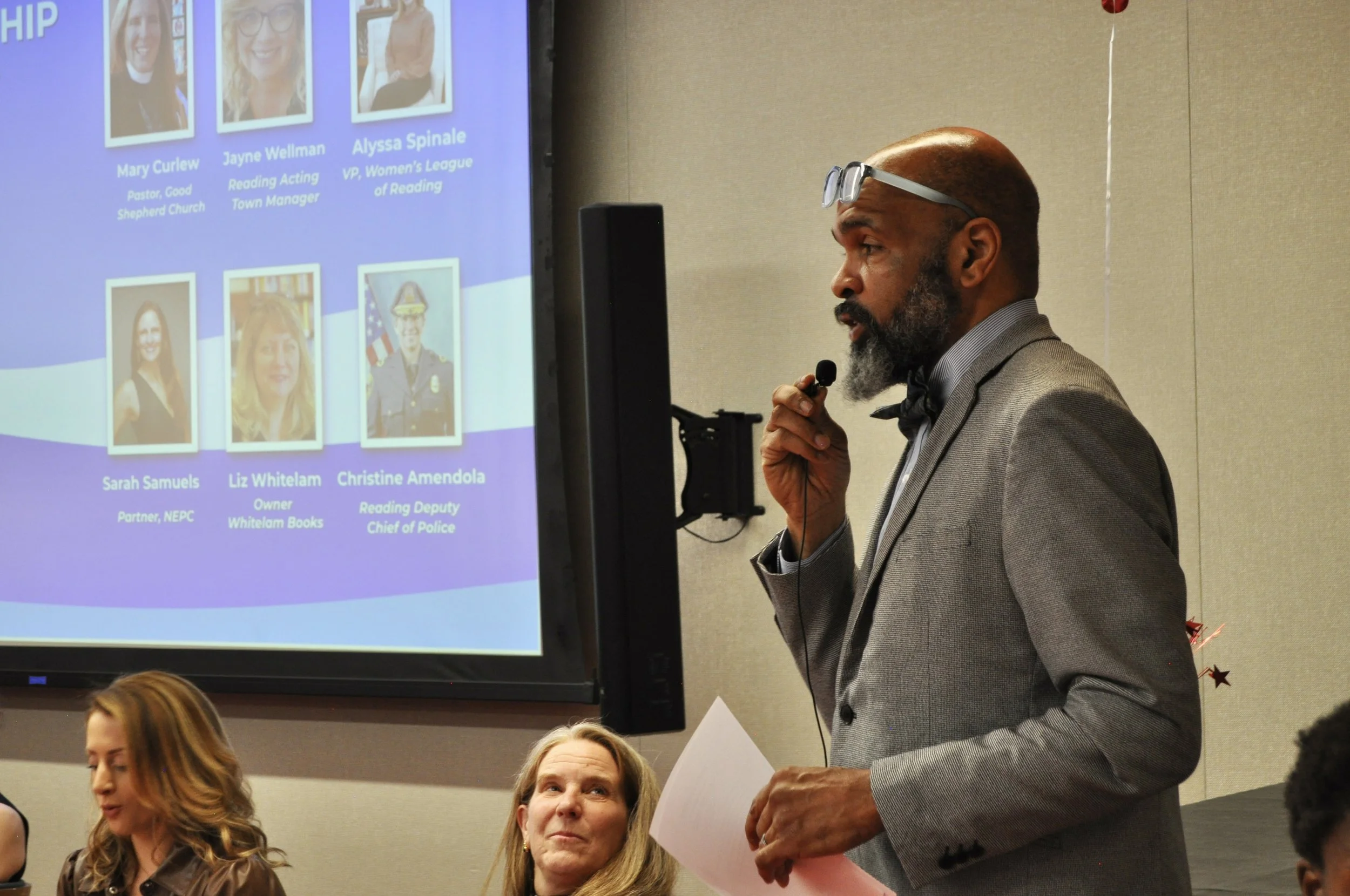
Director of the Office of Equity and Social Justice, Albert Pless, served as moderator and led the discussion, guiding the conversation and engaging panelists throughout the event. Photo by Aaron Soto.
Mentorship emerged as a consistent theme throughout the discussion. Panelists pointed to:
Family members, especially mothers, as early influences
Professional mentors who provided guidance and opportunity
Peer networks and friendships that offered support and perspective
Many emphasized that mentorship does not always come from formal structures, but often from everyday relationships.
Leadership styles: balancing strength and empathy
Panelists described leadership as a balance between confidence and compassion:
Amendola highlighted the importance of situational leadership, shifting between operational decisions and empathy in high-pressure environments.
Wellman emphasized a people-centered, mission-driven approach, focused on supporting individuals while achieving goals.
Whitelam described leadership as empowering others, creating a space for teams to grow and succeed.
Samuels focused on self-awareness and problem-solving, encouraging leadership to understand how others think and approach challenges directly.
Curlew emphasized the balance between assertiveness and compassion, describing leadership as both strong and relational.
Challenges and representation
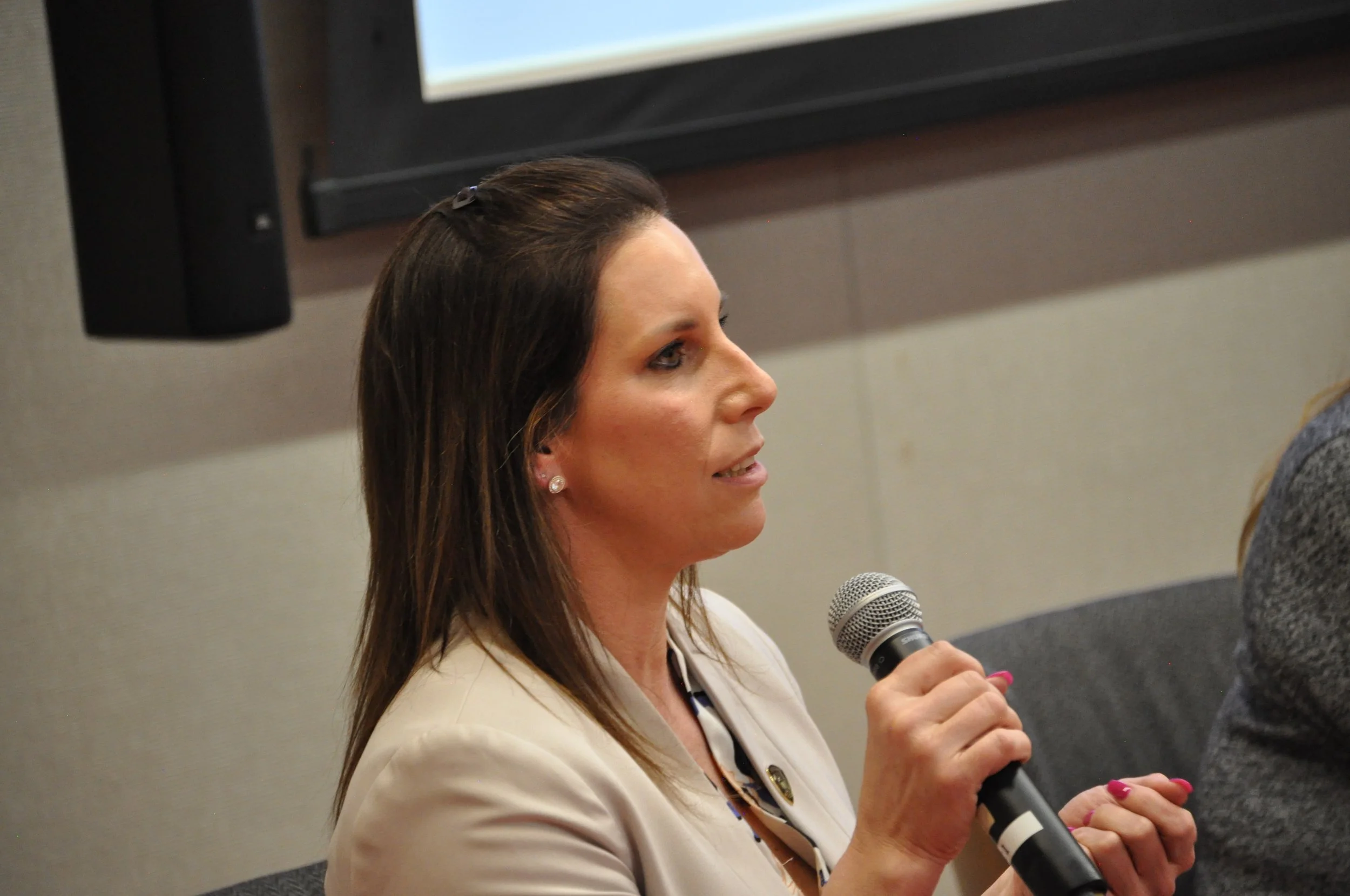
Deputy Chief Christine Amendola responds to a panel question, discussing the role models in her family and among her colleagues. Photo by Aaron Soto.
Panelists spoke candidly about challenges they have faced:
Working in male-dominated fields
Navigating imposter syndrome and self-doubt
Balancing multiple roles across career, family, and community
Facing skepticism or barriers to advancement
While acknowledging progress, panelists noted that representation and opportunity gaps still exist in many fields.
Rethinking leadership
The discussion also explored how leadership could evolve with broader representation and inclusion.
Panelists suggested that increased diversity in leadership could lead to:
More collaborative decision-making
Greater focus on community needs
Expanded support systems for families and individuals.
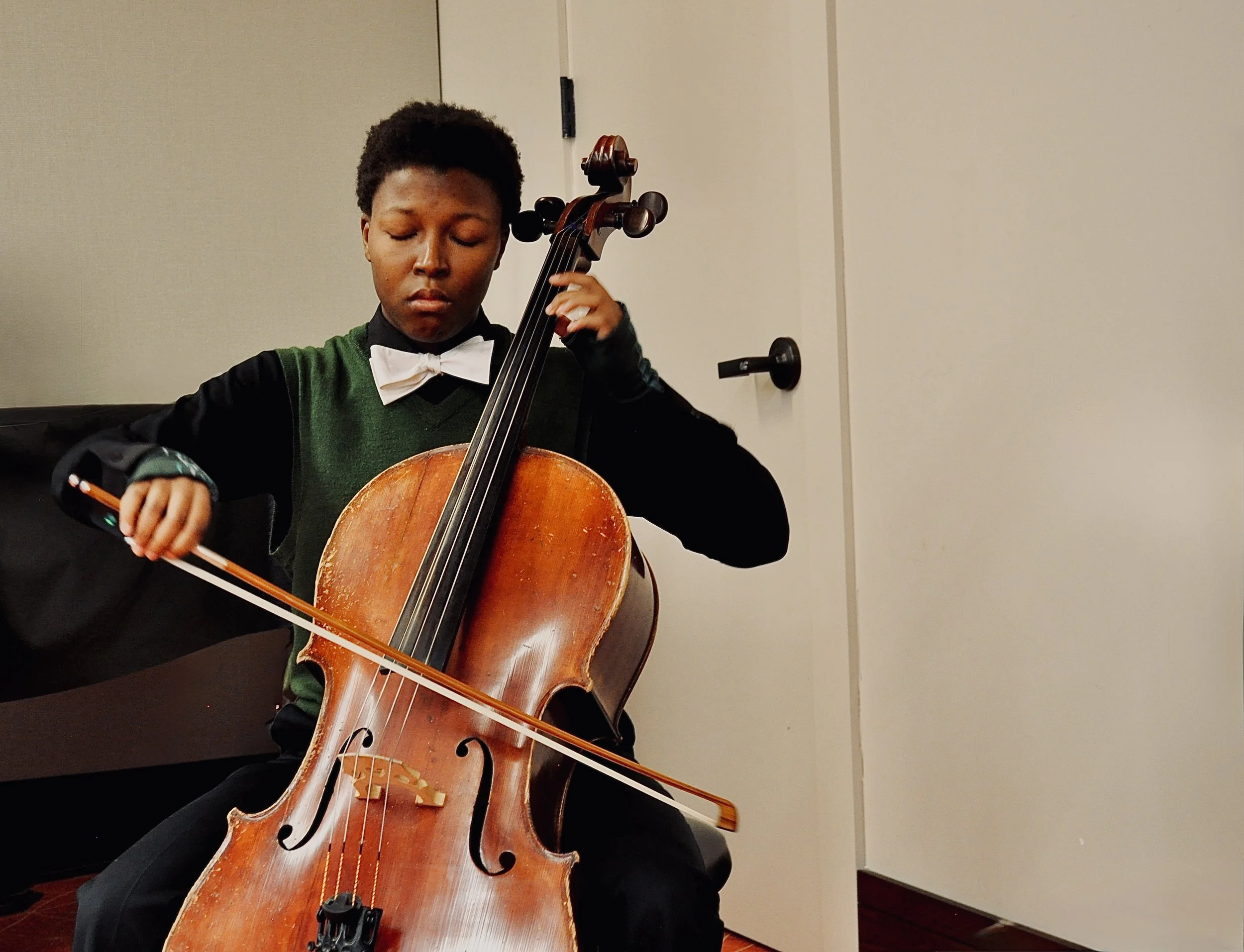
A student musician, T Saille, performs on cello, providing a live musical interlude to conclude the event. Photo by Aaron Soto.
Audience engagement and reflection
Audience questions focused on:
Supporting vulnerable populations
Responding to criticism or doubt
Encouraging the next generation of leaders
Panelists encouraged attendees to reflect on their own roles in supporting others and building stronger communities.
The evening concluded with a cello performance by T Saille (he/they) and a call to action by Pless - asking participants what they could do differently moving forward.
The Women & Leadership panel served as both a celebration of progress and a reminder of the ongoing work needed to expand opportunity, representation, and understanding in leadership roles.
