RMLD rates explained: understanding your electric bill
(3-4 minute read)
For many residents, an electric bill may look like a single monthly charge, but in reality, it reflects a combination of costs for both electricity supply and delivery.
The Reading Municipal Light Department (RMLD) is working to help customers better understand where their energy dollars go each month and how different charges are calculated.
Supply vs. delivery: the basics
At the core of every RMLD bill are two main components:
Supply refers to the cost of purchasing the electricity used in your home. RMLD buys power from a mix of sources, and those costs are passed directly to customers. Because energy prices fluctuate, supply charges can vary month to month based on usage and market conditions.
Delivery (also called distribution) covers everything needed to bring that electricity to your home. This includes maintaining power lines, substations, meters, and customer service operations. It also supports energy efficiency and electrification programs available to customers.
Together, these two components determine RMLD’s rates each year.
What affects your bill
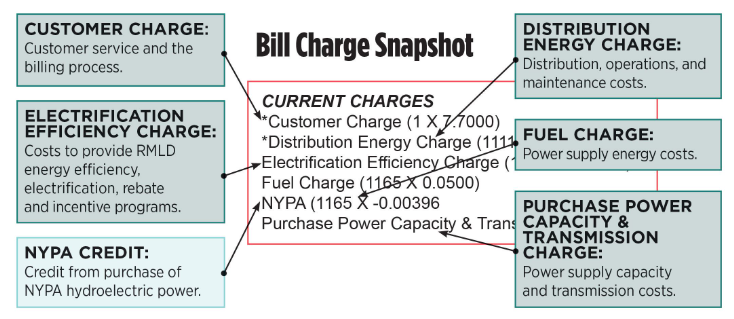
Your monthly electric usage is measured in kilowatt-hours (kWh), which appears on your bill. The more energy you use, the higher certain charges will be.
Charges tied to your energy usage
Distribution Energy Charge: covers system operations and maintenance
Electricification Efficiency Charge: funds energy efficiency programs, rebates, and incentives
Fuel Charge: reflects the cost of purchased electricity, passed through without markup
Purchase Power Capacity & Transmission Charge: covers capacity and transmission costs
NYPA Credit: a credit for residential customers tied to hydroelectric power (shown as a negative charge)
Reducing your electricity usage can directly lower these charges.
Charges not affected by usage
Customer Charge: a fixed fee covering billing and customer service, regardless of how much electricity you use
Additional credits and programs
RMLD also offers several programs and credits that may appear on your bill:
Connected Homes Credit: quarterly credits for participating in smart device programs
Prompt Payment Discount: a 15% discount on certain charges when bills are paid by a specific date
Energy Received Credit: compensation for excess energy generated by customer-owned solar systems
Renewable Choice Program: allows customers to opt into 75% or 100% renewable electricity
The options can help reduce cost or support cleaner energy choices.
Rates and reliability
RMLD emphasizes balancing reliability, safety, and affordability when setting rates. By managing both supply purchasing and system operations, the department works to keep customer costs stable.
In fact, RMLD notes that its rates are typically 50-60% lower than investor-owned utilities, providing a cost advantage for local residents.
Can you change your rate?
For customers looking to manage their electricity use, RMLD offers a Time-Of-Use (TOU) rate. This option features lower rates during off-peak hours and higher rates during peak demand hours.
Customers who can shift energy use, such as running appliances at night, may benefit from this structure.
Understanding your bill
While electric bills can seem complex, understanding the breakdown between supply, delivery, and usage-based changes can help residents make informed decisions about energy use and cost savings.
For more information, residents are encouraged to review a sample bill or contact RMLD directly to explore available programs and rate options.
