Seasonal allergy tips: small changes can bring big relief
(1-2 minute read)
May is recognized as National Allergy & Asthma Awareness Month, and local health officials are encouraging residents to take simple steps to reduce exposure to seasonal allergens as pollen levels rise across Massachusetts.
For many people, spring allergies can lead to symptoms such as sneezing, congestion, itchy eyes, fatigue, and breathing difficulties. Small adjustments at home and outdoors can help lessen the impact of allergy season.
Tips to reduce pollen exposure
Health officials recommend several ways to make your home more allergy-friendly:
Keep windows closed on high-pollen days
Use air conditioning and HEPA filters when possible
Shower and change clothes after spending time outdoors
Avoid outdoor activity during dry, windy conditions when pollen counts are highest
Check daily pollen forecasts and plan outdoor activities after rainfall when pollen levels are lower
Residents are also encouraged to start allergy medications before symptoms become severe. Nasal sprays and antihistamines may help manage common symptoms during peak allergy season.
When to seek medical help
While many seasonal allergies can be managed with over-the-counter medications, health professionals say residents should speak with a healthcare provider if symptoms do not improve or if they experience:
Trouble breathing
Wheezing
Persistent sleep disruption
Severe or worsening symptoms
The Middlesex-Essex Public Health Collaborative notes that awareness and early prevention can make a significant difference during allergy season.
More information on seasonal allergies and asthma management is available through healthcare providers and public health resources.
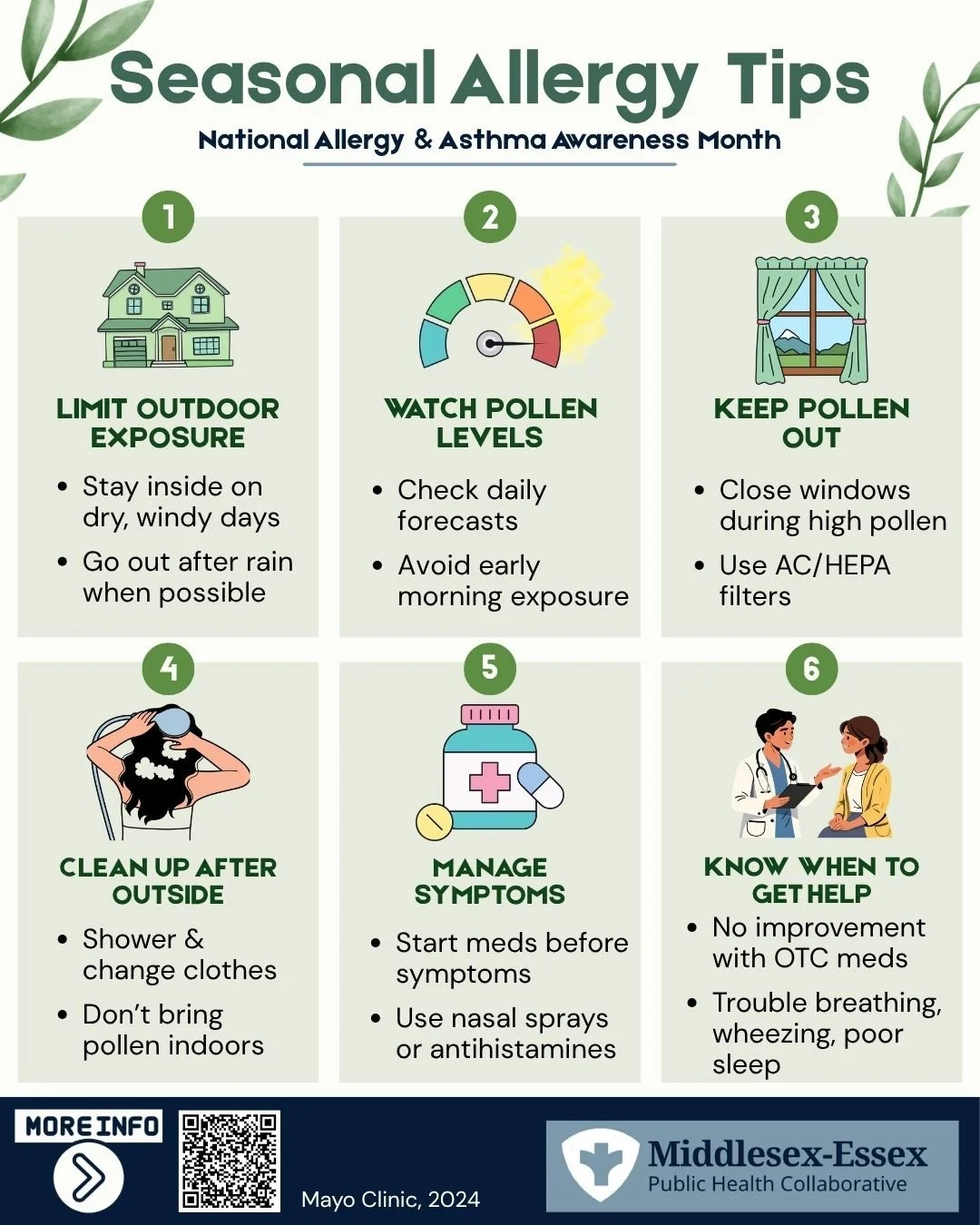
Graphic by the Middlesex-Essex Public Health Collaborative.
