Tick season returns: residents encouraged to take precautions outdoors
(1-2 minute read)
As warmer weather brings more people outdoors, health officials are reminding residents that tick season is here and encouraging simple prevention steps to reduce the risk of tick-borne illnesses.
Ticks are commonly found in wooded areas, tall grass, leaf litter, and even some backyard spaces throughout Massachusetts. Officials say awareness and prevention are especially important during the spring and summer months.
Prevention tips
Residents spending time outdoors are encouraged to:
Wear tick repellent
Check themselves, children, and pets for ticks daily
Shower soon after being outdoors
Contact a doctor if a rash or fever develops after a tick bite or outdoor exposure
Prompt tick checks and removal can help reduce the risk of disease transmission.
Lyme disease awareness
One of the most common tick-borne illnesses in Massachusetts is Lyme disease, transmitted by bites from the blacklegged tick (deer tick).
According to the health information shared by the Middlesex Essex Public Health Collaborative, symptoms may include:
A bull’s eye rash appearing within 3-30 days
Extreme fatigue
Joint aches, stiffness, and weakness
Officials note that Lyme disease can present as both acute and chronic illnesses if left untreated. Treatment typically involves antibiotics.
Alpha-gal syndrome
Residents are being warned about Alpha-gal syndrome, a condition associated with bites from the Lone Star tick.
Symptoms may include:
Increased sensitivity to red meat
Gastrointestinal distress
Skin reactions, such as itching, flushing, and hives
There is currently no cure for Alpha-gal syndrome, and treatment focuses on symptom management and avoiding trigger foods.
Common ticks in Massachusetts
The educational materials also highlighted several common tick species found in Massachusetts, including:
Blacklegged (deer) ticks
Lone Star ticks
American dog ticks
Officials encourage residents to remain cautious during outdoor activities, especially in wooded or grassy areas.
Learn more
Additional information about tick prevention and tick-borne illnesses is available through the Massachusetts Department of Public Health.
As outdoor activity increases this season, health officials say taking a few preventive steps can go a long way in reducing the risk of tick-related illness.
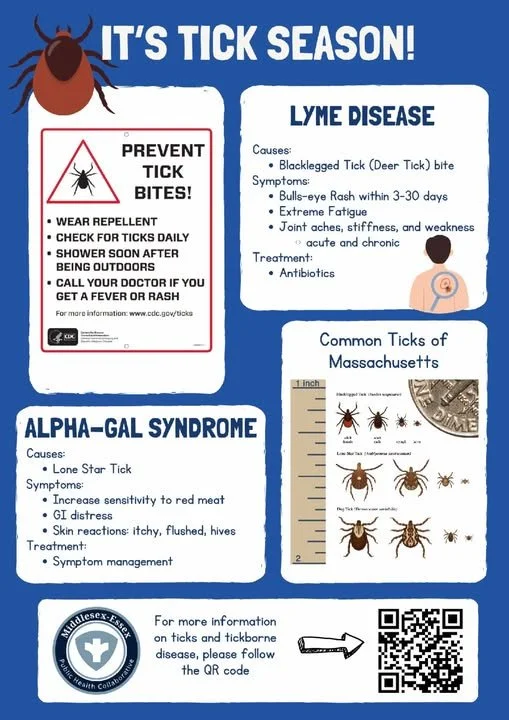
Graphic by the Middlesex Essex Public Health Collaborative.
