Honoring Black History Month: figures to learn from, organizations to support, and why it matters
(6-7 minute read)
Black History Month marks more than a moment of recognition; it reflects a century-long effort to ensure that Black history, scholarship, and lived experiences are remembered, taught, and valued. Resources highlighted in the recent CHNGE newsletter point residents toward influential Black leaders to learn about, organizations advancing justice today, and educational materials that deepen our understanding of Black history and culture.
A century of Black History Month
Black History Month traces its roots back to 1926, when historian Carter G. Woodson launched “Negro History Week” in response to the widespread erasure of Black history from textbooks and classrooms. Working with teachers, churches, and community groups, Woodson promoted focused study and public recognition of Black contributions.
The observance expanded in 1970, when Black educators and students at Kent State University organized the first Black History Month celebration. In 1976, the month received national recognition, and it has since been observed across the United States in schools, cultural institutions, and communities.
At its core, Black History Month is about restoring visibility, honoring truth, and carrying forward the stories that shape U.S. history.
Black leaders and changemakers to learn about
Below is a list of civil rights leaders, writers, organizers, and movement builders whose work spans generations and movements. Learning about their lives helps connect past struggles to present-day progress.
Figures include:
Ida B. Wells - investigative journalist and anti-lynching activist.
Bayard Rustin - key organizer of the 1963 March on Washington
Audre Lorde - poet, feminist, and social justice theorist
Marsha P. Johnson - LGBTQ+ and trans rights activist
John Lewis - civil rights leader and longtime member of Congress
Daisy Bates - leader in school desegregation efforts in Little Rock
Gloria Richardson - grassroots civil rights organizer
Miss Major Griffin-Gracy - transgender rights pioneer and advocate
Their work spans voting rights, desegregation, journalism, feminist theory, LGBTQ+ rights, and nonviolent protest - demonstrating the breadth of Black leadership across movements.
Organizations advancing justice and equity
Black History Month is also an opportunity to support organizations continuing this work today through legal advocacy, organizing, health equity, and cultural preservation.
Organizations include:
Equal Justice Initiative - legal advocacy against mass incarceration and racial injustice
Color of Change - national racial justice advocacy network
Movement for Black Lives - coalition coordinating national Black-led policy and organizing efforts
The Loveland Foundation - mental health support for Black women and girls
SisterSong - reproductive justice collective led by women of color
Marsha P. Johnson Institute - advocacy for Black transgender communities
Audre Lorde Project - community organizing for LGBTQ+ people of color
Black Trans Femmes in the Arts - cultural and artistic support network
Support can take many forms, including donations, volunteering, sharing resources, and participating in educational programming.
Books that deepen understanding
The newsletter also recommends influential works that explore Black history, feminism, justice, and identity. Suggested titles include works by bell hooks, James Baldwin, Maya Angelou, Toni Morrison, Bryan Stevenson, Angela Y. Davis, and others - spanning memoir, history, theory, and literature.
Why Black history matters - year-round
Black History Month began as a corrective - a response to omission and distortion. Today, it remains both a celebration and a call to continued learning. Understanding Black history strengthens civic knowledge, supports more accurate storytelling, and honors the people and movements that have shaped a nation.
Readers are encouraged to continue learning by exploring additional educational series and resources on Black history from the National Museum of African American History & Culture and the Center for Racial Justice in Education.
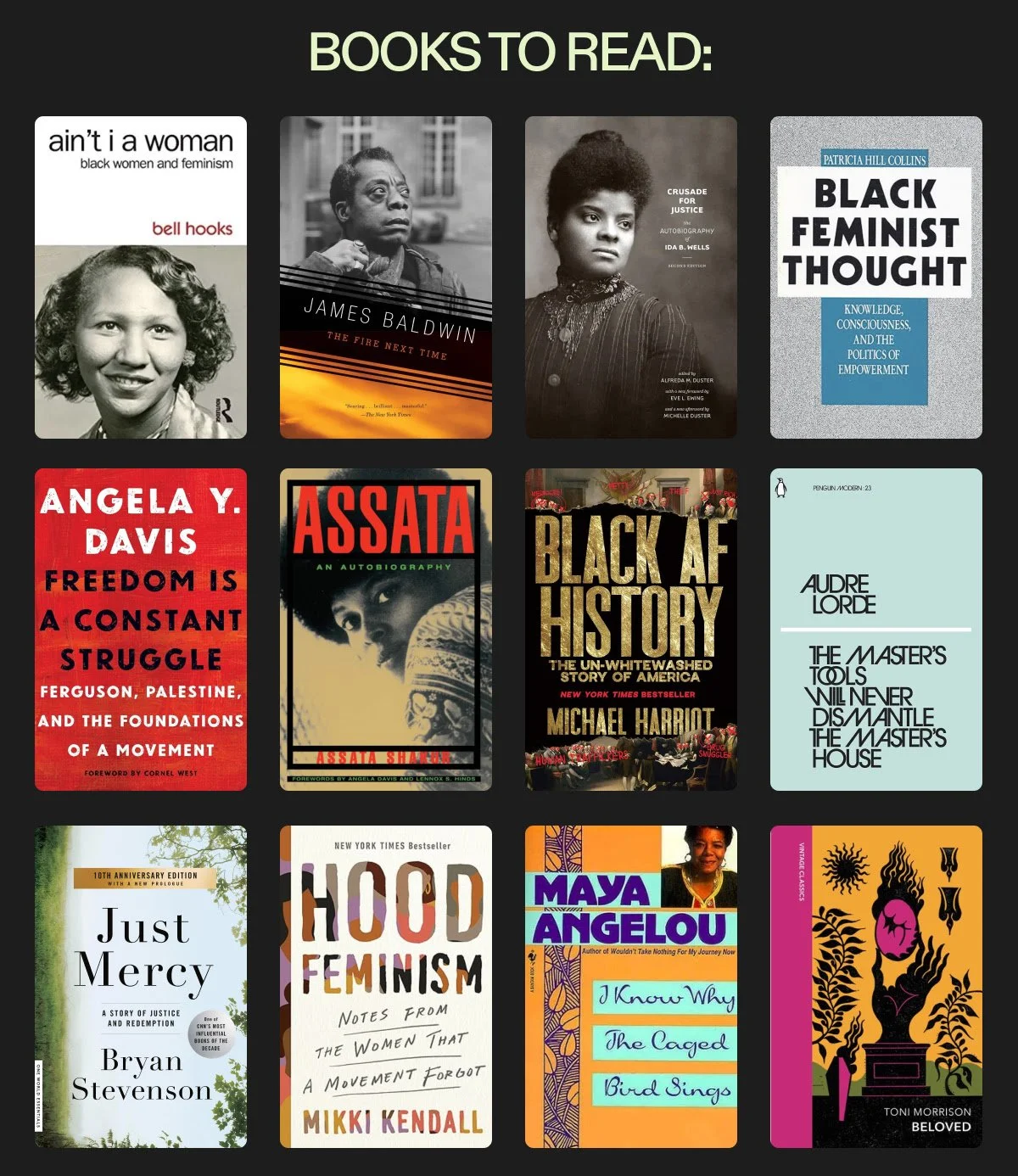
Photo from the CHNGE Newsletter that outlines 12 books to read related to Black history and figures dated February 5, 2026.
