(4-5 minute read)
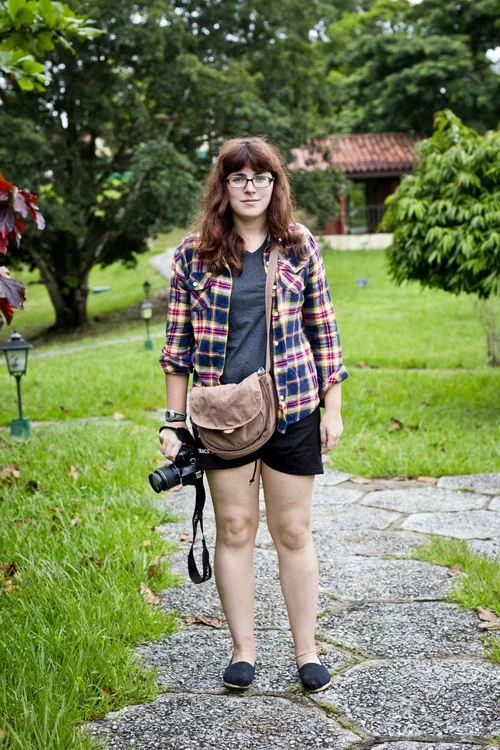
Delia Harrington in Viñales, Cuba, 2012. Photo by Gustav Hoiland.
A Reading local is bringing a deeply personal and visually striking body of work to the Worcester Art Museum, where their art is helping reshape how audiences understand disability.
Delia Harrington (they/them) grew up in Reading and is now based in the Greater Boston area. They are among eight artists featured in Repeat After Me, an exhibit presented by the Open Door Gallery. The exhibit is on display through May 13, 2026, and is free to the public during museum hours.
Turning data into art
Harrington’s featured work is a series of hand-embroidered pieces that transform years of personal health data into tangible, immediate forms.
The pieces are based on migraine logs they have kept at the request of their doctors, records that track the frequency and severity of migraines over time. What began as a medical tool evolved into an artistic practice.
Each piece resembles a calendar, with every day represented by a colored square. The color scale ranges from green (no migraine) to shades of pink and deep red, indicating increasing levels of pain. Over time, the patterns reveal the intensity and persistence of chronic illness in a way that words alone often cannot capture.
“I was sitting on years of data about my health,” Harrington said. “I was looking for a way to make something that’s often invisible more visible.”
The result is a series that is both methodical and deeply personal, where repetition becomes a visual language for lived experience.
Making the invisible visible
For Harrington, the work is not just about documentation; it’s about communication.
They described frustration with how often chronic conditions like migraines are misunderstood or minimized, even by people close to them. By translating that experience into a clear visual format, their work invites viewers to confront the reality of chronic pain in a new way.
When displayed together, the pieces reveal patterns that are immediately recognizable: clusters of difficult days, recurring triggers, and the sheer frequency of symptoms.
“It becomes a stark visual,” they said, noting that viewers often begin asking questions about the patterns they see.
A process shaped by lived experience
Harrington’s approach to art is closely tied to how they navigate their own health and identity.
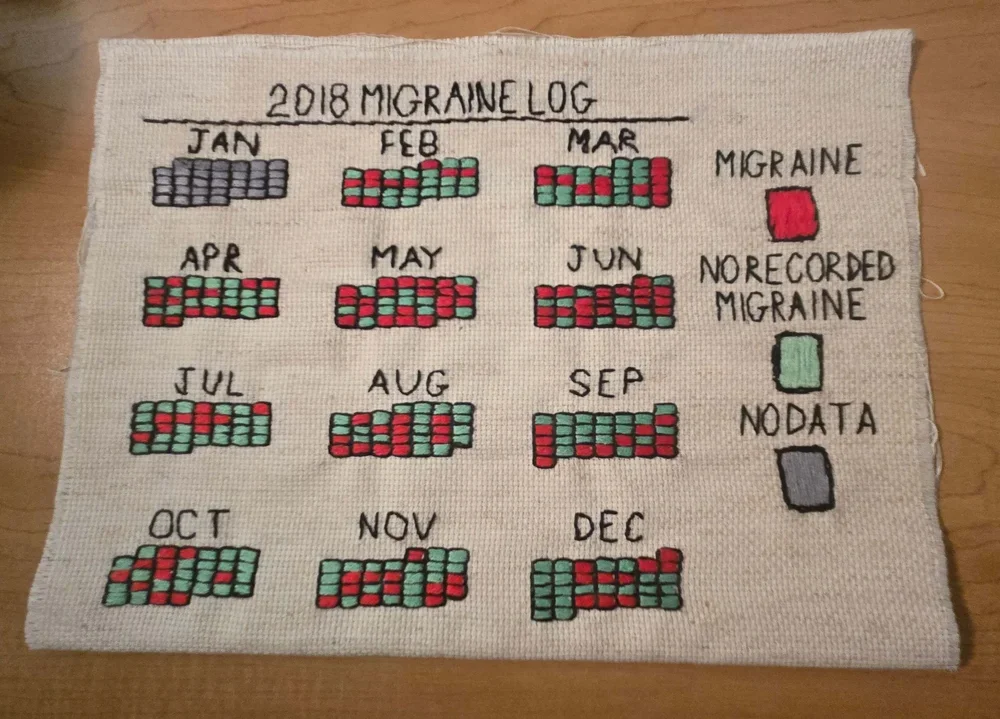
The work blends photography, fiber art, and data, reflecting both their background and evolving creative practice. While they first became involved in photography during college, they have more recently explored embroidery and textile-based work, often combining the two.
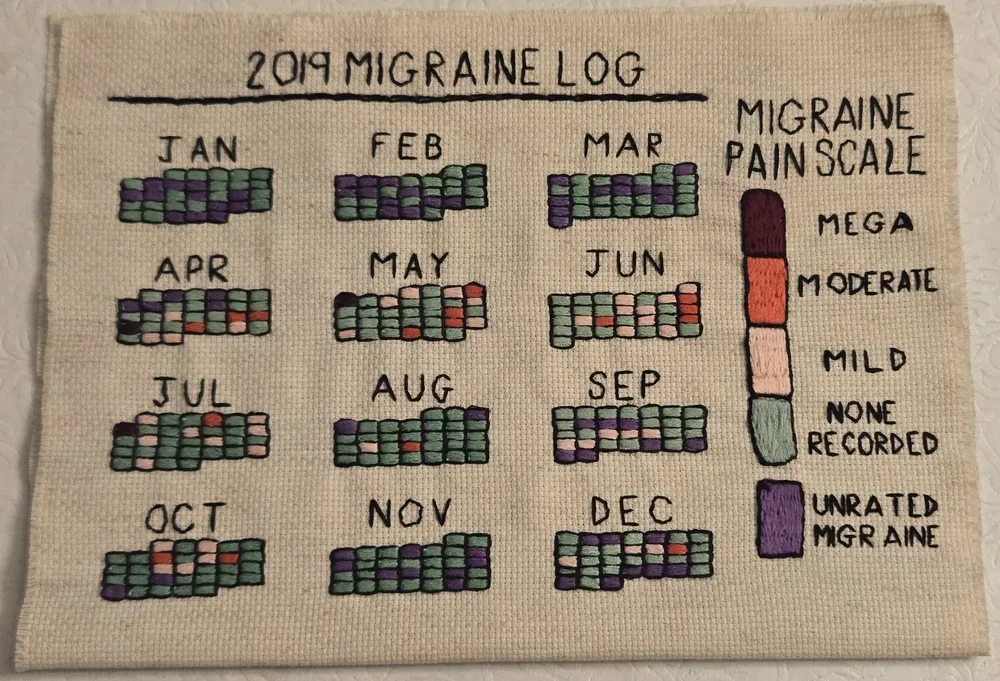
The process itself is intentional. Embroidery allows them to work away from screens and at their own pace, which is critical in managing migraines and maintaining their health.
“I can’t rush it,” they said. “It takes the time that it takes.”
That mindset - prioritizing sustainability over speed - has shaped both their work and perspective as an emerging artist.
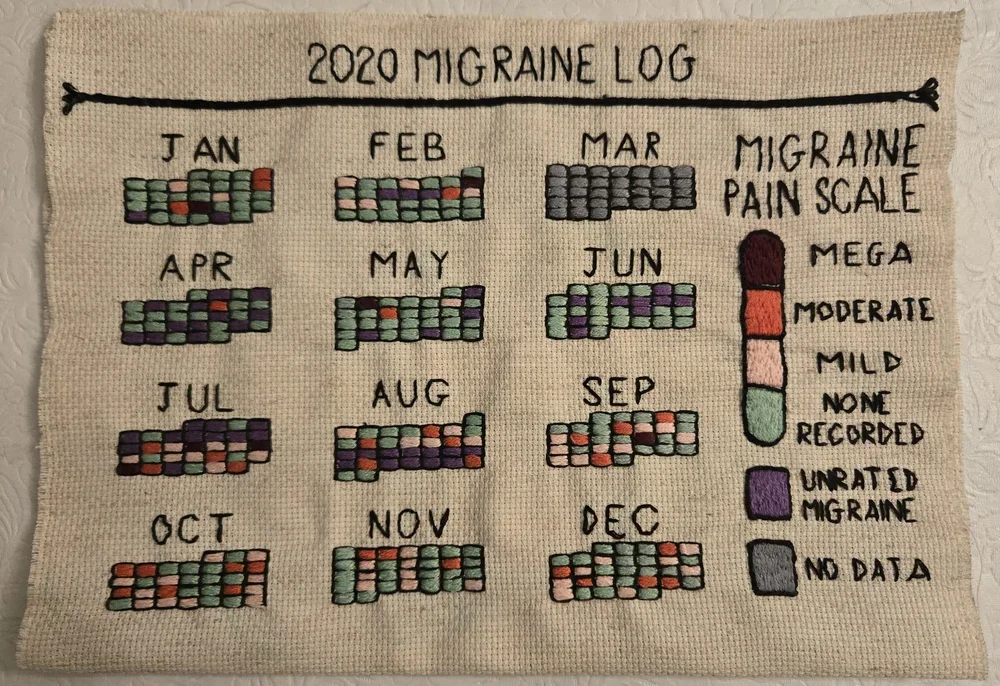
Harrington’s series of artwork visualizing migraine logs translates personal experiences of pain and patterns into striking data-driven compositions. Photos available on Delia Harrington’s website.
A meaningful milestone
Having their work displayed in a museum setting marks a significant moment in Harrington’s artistic journey.
“This is only my second exhibition,” they said, noting that showing work at a museum like Worcester Art Museum carries both personal and professional significance.
Beyond the recognition, they emphasized the importance of being part of a space that centers disabled artists. The Open Door Gallery, they said, has created an environment that is both supportive and intentionally inclusive.
Expanding representation in the arts
Harrington also sees their work as part of a broader conversation about accessibility and representation in the art world.
They noted that artists with disabilities often face barriers to entry, from application requirements to expectations around production and output. Creating more inclusive pathways, they said, is essential to ensuring a wider range of voices are seen and heard.
At the same time, they encourage other artists, particularly those with disabilities, to focus on finding processes that work for them, rather than trying to meet external expectations.
“Find something that works for your brain and your body,” Harrington said. “That’s what matters.”
On display through May 13
Harrington’s work is currently on view as part of Repeat After Me at the Worcester Art Museum through May 13, 2026.
Through careful stitching and repetition, their pieces offer more than a visual experience; they provide insights into the realities of chronic illness and the power of art to make those experiences visible.
For visitors, the exhibit offers not only the opportunity to view compelling artwork but also to engage with a perspective often overlooked and to leave with a deeper understanding of the stories behind it.
Special thanks to Delia Harrington for taking the time to speak with us about her work and experiences, and to Open Door Arts Managing Director Nicole Agois for providing additional insight and answering questions for the article.
