Town Meeting 101 session gives residents a primer on Reading’s legislative process
(6-7 minute read)
For residents looking to better understand how Town Meeting works before the Annual Town Meeting begins, community members gathered at the Reading Public Library on the morning of Saturday, April 25, 2026, for a “Town Meeting 101” presentation led by Town Moderator Alan Founds, Town Meeting Member Jennifer Hillery, and Finance Committee Chair Joe Carnahan.
The session walked attendees through what happens before, during, and after Town Meeting, while also explaining parliamentary procedures, the Town budget process, and the role Town Meeting Members play in approving local spending and bylaws.
What is Town Meeting?
One of the first topics discussed was the structure and purpose of Reading’s representative Town Meeting system.
Hillery explained that Town Meeting functions in two ways:
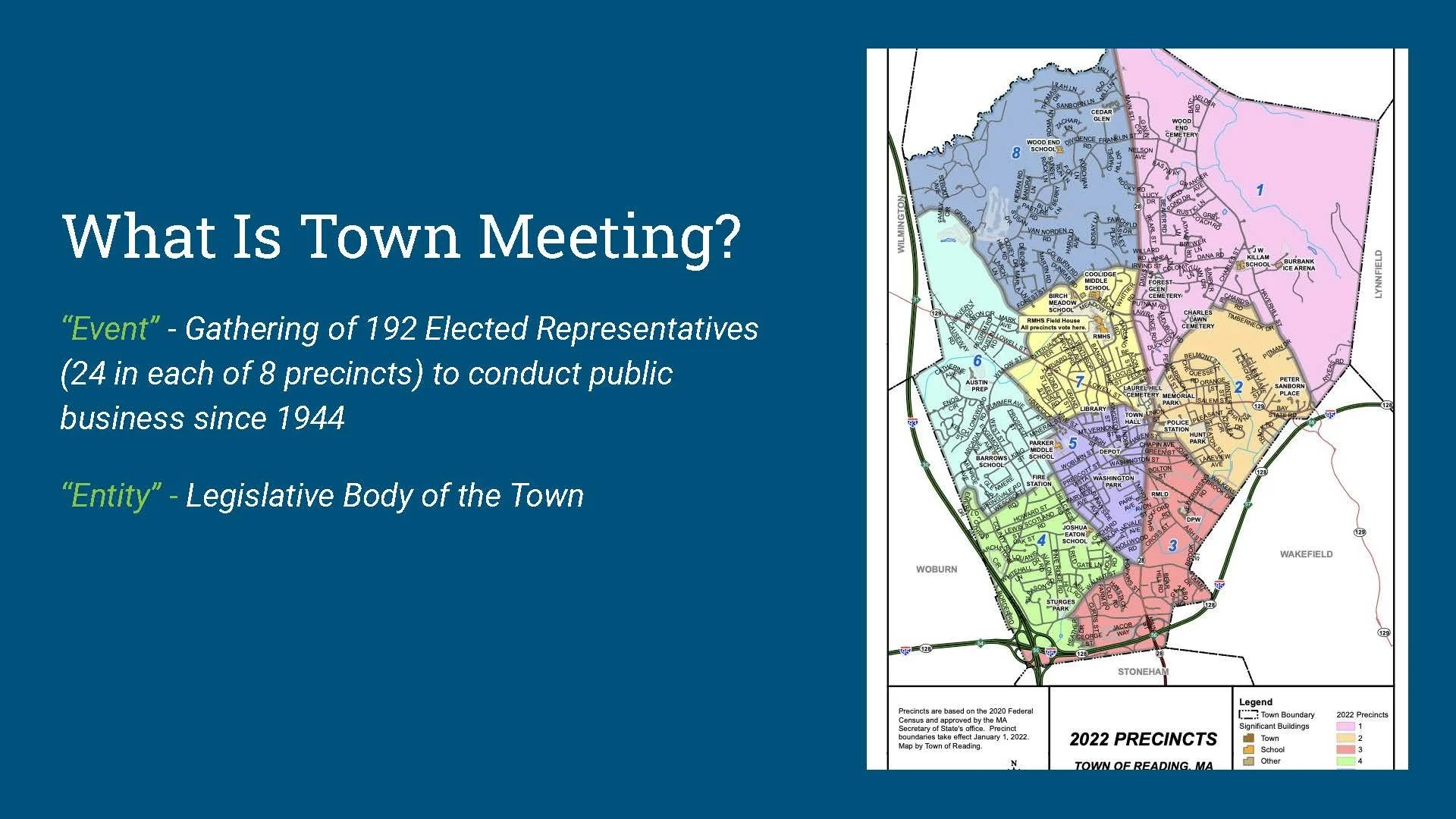
As an event, Town Meeting is the gathering of Reading’s 192 elected Town Meeting Members, 24 representatives from each of the Town’s eight (8) precincts, who assemble to conduct public business. Reading has operated under a representative Town Meeting since 1944.
As an entity, Town Meeting serves as the legislative body of the Town, responsible for approving budgets, bylaws, appropriations, and other major policy decisions.
When and where does Town Meeting meet?
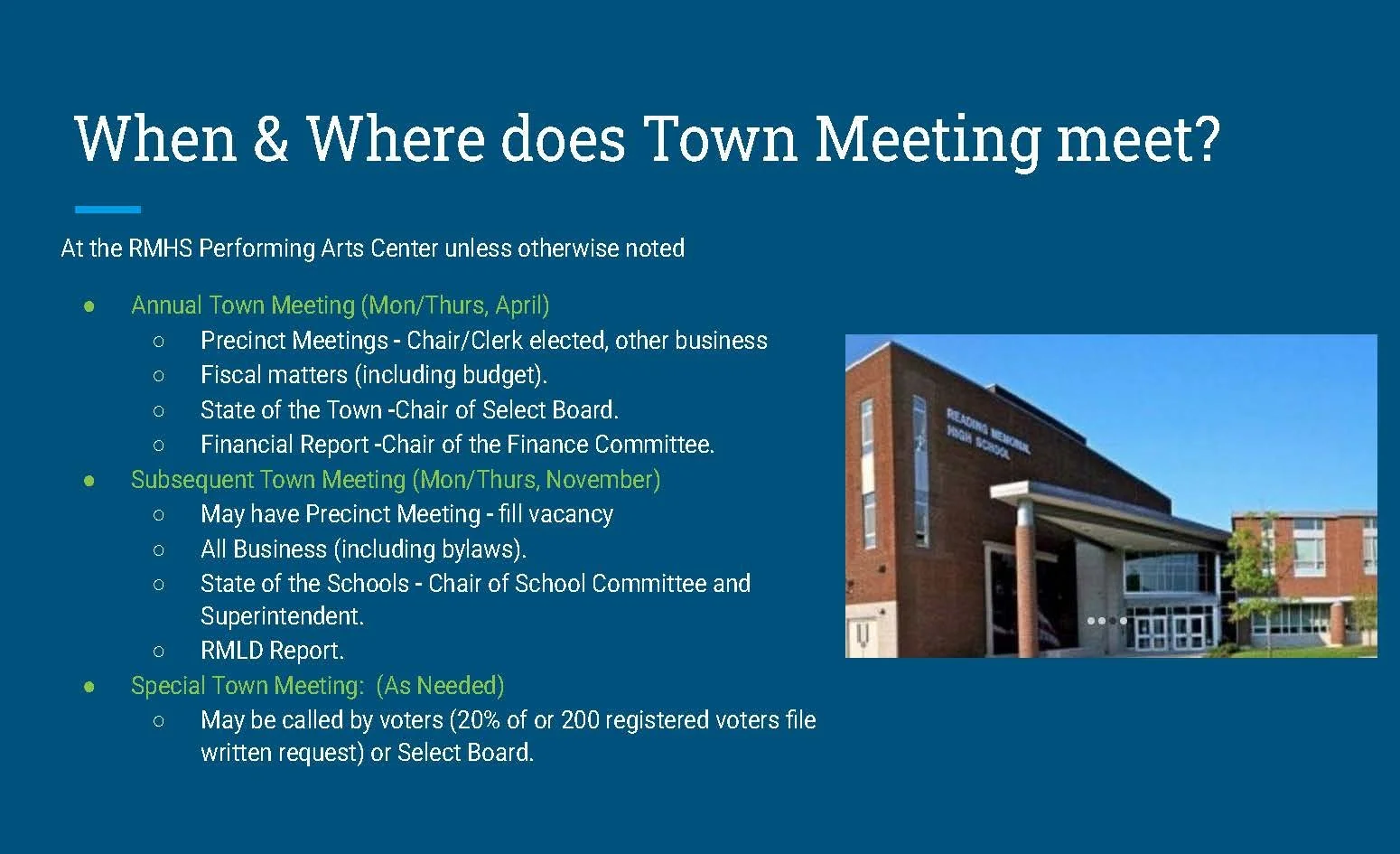
Town Meeting sessions are held at the Reading Memorial High School Performing Arts Center (RMHS PAC).
Hillery outlined the three primary types of Town Meeting sessions held throughout the year:
Annual Town Meeting
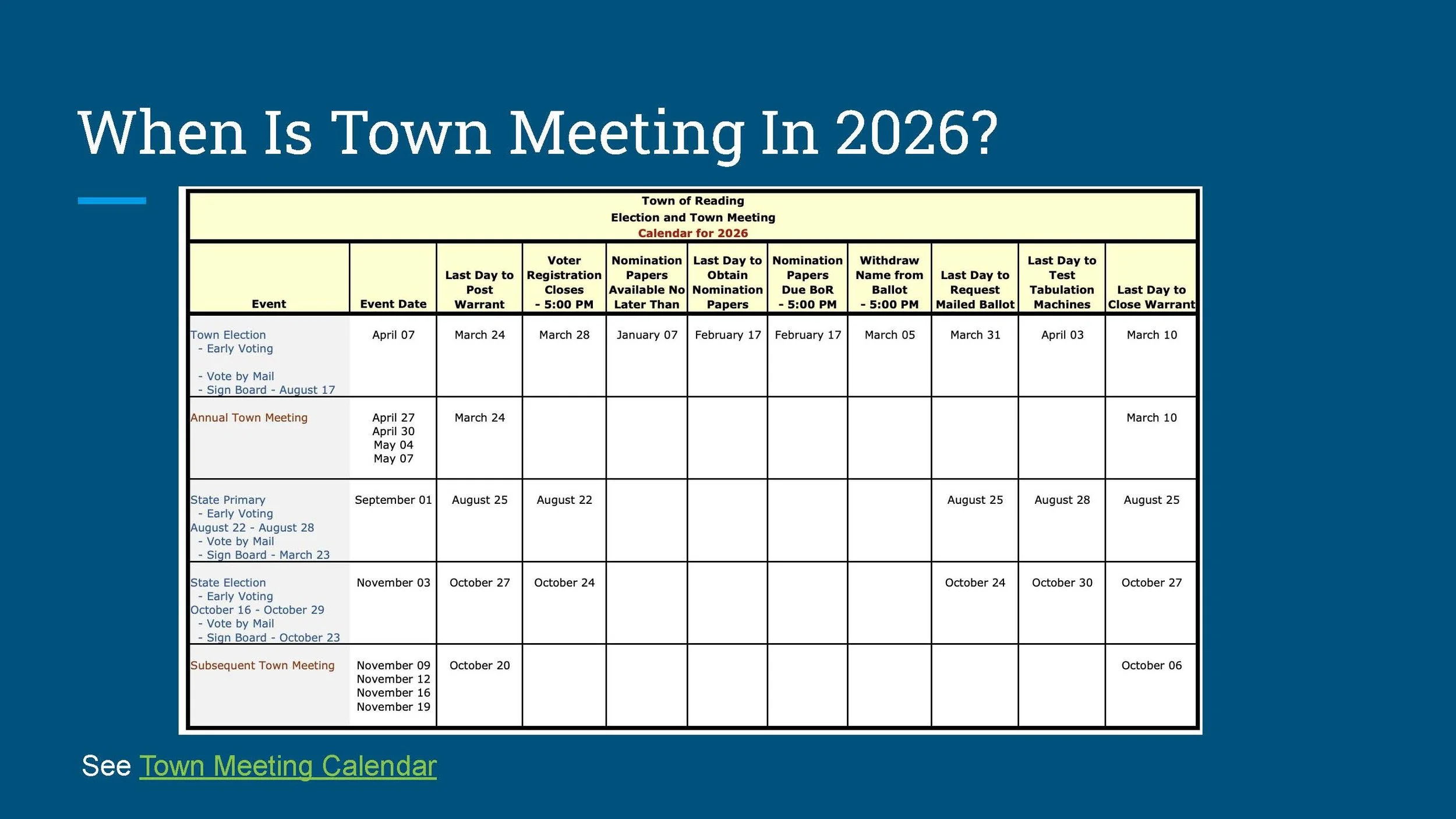
Typically held on Monday and Thursday evening in April, the Annual Town Meeting focuses primarily on:
Fiscal matters and the Town budget
Precinct meetings and organizational matters
The “State of the Town” address from the Select Board Chair
The annual financial report presented by the Finance Committee
Subsequent Town Meeting
Usually held in November, the Subsequent Town Meeting may include:
Precinct meetings to fill Town Meeting vacancies
General Town business and bylaw proposals
A “State of the Schools” presentation from the School Committee Chair and Superintendent
An annual Reading Municipal Light Department (RMLD) report
Special Town Meeting
A Special Town Meeting may be called by the Select Board or by a voter petition requiring either 20% of registered voters or 200 registered voters to submit a written request.
Presenters noted that Special Town Meetings are typically reserved for urgent or time-sensitive matters.
Understanding the warrant and budget process
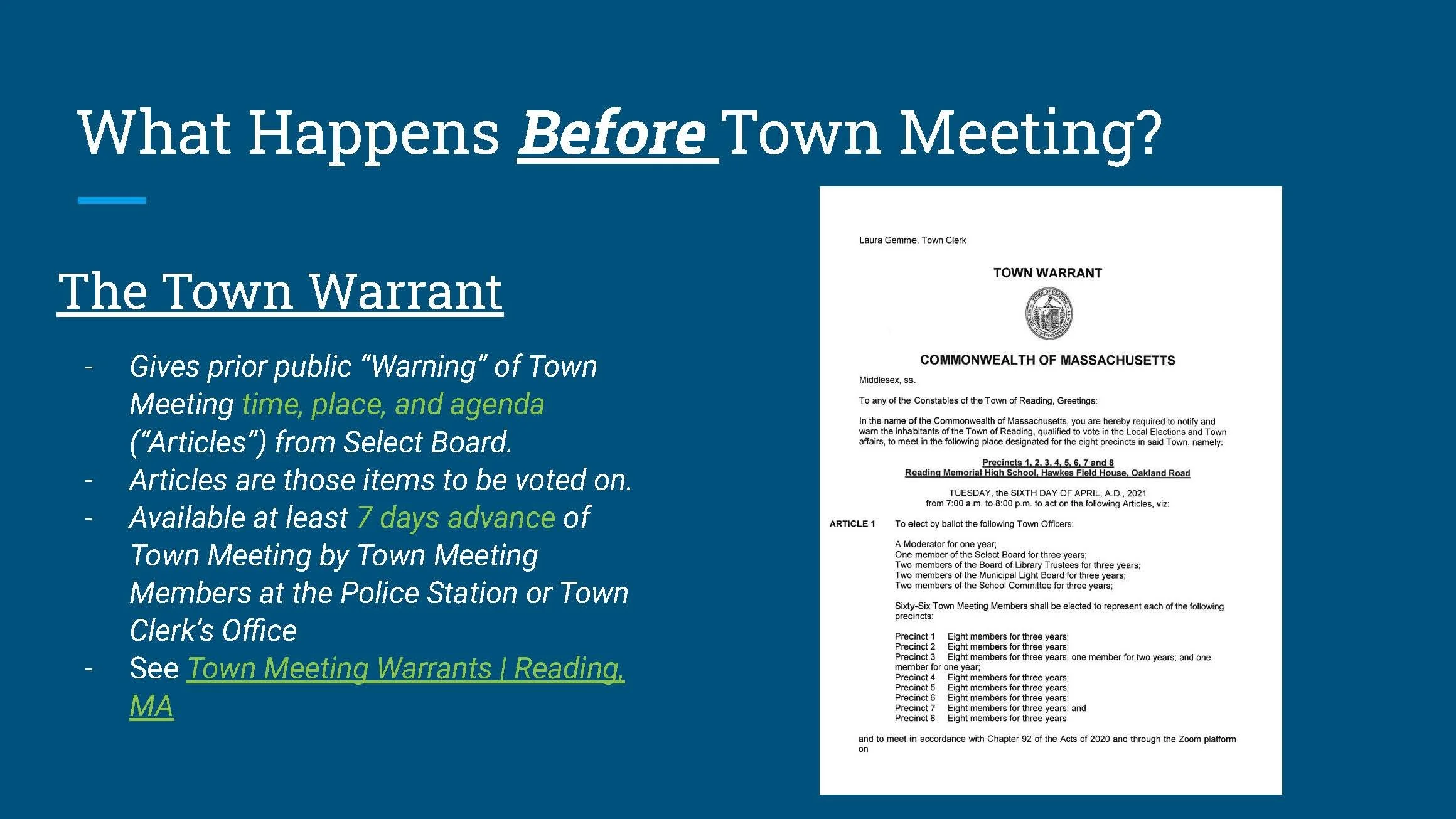
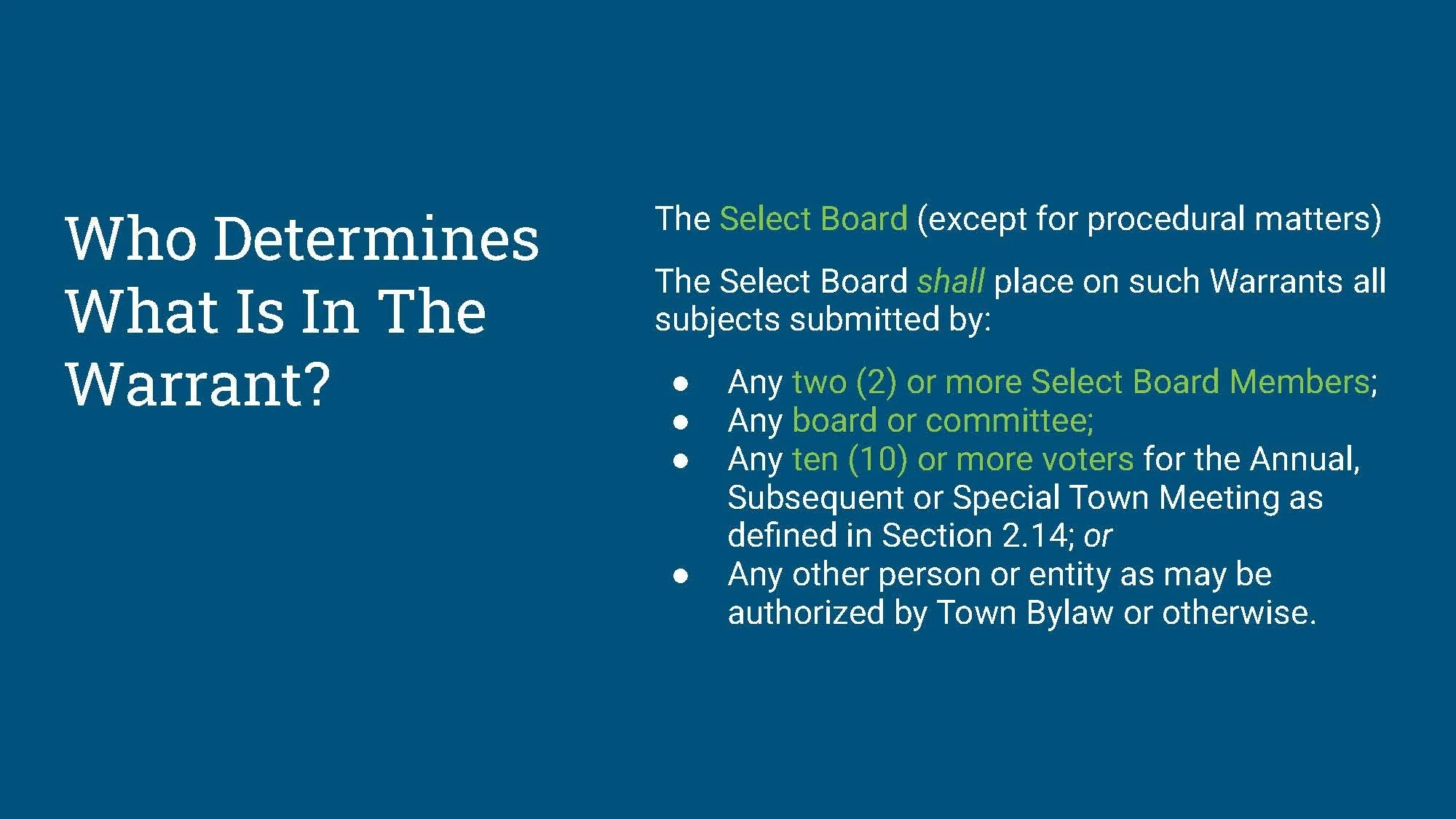
The presentation then shifted to the Town Warrant, the legal notice that establishes the time, place, and agenda for Town Meeting. Hillery explained that each item on the agenda is called a “Warrant Article,” which Town Meeting Members ultimately debate and vote on.
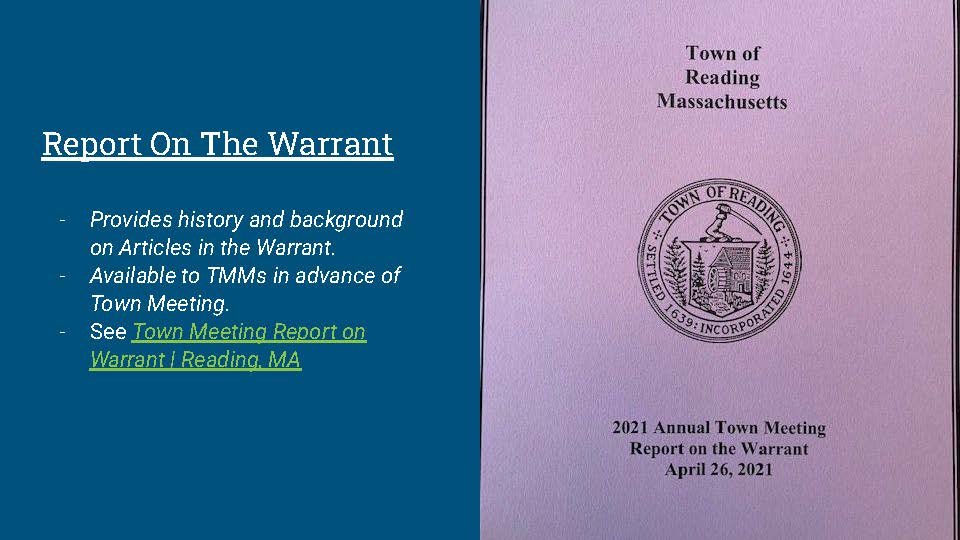
Presenters also reviewed the “Report on the Warrant,” which provides background information and recommendations related to each article before Town Meeting convenes. Physical and online copies are made available ahead of the session.
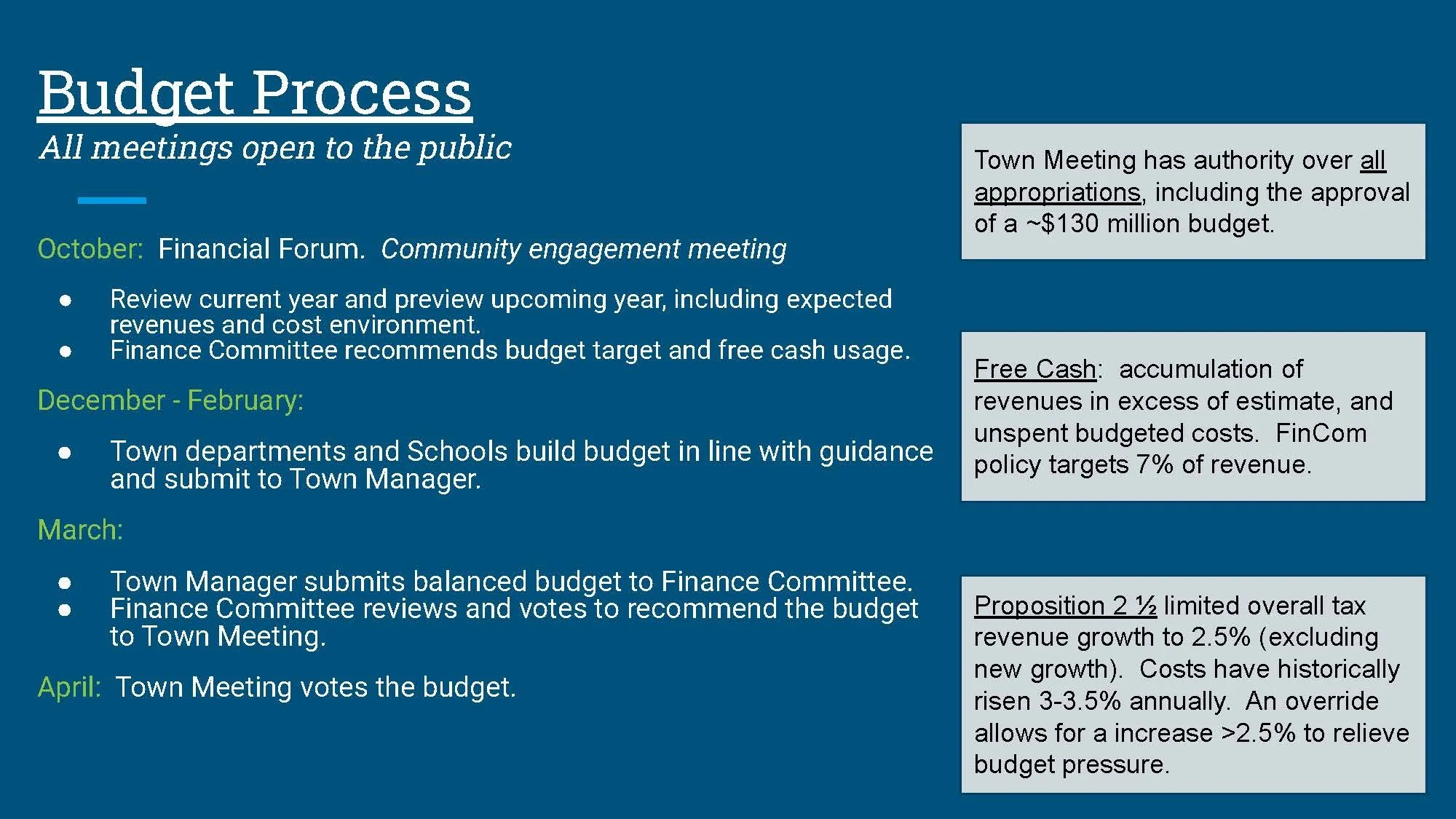
Carnahan outlined the Town’s annual budget development timeline, including:
Fall financial forums
Department and School budget development
Finance Committee review
Final Town Meeting approval
He emphasized that Town Meeting has authority over all appropriations, including Reading’s approximately $130 million budget.
The presentation also covered “Free Cash,” which represents accumulated revenue and unspent appropriations, as well as Proposition 2 ½ limitations and the role of overrides in addressing budget pressures.
What happens during Town Meeting
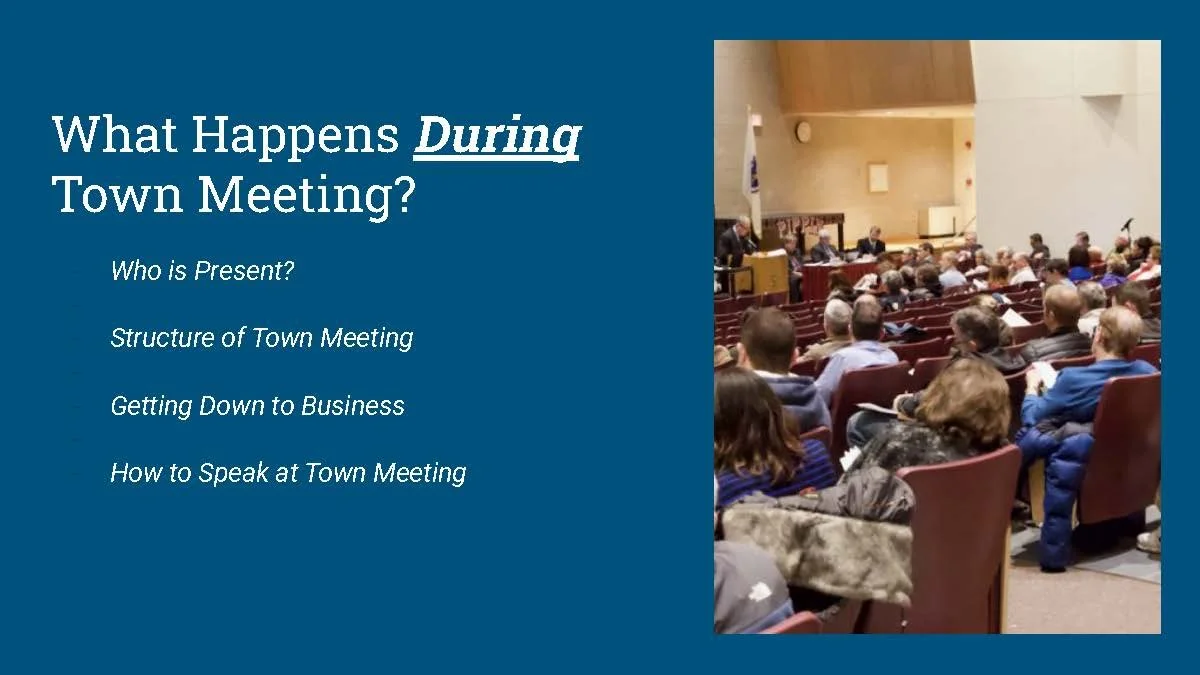
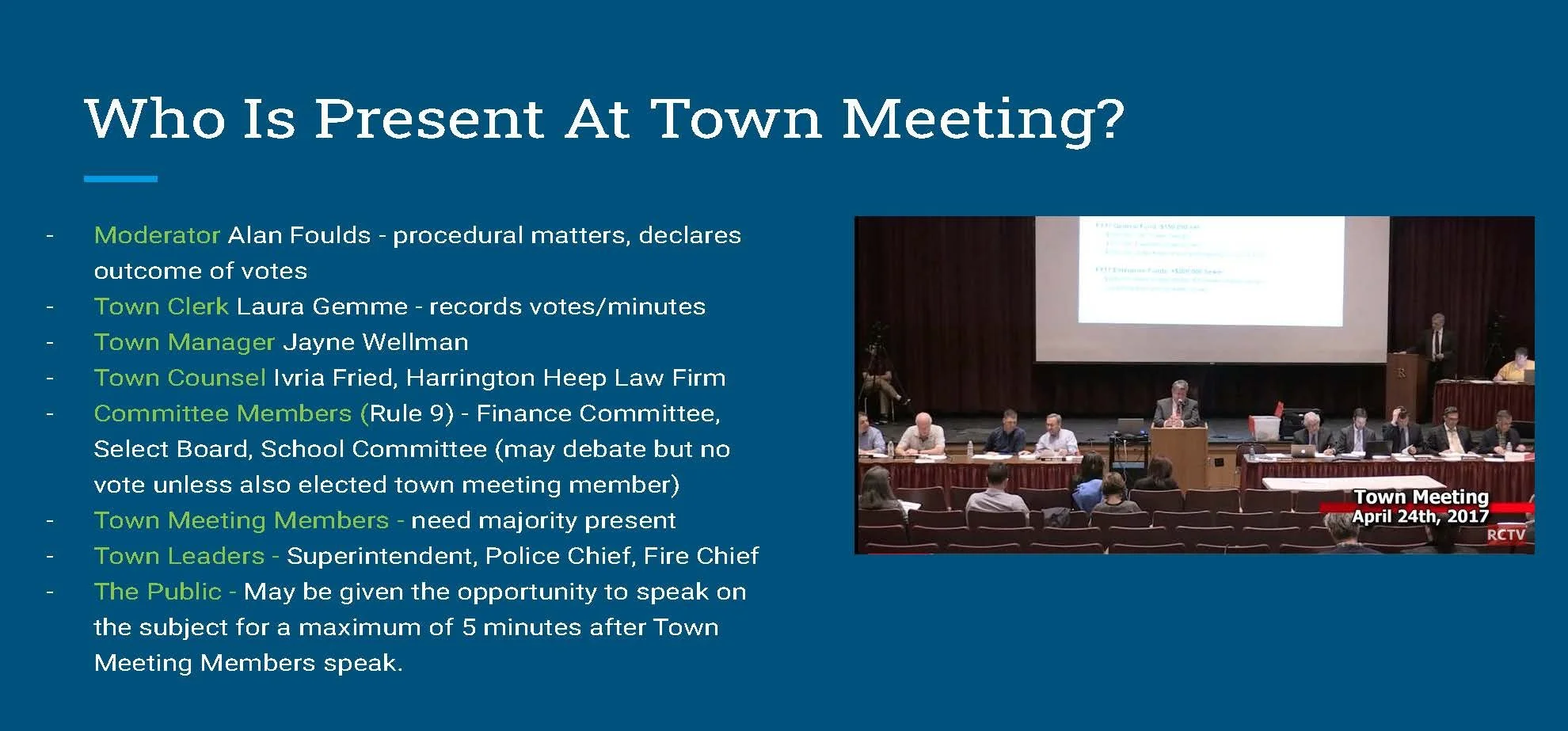
Foulds reviewed the physical setup and structure of Town Meeting, explaining where the Moderator, Town Clerk, Select Board, Finance Committee, Town Counsel, department leaders, Town Meeting Members, and public attendees sit during sessions.
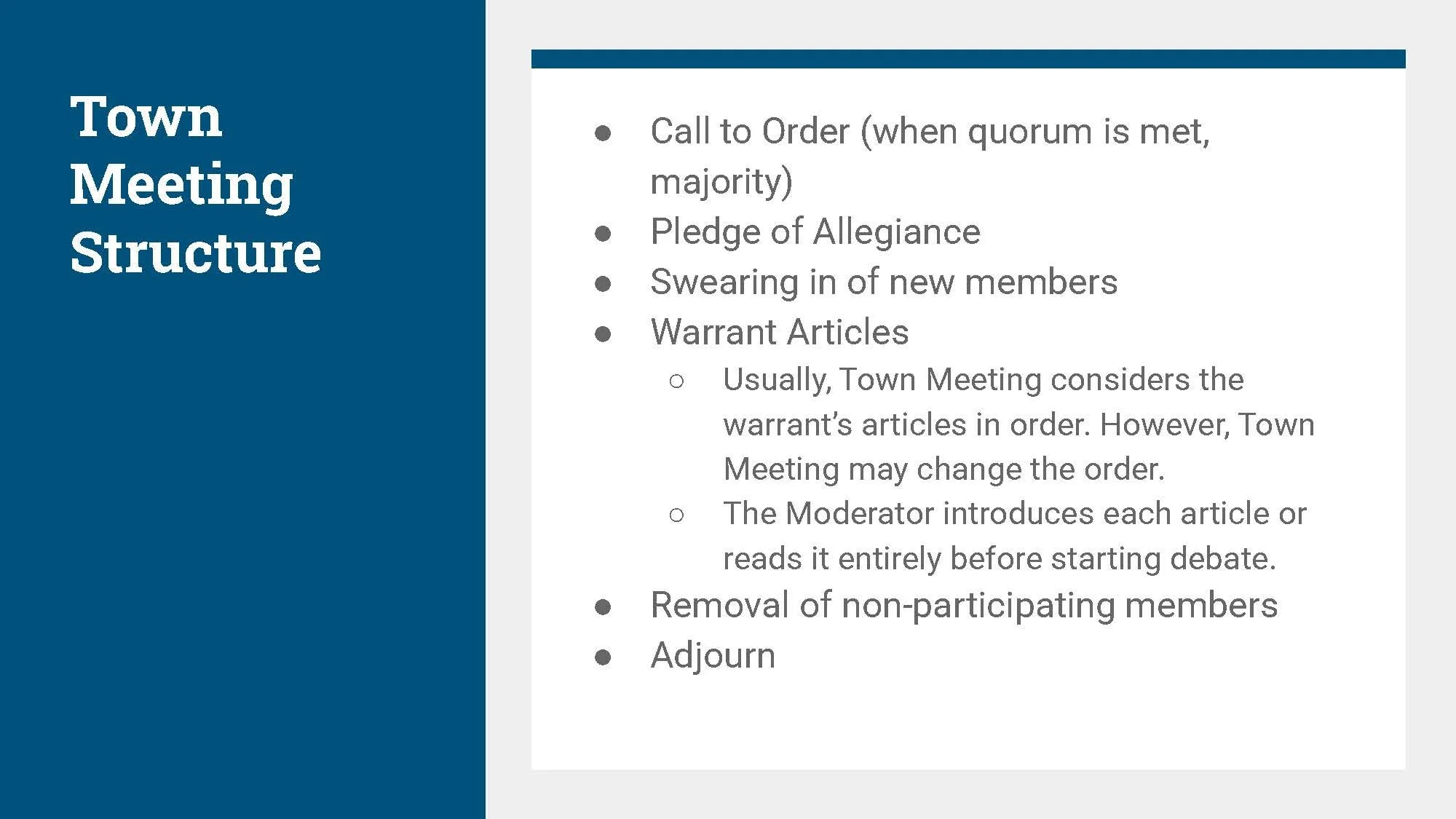
He also described the opening procedures, which include:
Establishing a quorum
The Pledge of Allegiance
Swearing in newly elected members
Introduction of warrant articles
The presentation noted that while articles are typically considered in order, Town Meeting can vote to change the sequence.
Rules for debate and speaking
Foulds spent significant time explaining parliamentary procedures and expectations for debate.
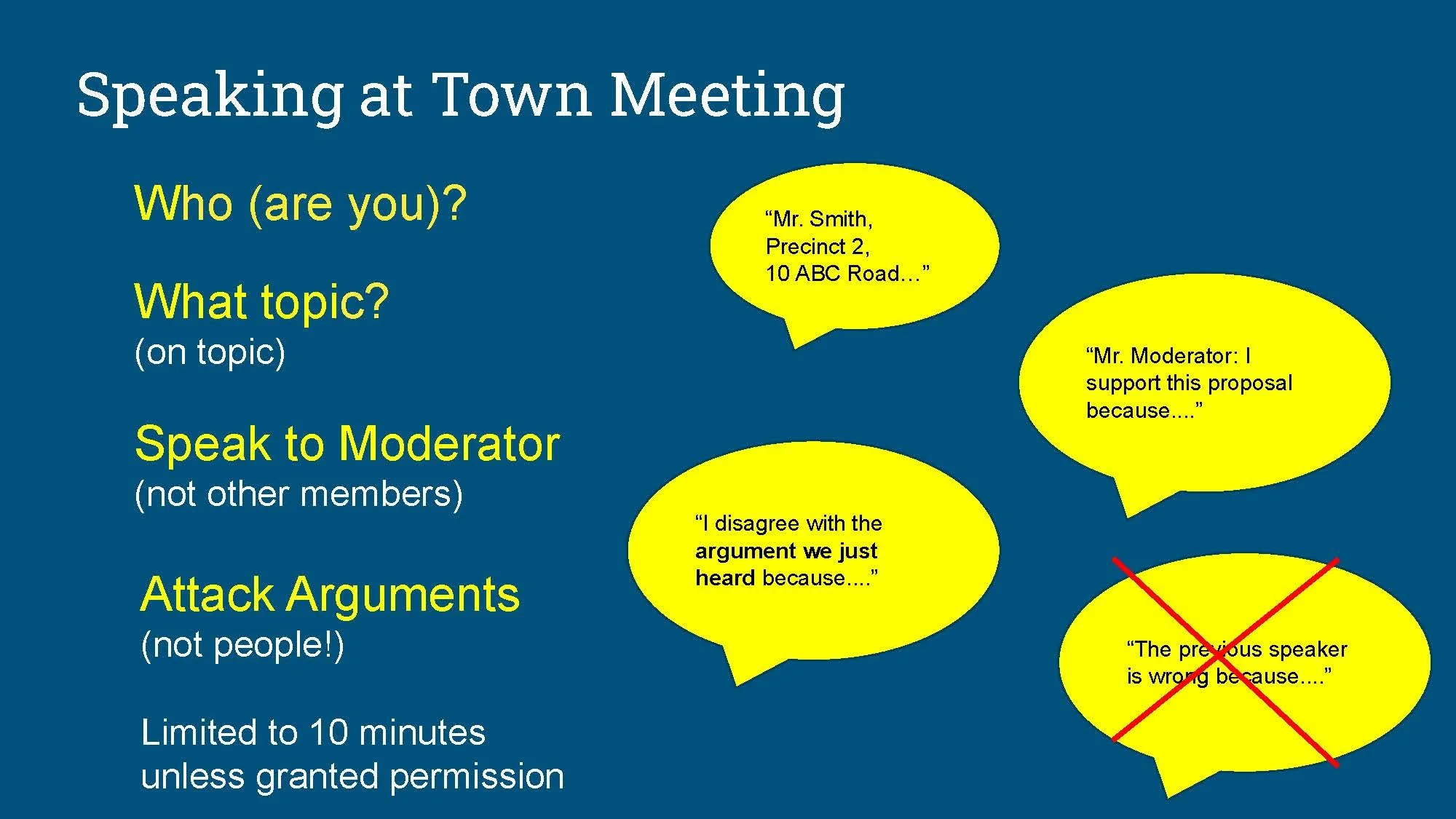
Town Meeting Members speaking on the floor are expected to:
State their name and precinct
Speak only on the article being discussed
Address remarks through the Moderator
Focus on arguments rather than individuals
Speakers are generally limited to ten (10) minutes unless additional time is granted.
The session also covered:
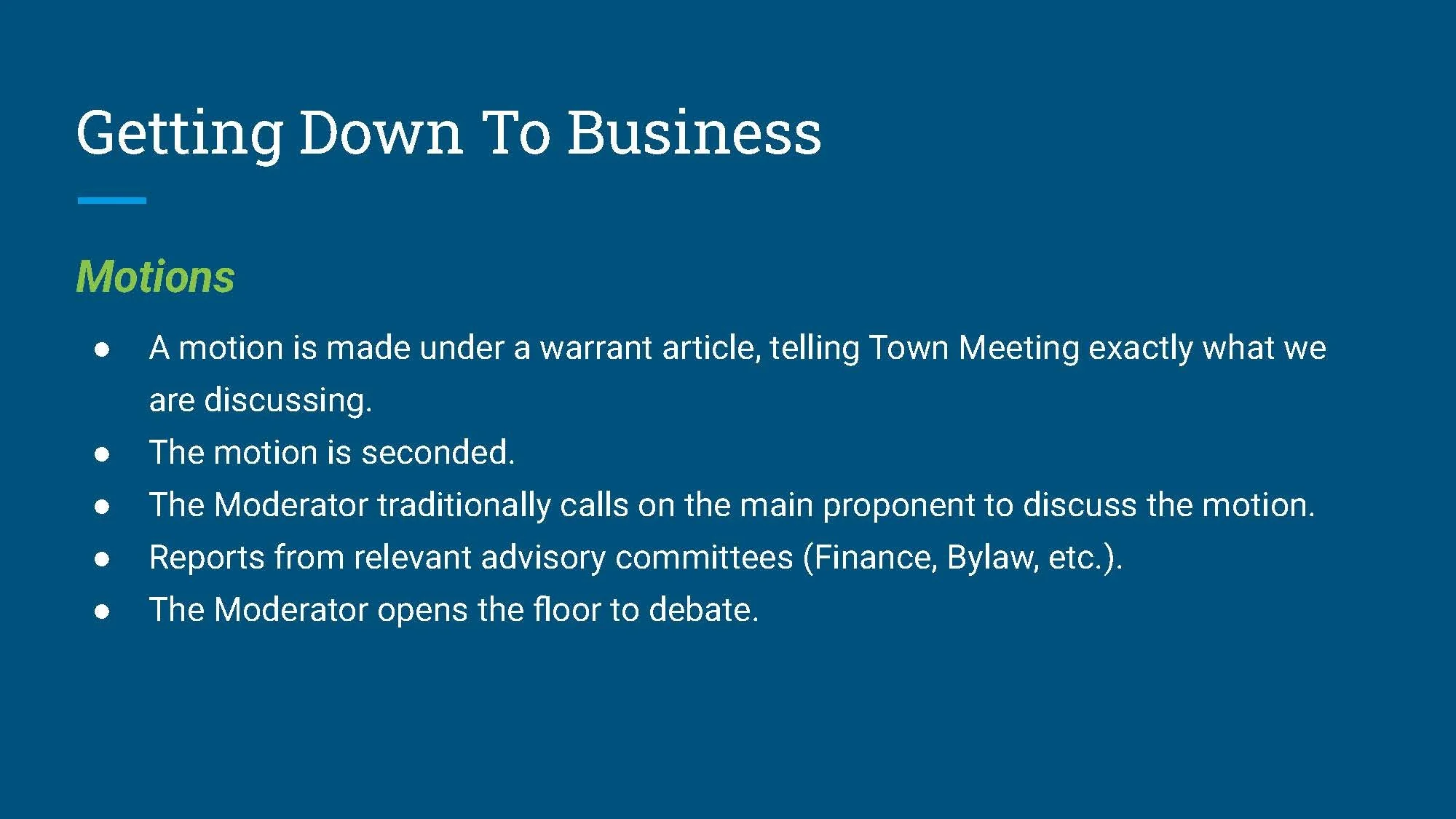
Main motions
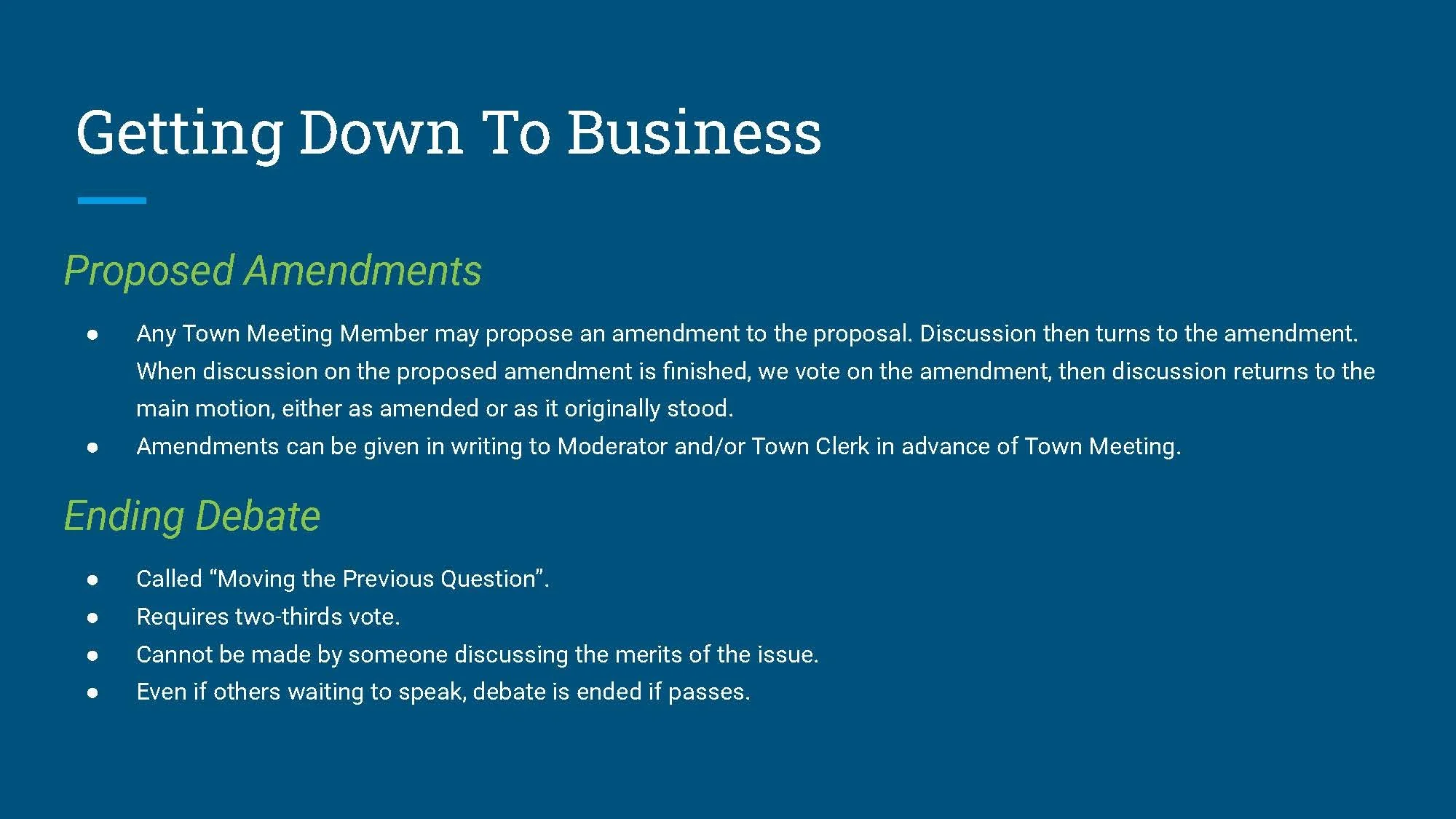
Amendments
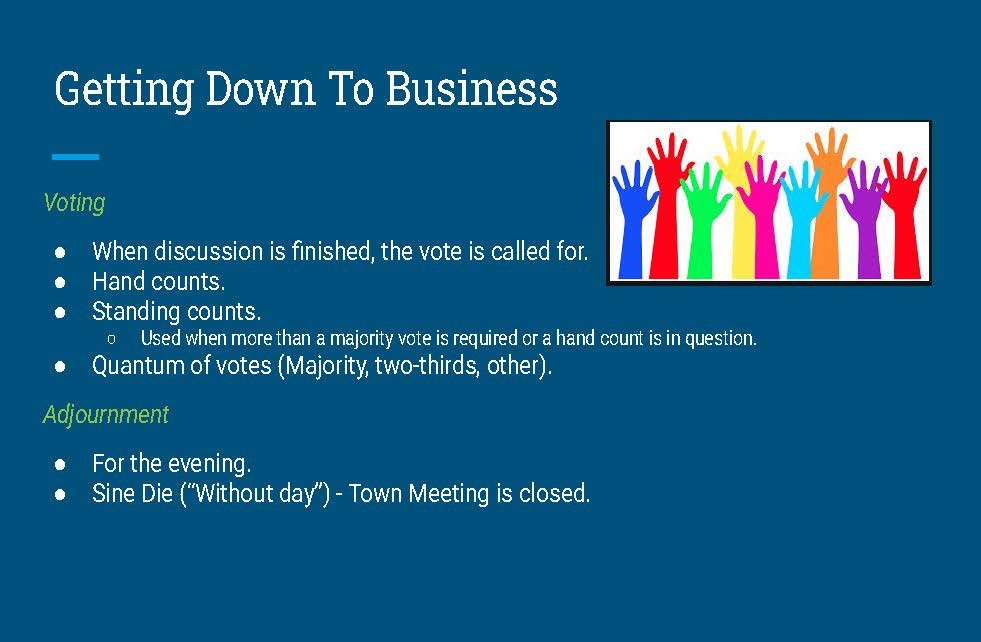
Standing and hand counts
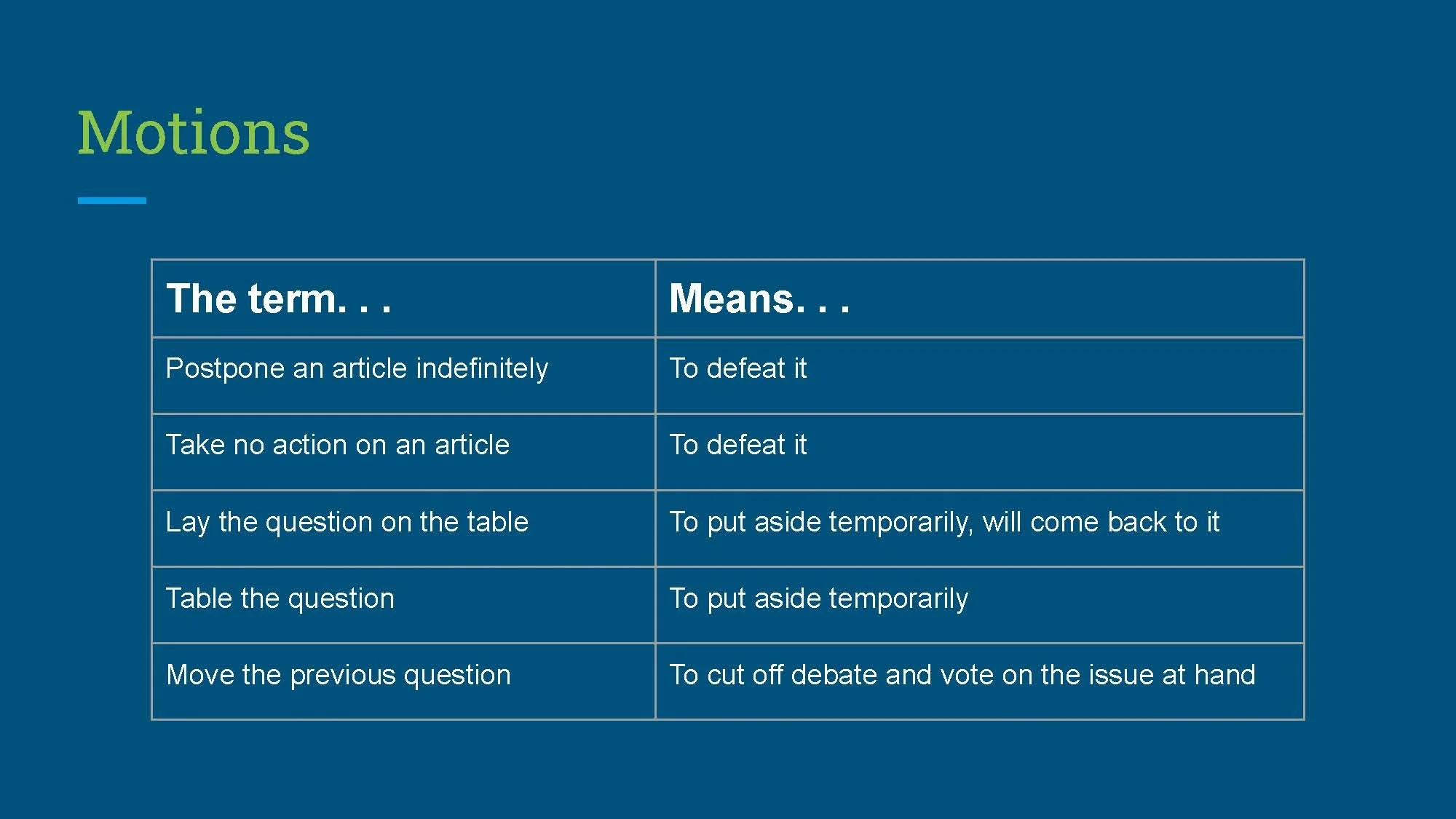
Motions to end debates (“moving the question”)
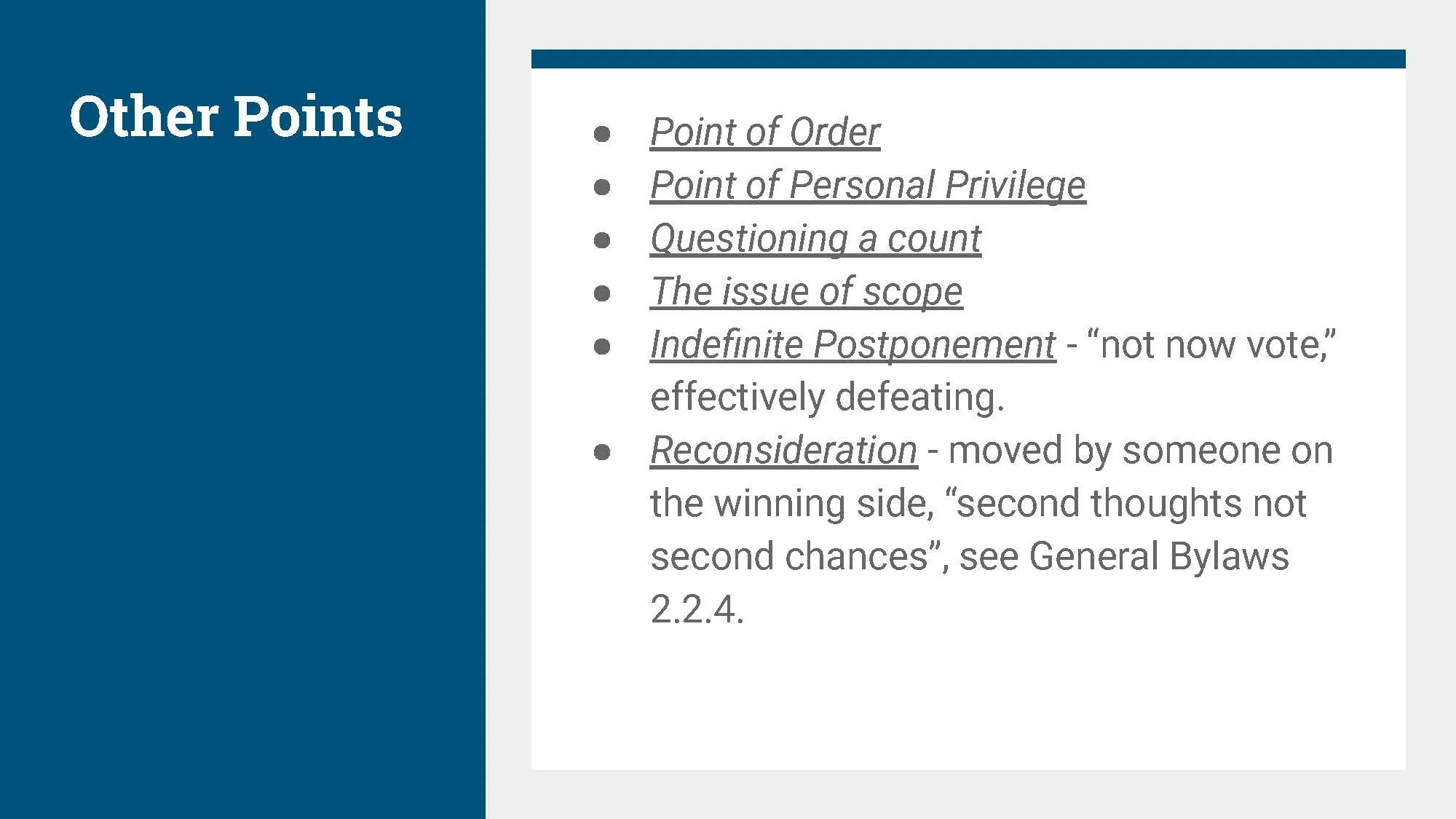
Reconsideration procedures
Points of order and personal privilege
Foulds noted that amendments may be submitted in writing to the Moderator and Town Clerk in advance to streamline debate, as well as on the floor of Town Meeting during debate.
Reading’s unique instructional motions
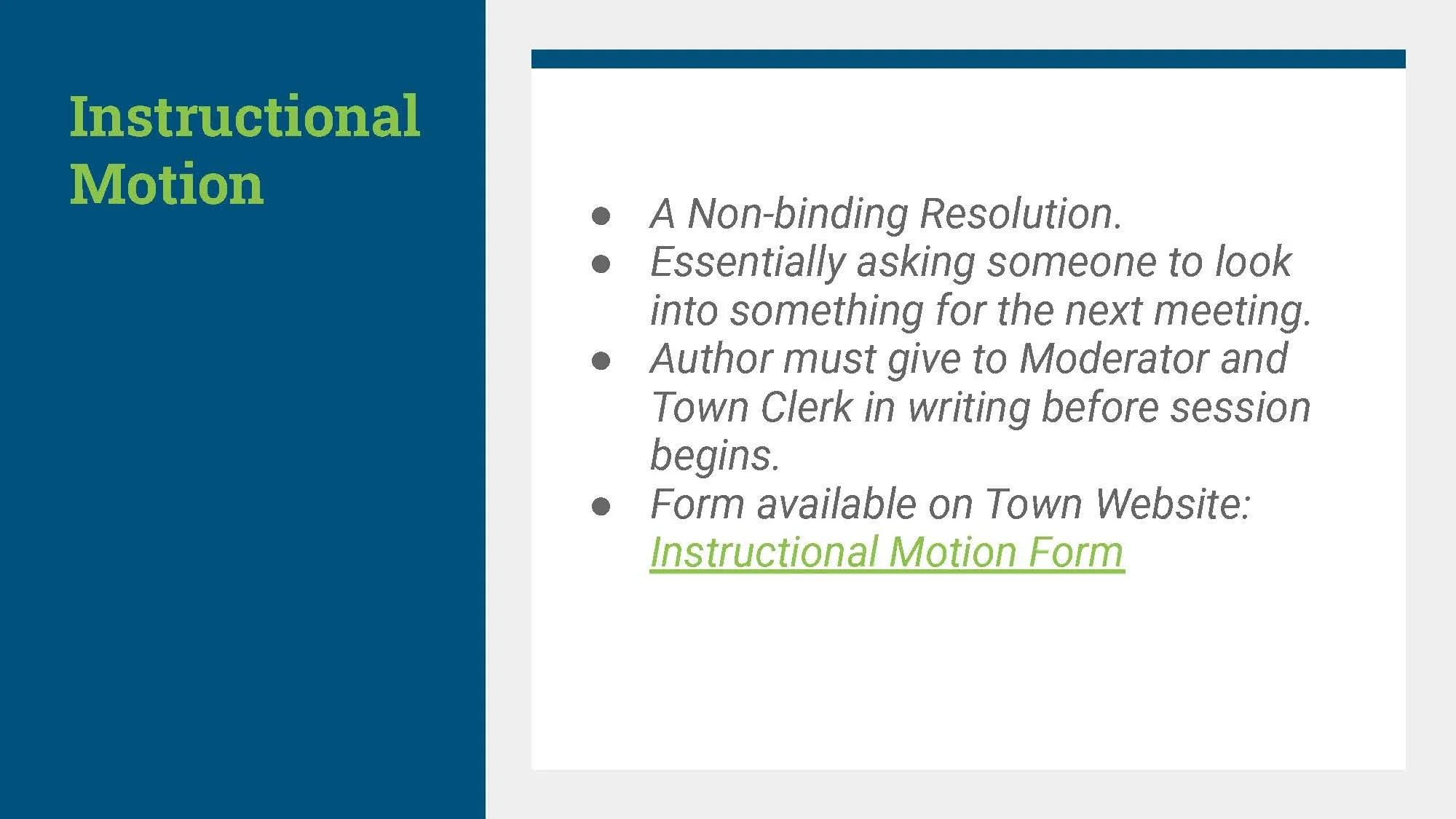
A portion of the discussion focused on “Instructional Motions,” a practice Foulds described as unique to Reading.
Instructional motions that typically request additional study or action before a future Town Meeting. According to Foulds, Reading had used the process since 1895.
Foulds noted that authors must submit instructional motions before the session begins.
After Town Meeting concludes
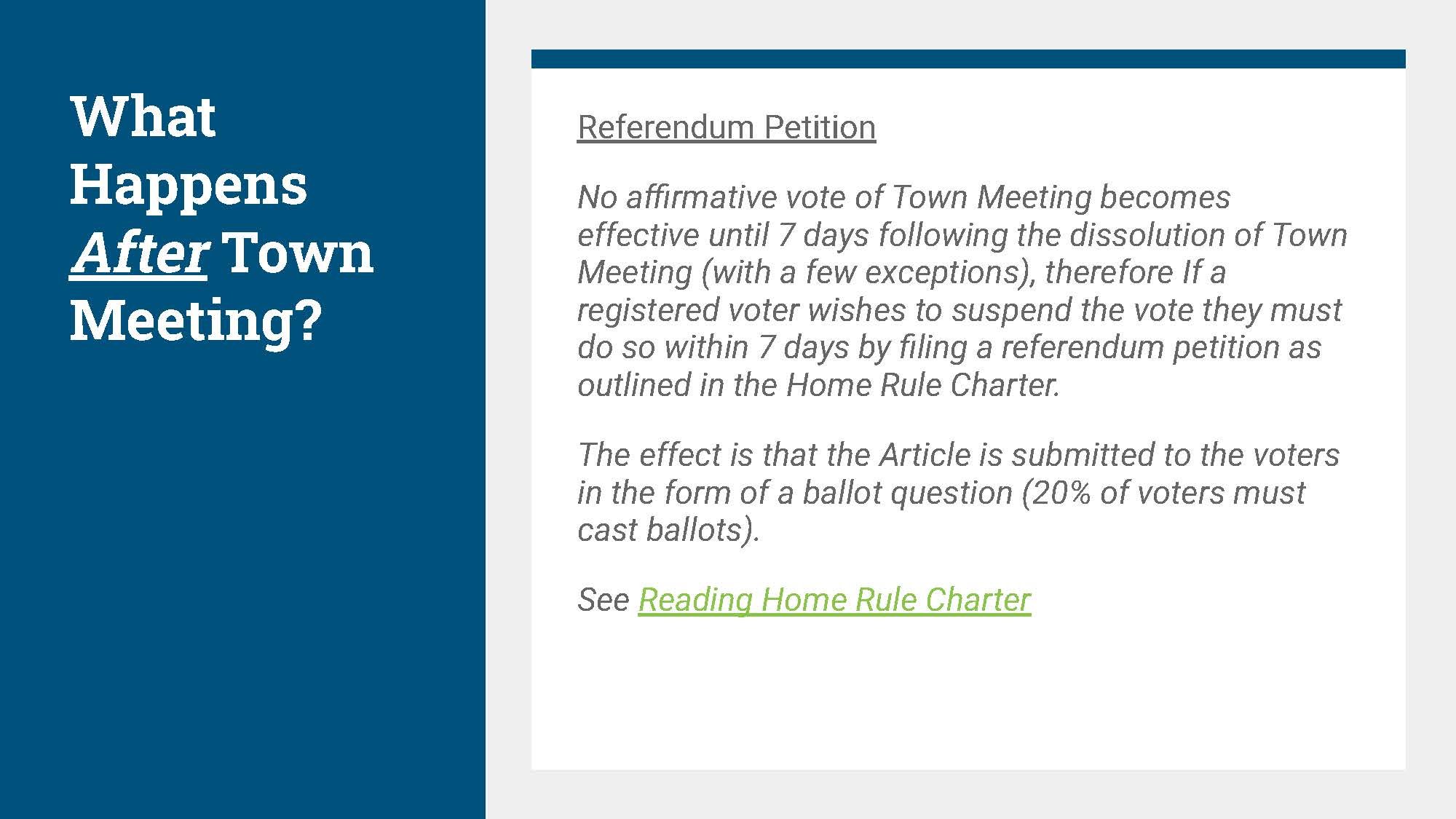
The presentation also addressed what happens after Town Meeting adjourns, including the referendum petition process available under the Home Rule Charter.
Foulds explained that most affirmative votes do not become effective until seven (7) days after dissolution of Town Meeting, allowing residents time to file a referendum petition if they seek to suspend a vote.
Community questions and discussions
The session concluded with audience questions about participation and Town Meeting structure.
A resident asked whether non-Town Meeting Members are allowed to participate during debate. Foulds responded that non-members may attend and speak after Town Meeting Members have had the opportunity to do so, subject to the Moderator’s discretion.
Another attendee asked about “Point of Order” and whether they can interrupt proceedings. Foulds explained that only Town Meeting Members may raise them and that moderators determine whether they are valid and relevant.
A question was also raised about the size of the representative Town Meeting in other communities. Foulds noted that the number of members is established through the Town Charter. The average size of a representative Town Meeting is 214 members, with Saugus the smallest at 50 and Fairhaven the largest at 429.
Preparing for Annual Town Meeting
The presentation comes just days before Reading’s Annual Town Meeting began on Monday, April 27, at Reading Memorial High School Performing Arts Center, airing on Fios channels 22 and 2131 (HD), Xfinity channel 22, and will be streamed live on the RCTV Youtube page.
Residents can review the full Report on the Warrant, Town budget materials, and additional Town Meeting resources through the Town website.